Your shoulders ache. Your jaw clenches without you noticing. That familiar throb in your lower back intensifies every time your inbox fills up or your schedule gets overwhelming.
You’re not imagining the connection. Stress doesn’t just live in your mind. It settles into your muscles, tightens your fascia, and amplifies every pain signal your nervous system sends. For people living with chronic pain, stress acts like gasoline on a fire.
The good news? Managing stress can genuinely reduce physical pain. Not through wishful thinking or positive vibes, but through measurable changes in your nervous system, muscle tension, and inflammatory markers.
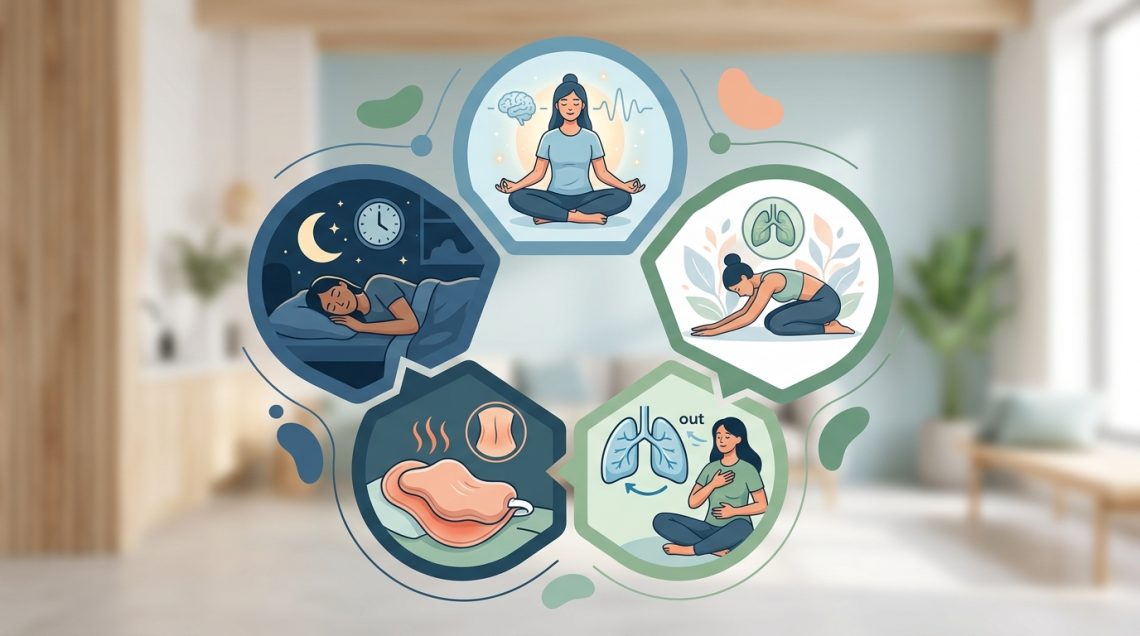
Stress management techniques for pain relief work by interrupting the stress-pain cycle at multiple points. Controlled breathing calms your nervous system, progressive muscle relaxation releases tension, mindfulness retrains pain perception, gentle movement increases endorphins, and cognitive techniques reduce pain catastrophizing. These evidence-based approaches provide measurable relief without medication, addressing both the psychological and physical dimensions of chronic pain when practiced consistently.
How Stress Amplifies Your Physical Pain
Your body doesn’t distinguish between physical threats and psychological stress.
When you’re stressed, your sympathetic nervous system activates. Cortisol floods your bloodstream. Muscles tense in preparation for action. Blood vessels constrict. Inflammation increases.
All of these responses make existing pain worse. They also lower your pain threshold, meaning stimuli that wouldn’t normally hurt suddenly do.
Research shows that people with chronic pain conditions experience a bidirectional relationship with stress. Pain creates stress. Stress worsens pain. The cycle feeds itself.
Breaking this cycle requires targeted intervention. Not just relaxation, but specific techniques that interrupt the physiological mechanisms linking stress to pain.
Controlled Breathing to Reset Your Nervous System
Your breath is the most accessible tool you have for pain management.
Shallow, rapid breathing keeps your body in a stress state. Deep, controlled breathing activates your parasympathetic nervous system, the rest-and-digest mode that reduces muscle tension and pain sensitivity.
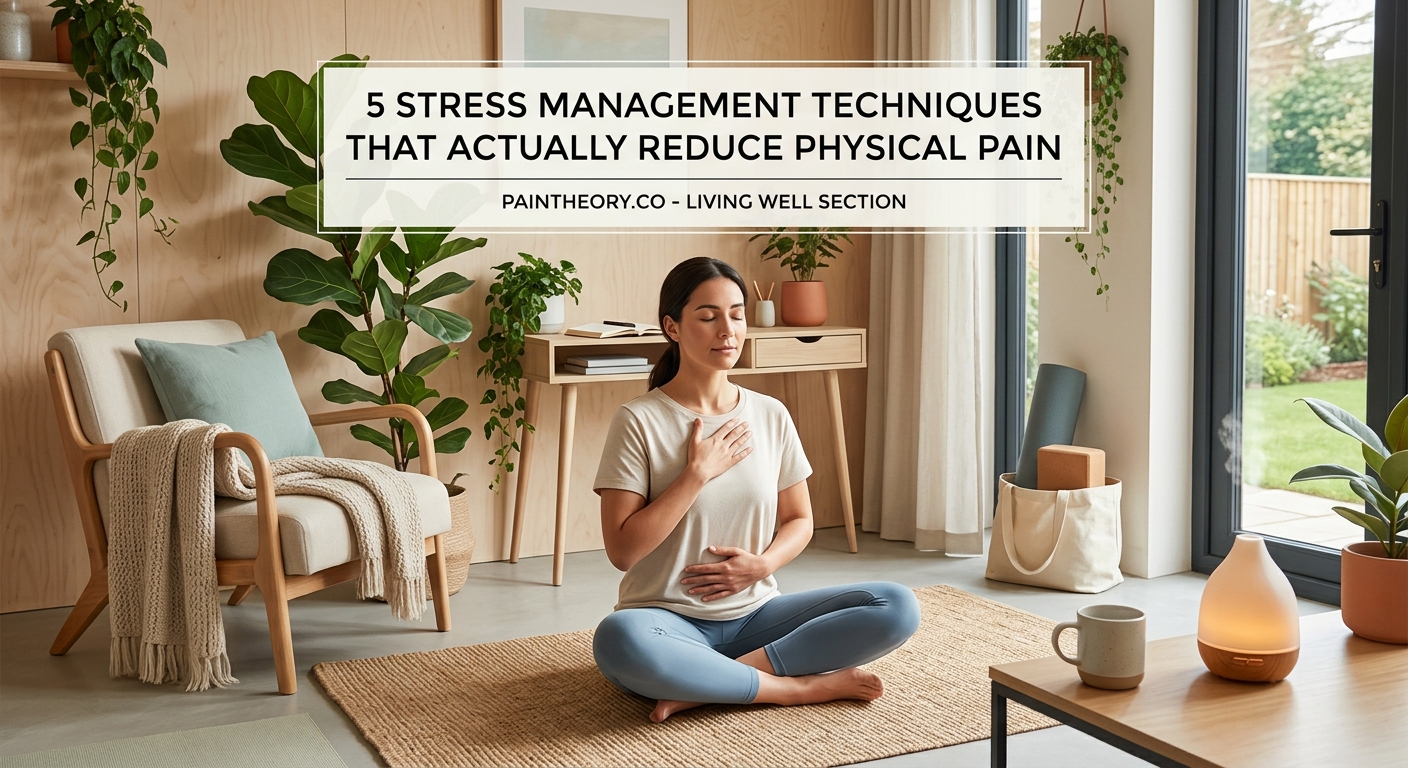
The 4-7-8 breathing technique works particularly well for pain relief:
- Sit comfortably with your back supported.
- Place one hand on your chest and one on your belly.
- Breathe in through your nose for a count of 4, letting your belly expand.
- Hold your breath for a count of 7.
- Exhale completely through your mouth for a count of 8.
- Repeat for 4 to 8 cycles.
This pattern forces a physiological shift. The extended exhale activates your vagus nerve, which signals your body to calm down. Heart rate slows. Blood pressure drops. Muscle tension decreases.
You can use this technique anywhere. During a pain flare. Before bed when pain keeps you awake. At your desk when work stress builds.
The beauty of breath work is its immediacy. Unlike medication that takes time to kick in, controlled breathing changes your physiology within minutes.
“Diaphragmatic breathing isn’t just relaxation. It’s a direct intervention in the autonomic nervous system that regulates pain perception. We see measurable decreases in pain scores when patients practice this consistently.” — Dr. Sarah Mitchell, Pain Management Specialist
Progressive Muscle Relaxation for Tension Release
Chronic pain creates chronic muscle guarding.
Your body tenses around painful areas to protect them. Over time, this protective tension becomes habitual. You stop noticing it. But it never stops contributing to your pain.
Progressive muscle relaxation (PMR) systematically releases this accumulated tension.
Here’s how to practice it:
- Find a quiet space where you can lie down or recline comfortably.
- Starting with your feet, tense the muscles as tightly as you can for 5 seconds.
- Release completely and notice the difference for 10 seconds.
- Move up to your calves, then thighs, then buttocks, continuing through each muscle group.
- Include your abdomen, chest, hands, arms, shoulders, neck, and face.
- Finish by tensing your entire body, then releasing everything at once.
The contrast between tension and release teaches your nervous system what relaxation actually feels like. Many people with chronic pain have forgotten.
PMR works especially well for stress-related conditions like tension headaches, jaw pain from clenching, and lower back pain that worsens with stress.
Practice this daily for two weeks. You’ll likely notice not just reduced pain, but better sleep and lower overall stress levels.
Mindfulness Meditation to Change Pain Perception
Pain isn’t just a physical sensation. It’s an experience shaped by attention, emotion, and interpretation.
Mindfulness meditation doesn’t make pain disappear. Instead, it changes your relationship with pain. You learn to observe sensations without the added layers of fear, frustration, and catastrophizing that amplify suffering.
Studies show that regular mindfulness practice actually changes brain activity in regions associated with pain processing. The pain signal may still exist, but your brain processes it differently.
A simple mindfulness practice for pain:
- Sit or lie in a comfortable position.
- Bring attention to your breath without trying to change it.
- When you notice pain, turn your attention toward it with curiosity rather than resistance.
- Observe the sensation’s qualities: sharp or dull, constant or pulsing, hot or cold.
- Notice how it changes moment to moment rather than treating it as one solid block.
- When your mind wanders to worries or frustration, gently return to observing the sensation.
This approach interrupts the automatic stress response to pain. Instead of tensing against discomfort, you create space around it.
The technique becomes more effective with practice. Start with 5 minutes daily. Gradually increase to 15 or 20 minutes as it becomes easier.
Many people find that understanding how their brain creates and amplifies pain makes mindfulness practice more effective. Knowledge reduces fear, and fear reduction lowers pain intensity.
Gentle Movement to Release Endorphins
Movement seems counterintuitive when you’re in pain. But the right kind of movement is one of the most effective stress management techniques for pain relief.
Exercise releases endorphins, your body’s natural pain relievers. It also reduces inflammatory markers, improves sleep quality, and builds resilience against stress.
The key word is gentle. You’re not training for a marathon. You’re moving enough to shift your physiology without triggering a pain flare.
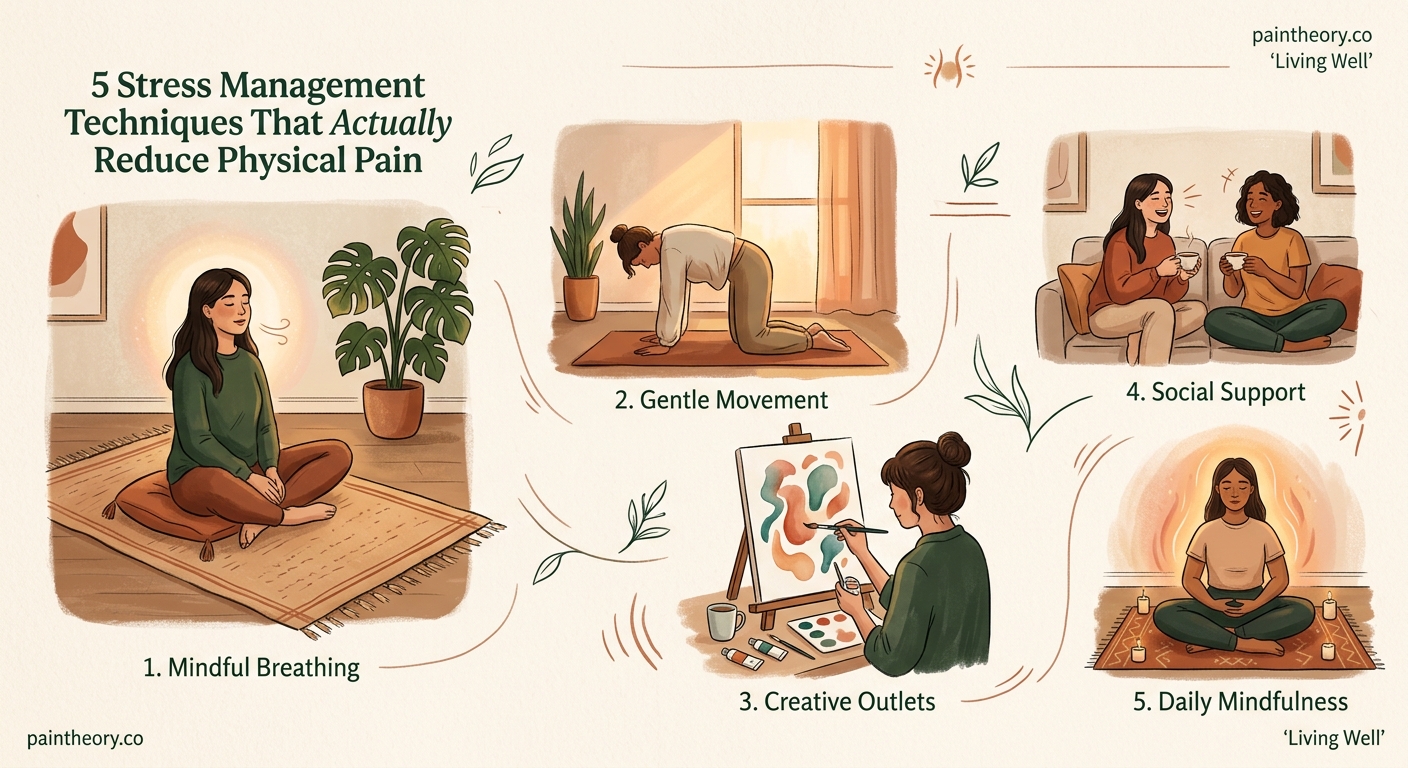
Effective low-impact options include:
- Walking at a comfortable pace for 10 to 20 minutes
- Gentle yoga focused on breath and stretching rather than intensity
- Swimming or water aerobics that support your joints
- Tai chi or qigong that combine movement with mindfulness
- Targeted stretching routines designed for chronic pain
Consistency matters more than intensity. Moving for 15 minutes daily provides more benefit than an aggressive hour-long session once a week that leaves you hurting for days.
Pay attention to how different movements affect your pain. Some activities may feel good during but cause increased pain later. Others may feel challenging at first but lead to reduced pain over time.
Track your movement and pain levels for two weeks. You’ll start seeing patterns that help you choose the most beneficial activities for your specific condition.
Cognitive Techniques to Break Pain Catastrophizing
Your thoughts about pain directly influence how much it hurts.
Pain catastrophizing means assuming the worst. “This pain will never get better.” “I can’t handle this.” “Something must be seriously wrong.” These thoughts trigger stress responses that genuinely increase pain intensity.
Cognitive restructuring helps you identify and challenge these automatic thoughts.
The process looks like this:
- Notice catastrophic thoughts when they arise.
- Write them down to create distance from them.
- Ask yourself: Is this thought based on facts or fear?
- Generate alternative, more balanced thoughts.
- Practice the alternative thought until it becomes more automatic.
For example, “This pain means I’m getting worse” becomes “I’m having a pain flare, which is normal with my condition. I’ve managed these before and I have tools to help.”
This isn’t positive thinking or denial. It’s accuracy. Catastrophizing distorts reality in one direction. Cognitive restructuring brings you back to what’s actually true.
Combined with other stress management techniques, cognitive work creates lasting changes in how your nervous system processes pain signals.
Comparing Stress Management Approaches
Different techniques work better for different situations and pain types. Here’s how they compare:
| Technique | Best For | Time Required | Difficulty Level |
|---|---|---|---|
| Controlled breathing | Acute stress, pain flares, anxiety | 2-5 minutes | Easy |
| Progressive muscle relaxation | Tension-related pain, sleep problems | 15-20 minutes | Easy to moderate |
| Mindfulness meditation | Chronic pain, pain catastrophizing | 10-20 minutes | Moderate |
| Gentle movement | Overall pain levels, mood, sleep | 15-30 minutes | Moderate |
| Cognitive restructuring | Pain-related anxiety, catastrophizing | 10-15 minutes | Moderate to challenging |
You don’t need to master all of these at once. Start with one technique that feels most accessible. Practice it consistently for two weeks before adding another.
Common Mistakes That Reduce Effectiveness
Even evidence-based techniques fail when applied incorrectly.
Avoid these common errors:
-
Practicing only during pain flares: Stress management works best as prevention. Regular practice builds resilience that reduces flare frequency and intensity.
-
Expecting immediate pain elimination: These techniques reduce pain over time. They’re not instant fixes. Give each approach at least two weeks of consistent practice before evaluating effectiveness.
-
Practicing inconsistently: Five minutes daily beats an hour once a week. Your nervous system needs regular input to create lasting changes.
-
Forcing techniques that don’t fit: If meditation feels impossible, try movement instead. If breathing exercises trigger anxiety, start with muscle relaxation. Find what works for your brain and body.
-
Ignoring serious warning signs: Stress management complements medical care but doesn’t replace it. If you experience red flags that require medical attention, see a healthcare provider.
Building Your Personal Pain Management Practice
The most effective approach combines multiple techniques tailored to your specific needs.
Start by choosing one primary technique to practice daily. Add others as needed for specific situations. Someone with tension headaches might use breathing for acute relief, progressive muscle relaxation before bed, and gentle movement throughout the day.
Track what works. Keep a simple log noting which techniques you used and your pain levels before and after. Patterns emerge quickly.
Remember that pain becomes chronic through complex nervous system changes. Reversing those changes takes time and consistency. But it’s absolutely possible.
Consider working with professionals who understand the stress-pain connection. Physical therapists, psychologists specializing in chronic pain, and pain management specialists can provide personalized guidance.
For some conditions, stress management works alongside other treatments. Women dealing with pelvic pain might combine these techniques with condition-specific approaches for comprehensive relief.
Making Stress Management Work in Real Life
Theory means nothing without application.
The biggest barrier most people face isn’t lack of knowledge. It’s finding time and motivation to practice consistently when you’re already exhausted from managing pain.
Make it easier on yourself:
-
Link stress management to existing habits. Practice breathing after brushing your teeth. Do progressive muscle relaxation when you get into bed.
-
Set phone reminders for the first month until practice becomes automatic.
-
Start absurdly small. Two minutes of breathing is infinitely better than zero minutes of meditation you never do.
-
Adjust techniques for your environment. Managing pain at a desk job requires different strategies than managing it at home.
-
Give yourself permission to modify. If sitting for meditation hurts, lie down. If full body muscle relaxation feels overwhelming, focus on just your shoulders and jaw.
The goal isn’t perfect practice. It’s consistent practice that fits your actual life.
Your Stress and Pain Don’t Have to Control Each Other
Breaking the stress-pain cycle changes everything.
You gain tools that work anywhere, anytime, without prescriptions or appointments. You develop confidence in your ability to influence your pain rather than feeling helpless against it. You create space between stimulus and response, between sensation and suffering.
These stress management techniques for pain relief won’t cure chronic pain conditions. But they can significantly reduce your pain intensity, decrease flare frequency, and improve your quality of life.
Start today with just one technique. Practice it for two weeks. Notice what changes. Then build from there, adding approaches that address your specific needs and challenges. Your nervous system is capable of remarkable change when you give it consistent, appropriate input.