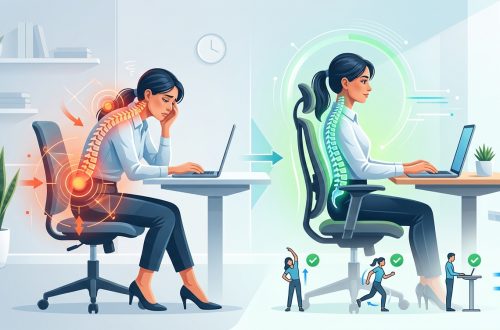
You twisted wrong while lifting a box. Or maybe you woke up with pain that won’t budge. Now you’re stuck wondering how long you’ll be dealing with this back injury and when life will feel normal again.
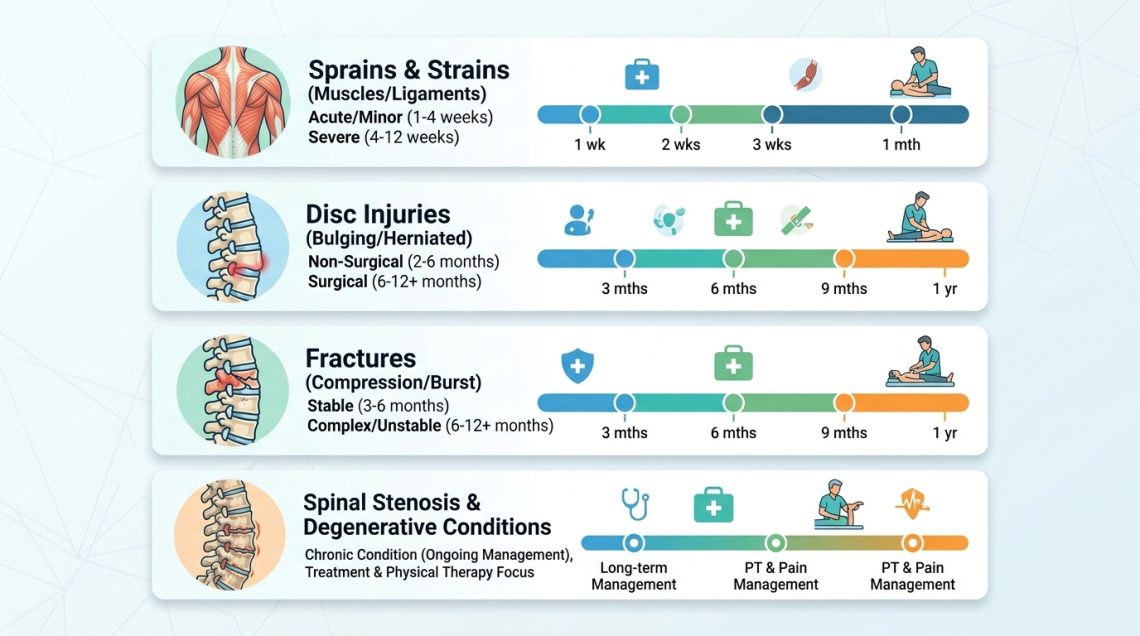
Most back strains and sprains heal within two to six weeks with proper care. Herniated discs typically improve in six to twelve weeks, while spinal fractures need three to four months. Your recovery timeline depends on injury severity, age, overall health, and how consistently you follow treatment recommendations. Persistent pain beyond expected timelines warrants medical evaluation.
Understanding different types of back injuries
Not all back injuries heal at the same pace. The tissue involved determines your recovery timeline.
Muscle strains happen when you overstretch or tear muscle fibers. These are the most common back injuries and usually the fastest to heal.
Ligament sprains involve the tough bands connecting your vertebrae. They take longer than muscle injuries because ligaments have less blood flow.
Herniated discs occur when the cushioning between vertebrae bulges or ruptures. The jelly-like center pushes out and can press on nerves.
Spinal fractures are cracks or breaks in the vertebrae themselves. These are the most serious and need the longest recovery time.
Each injury type follows its own healing process. Your body repairs muscle tissue faster than it rebuilds ligaments or bone.
Typical recovery timelines for common back injuries
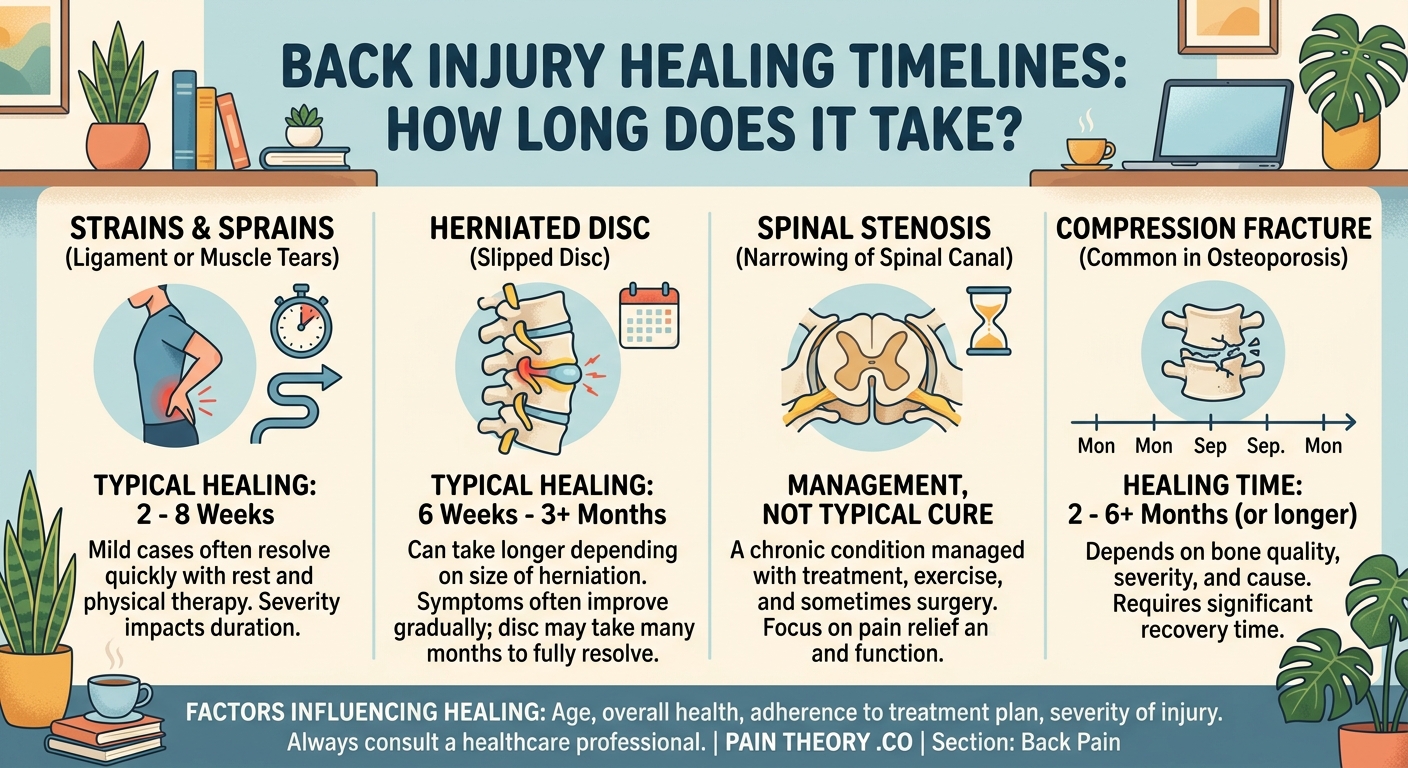
Here’s what research shows about average healing times:
Muscle strains: Two to four weeks for mild cases, up to six weeks for severe tears. You’ll notice improvement within the first week if you’re managing it correctly.
Ligament sprains: Four to six weeks for most cases. Some people need up to eight weeks if the sprain is severe or involves multiple ligaments.
Herniated discs: Six to twelve weeks for most people. About 90% of herniated disc cases improve without surgery within this timeframe.
Compression fractures: Eight to twelve weeks with proper immobilization. Some fractures need up to four months, especially in older adults with osteoporosis.
Facet joint injuries: Three to six weeks. These small joints between vertebrae can become inflamed from sudden movements or arthritis.
Keep in mind these are averages. Your actual recovery might be shorter or longer based on multiple factors.
What affects how fast your back heals
Several elements influence your personal recovery timeline.
Age plays a significant role. Younger people typically heal faster because their cells regenerate more efficiently. Someone in their twenties might recover from a muscle strain in two weeks, while the same injury could take four weeks for someone in their sixties.
Your overall health matters tremendously. Conditions like diabetes slow healing by affecting blood flow and cell repair. Smoking reduces oxygen to injured tissues, adding weeks to your recovery.
The severity of your initial injury sets the baseline. A minor muscle pull heals faster than a complete tear. A small disc bulge resolves sooner than a large rupture pressing on nerve roots.
How you treat the injury from day one makes a huge difference. People who rest appropriately, use ice and heat correctly, and start gentle movement at the right time heal faster than those who either do too much or too little.
Previous injuries to the same area can slow things down. Scar tissue from old injuries doesn’t have the same flexibility as healthy tissue, making you more vulnerable to re-injury and longer recovery.
Your activity level before the injury also counts. Someone with strong core muscles and good flexibility typically bounces back faster than someone who was sedentary.
Body weight affects spine healing too. Extra pounds put more stress on your back structures, potentially extending recovery time.
The healing process week by week
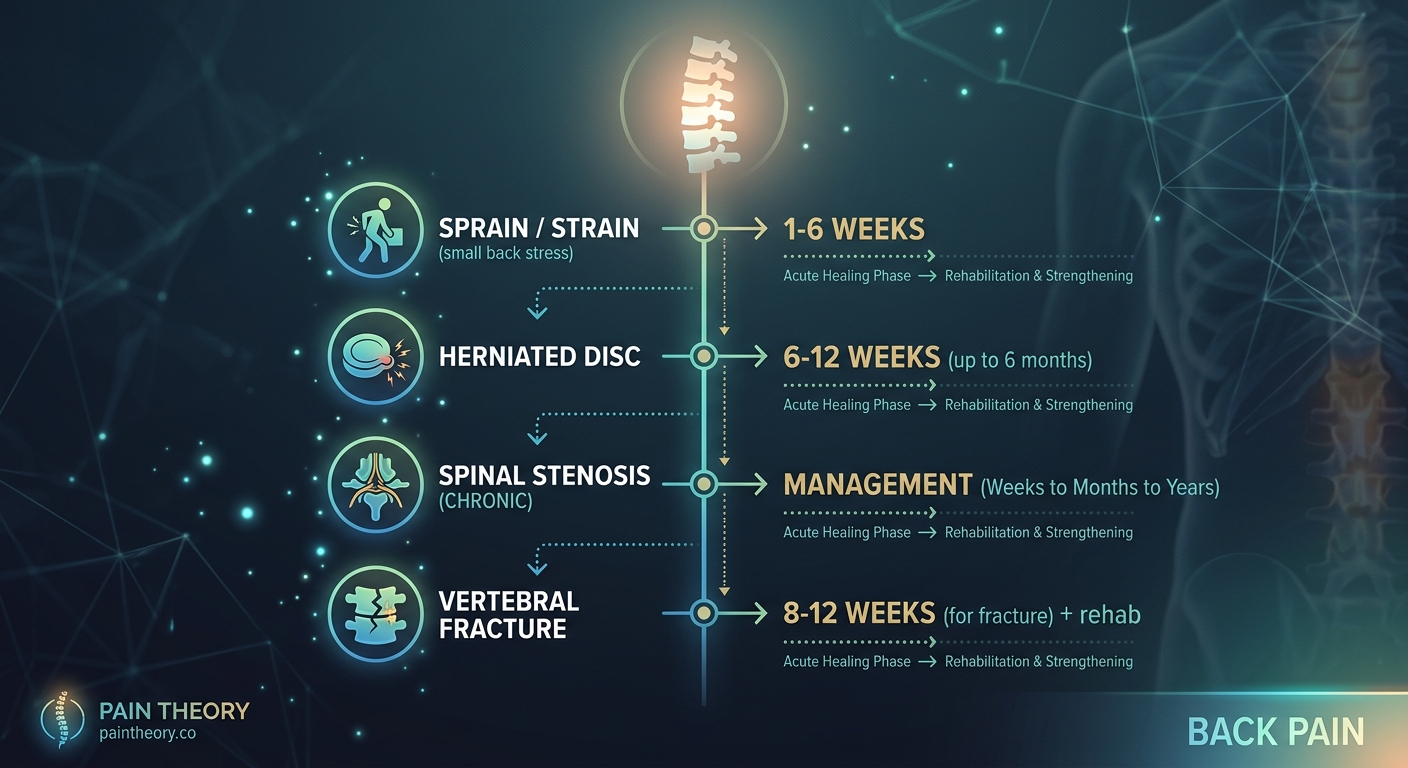
Understanding what happens during recovery helps you know if you’re on track.
Week one: Acute inflammation phase
Your body rushes blood and immune cells to the injury site. You’ll feel the most pain during this phase. Swelling and muscle spasms are normal protective responses.
Rest is crucial now, but complete bed rest beyond a day or two actually slows healing. Gentle movement helps, but avoid the activity that caused the injury.
Weeks two to three: Repair begins
New tissue starts forming. Pain should decrease noticeably. If it’s not improving at all by week two, you should see a doctor immediately to rule out complications.
This is when many people make mistakes. Feeling better, they return to normal activities too fast and re-injure themselves.
Weeks four to six: Remodeling phase
New tissue strengthens and organizes. You should have much less pain, though some stiffness or mild discomfort with certain movements is normal.
Gradual return to activities is appropriate now. Listen to your body and back off if pain increases.
Weeks six to twelve: Final strengthening
For more serious injuries like herniated discs, this is when major healing happens. The body continues strengthening repaired tissue.
Physical therapy during this phase helps ensure you regain full function and don’t develop compensatory movement patterns that cause future problems.
Red flags that mean your injury isn’t healing normally
Some symptoms indicate complications that need medical attention:
- Pain that gets worse instead of better after the first week
- Numbness or tingling that spreads down your legs
- Loss of bowel or bladder control
- Weakness in your legs
- Pain accompanied by fever or unexplained weight loss
- Pain that wakes you from sleep consistently
These symptoms might indicate nerve compression, infection, or other serious conditions that won’t improve without intervention.
Understanding when pain becomes chronic helps you recognize if your acute injury is transitioning into a long-term problem.
Steps to support faster healing
Your actions directly impact how fast you recover.
-
Apply ice for the first 48 hours: Use ice packs for 15 to 20 minutes every two to three hours. This reduces inflammation and numbs pain.
-
Switch to heat after 48 hours: Heat increases blood flow and relaxes tight muscles. Use heating pads or warm baths for 15 to 20 minutes several times daily.
-
Move gently but regularly: Complete rest beyond a day or two weakens muscles. Walk short distances, do gentle stretches, and change positions frequently.
-
Take anti-inflammatory medication as directed: Over-the-counter options like ibuprofen reduce inflammation and pain, making it easier to move.
-
Sleep in supportive positions: Side sleeping with a pillow between your knees or back sleeping with a pillow under your knees reduces spine stress.
-
Start physical therapy when appropriate: A therapist teaches exercises that strengthen supporting muscles and improve flexibility.
-
Maintain good nutrition: Protein, vitamin C, and zinc support tissue repair. Stay hydrated to keep spinal discs healthy.
Better sleep habits become especially important during recovery, as your body does most healing work while you rest.
Common mistakes that delay recovery
Avoid these pitfalls that extend healing time:
- Returning to heavy lifting too soon: Even if pain decreases, tissues need full healing time before handling significant loads.
- Skipping physical therapy exercises: These aren’t optional. They rebuild strength and prevent future injuries.
- Staying completely immobile: Prolonged rest weakens muscles and stiffens joints, actually slowing recovery.
- Ignoring posture: Poor sitting and standing habits stress healing tissues constantly.
- Stopping treatment when pain improves: Finishing the full recovery program prevents re-injury.
Treatment options and their impact on healing time
Different treatments can speed or slow your recovery.
| Treatment | Impact on Healing Time | Best For |
|---|---|---|
| Rest (1-2 days) | Neutral to positive | Acute phase of any injury |
| Ice therapy | Speeds early healing | First 48 hours, reduces inflammation |
| Heat therapy | Speeds mid-stage healing | After 48 hours, relaxes muscles |
| Physical therapy | Significantly speeds healing | All injury types, especially important for disc issues |
| Massage | Moderately helpful | Muscle strains, improves blood flow |
| Chiropractic care | Variable, case dependent | Alignment issues, not for fractures |
| Medications | Enables movement, indirect benefit | Pain and inflammation management |
| Surgery | Reserved for severe cases | Herniated discs with nerve damage, unstable fractures |
Comparing different pain medications helps you choose the most effective option for your situation.
For some injuries, nerve blocks and targeted injections provide relief that allows you to participate in physical therapy more effectively.
When to consider professional treatment
Some situations require more than home care.
See a doctor within a few days if:
- Pain is severe and not improving with over-the-counter medication
- You injured your back in a significant fall or accident
- You have a history of cancer or osteoporosis
- You’re over 70 years old
- Pain radiates down one or both legs
Physical therapy becomes important when:
- Pain persists beyond two weeks despite home treatment
- You’re not regaining normal movement
- You want to prevent future injuries
- You need guidance on safe return to sports or physical work
Deciding about surgery usually only comes up if conservative treatments fail after several months or if you have severe nerve compression.
Age-specific recovery considerations
Your age significantly affects healing timelines.
Younger adults (20s-30s) typically heal at the faster end of expected ranges. A muscle strain might resolve in two weeks instead of four. Their bodies produce growth factors and repair cells more efficiently.
Middle-aged adults (40s-50s) fall in the middle of typical ranges. Healing takes the full expected time, and proper treatment becomes more important. Skipping physical therapy or returning to activities too soon causes more problems in this age group.
Older adults (60+) often need the longer end of recovery timelines. A herniated disc that heals in eight weeks for someone younger might take twelve weeks. Bone healing is slower, especially with osteoporosis.
Age also affects which injuries are most common. Younger people typically get acute injuries from sports or lifting. Older adults more often deal with degenerative changes that make injuries more likely.
Activity modifications during recovery
What you can and can’t do changes as you heal.
First two weeks:
– Avoid lifting anything over 10 pounds
– No twisting motions
– Limit sitting to 20 minutes at a time
– Walk short distances on level ground
– Sleep in supported positions only
Weeks three to six:
– Gradually increase walking distance
– Light household tasks are okay
– Still avoid heavy lifting and high-impact activities
– Gentle stretching routines become important
– Return to desk work with frequent position changes
Weeks six to twelve:
– Resume most normal activities with modifications
– Begin strengthening exercises
– Return to recreational activities gradually
– Still avoid maximum lifts and high-risk movements
Managing back pain at a desk job requires specific strategies during recovery and beyond.
The role of inflammation in healing time
Understanding inflammation helps you work with your body’s repair process.
Inflammation isn’t your enemy. It’s the first stage of healing. Your body sends extra blood, immune cells, and growth factors to the injury site.
The problem is when inflammation becomes excessive or prolonged. Too much swelling compresses nerves and limits movement. This is why ice helps in the first 48 hours.
After the acute phase, some inflammation continues as part of tissue repair. This is normal and necessary. Anti-inflammatory medications help manage pain but shouldn’t completely eliminate all inflammation.
“The goal isn’t to stop inflammation entirely, but to keep it at levels that support healing without causing excessive pain or limiting your ability to move gently. Movement itself helps regulate inflammation by pumping away excess fluid and bringing in fresh nutrients.”
How your brain processes pain signals also influences your perception of inflammation and discomfort during recovery.
Preventing future injuries after you heal
Once you recover, prevention becomes crucial.
Core strengthening exercises protect your spine better than any other intervention. Your core includes not just abs but also back muscles, hip muscles, and pelvic floor muscles.
Proper lifting technique matters every single time, not just with heavy objects. Bend at your knees, keep items close to your body, and avoid twisting while holding weight.
Flexibility work keeps muscles and ligaments supple. Tight hamstrings and hip flexors pull on your lower back constantly.
Maintaining a healthy weight reduces spine stress. Every extra pound adds four pounds of pressure on your lower back.
Ergonomic workspaces prevent gradual strain. Monitor height, chair support, and keyboard position all affect your spine alignment throughout the day.
Regular movement breaks up prolonged positions. Set a timer to stand and stretch every 30 minutes if you sit for work.
What to expect long term
Most people fully recover from back injuries without lasting problems.
About 80% of people with acute back pain improve within six weeks. Of those, most return to all normal activities.
However, having one back injury does increase your risk of future episodes. This is why prevention strategies matter so much after recovery.
Some people develop chronic pain even after tissues heal. This happens when your nervous system continues sending pain signals beyond the actual tissue damage.
Why pain sometimes gets worse at night can persist even after the initial injury heals, requiring different management strategies.
Regular check-ins with yourself help catch problems early. Notice if certain activities consistently cause discomfort and modify them before a full re-injury occurs.
Building realistic expectations
Your recovery won’t follow a perfectly straight line.
Good days and bad days are normal. You might feel great one day and have more pain the next. This doesn’t mean you’re not healing.
Weather changes affect some people’s back pain. Barometric pressure shifts can temporarily increase discomfort even in healing tissues.
Stress and poor sleep slow healing. Your emotional state directly impacts physical recovery through hormone and immune system changes.
Comparing yourself to others isn’t helpful. Your coworker’s herniated disc might have healed in six weeks, but yours might need ten. Different disc locations, sizes, and individual factors create variation.
Trust the process but stay alert. Gradual improvement is the key marker. If you’re not seeing any progress over a two-week period, reassess your treatment approach.
Moving forward with confidence
Knowing typical healing timelines helps you set realistic expectations and recognize when something’s off track.
Your back injury will heal. The timeline depends on what you injured, how severe it is, and how well you support the healing process. Most muscle and ligament injuries resolve within a month or two. Disc problems and fractures need more time but still improve for the vast majority of people.
Focus on what you can control. Follow treatment recommendations consistently. Move gently but regularly. Give your body the nutrition and rest it needs. Stay patient with the process while remaining alert to warning signs that need professional attention.
Recovery isn’t just about waiting for time to pass. It’s about actively supporting your body’s remarkable ability to repair itself.