
Living with chronic pain changes everything. Your morning routine takes longer. You skip activities you used to love. Even simple tasks like grocery shopping or sitting through a movie become exhausting.
If you’ve tried physical therapy, medications, and injections without lasting relief, your pain management doctor may have mentioned radiofrequency ablation. This minimally invasive procedure offers hope for people who’ve been struggling with persistent back, neck, or joint pain for months or years.
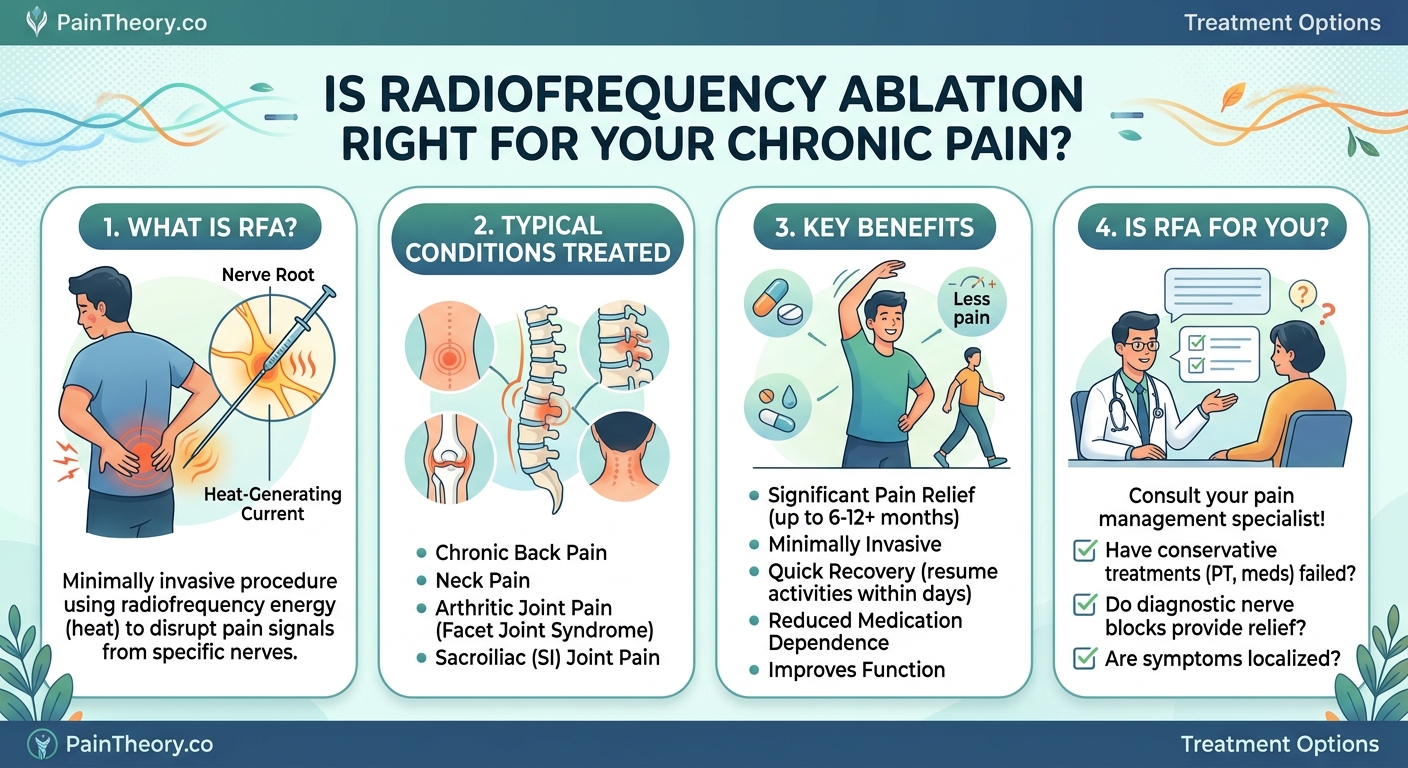
Radiofrequency ablation uses heat to disrupt pain signals from damaged nerves. The outpatient procedure takes 30 to 90 minutes and can provide relief for 6 to 12 months or longer. Success rates range from 70% to 80% for properly selected candidates. Most people return to normal activities within days, though results vary based on the pain source and individual factors.
What Radiofrequency Ablation Actually Does
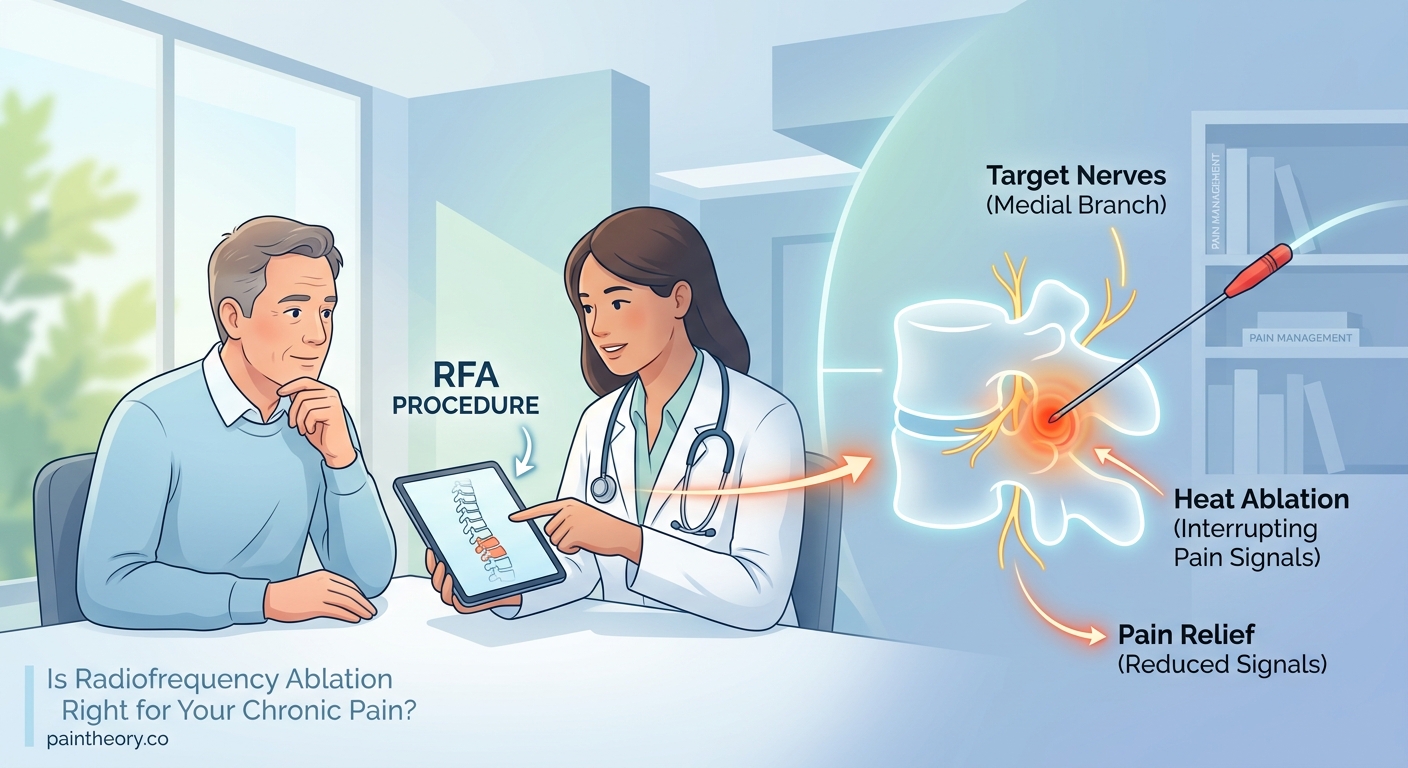
Radiofrequency ablation (RFA) targets the nerves that send pain signals to your brain.
Your doctor uses a specialized needle to deliver heat energy to specific nerve endings. The heat creates a lesion on the nerve, temporarily stopping it from transmitting pain signals.
Think of it like muting a specific channel on your body’s pain network. The nerve still exists, but it can’t communicate with your brain the same way.
The procedure doesn’t fix the underlying problem, like arthritis or a damaged disc. Instead, it interrupts the pain pathway.
This matters because sometimes the original injury heals, but the nervous system keeps firing pain signals anyway. Understanding why pain becomes chronic helps explain why blocking these signals can be so effective.
How the Heat Works
The radiofrequency energy heats nerve tissue to about 80 degrees Celsius (176 degrees Fahrenheit).
At this temperature, proteins in the nerve break down. The nerve can no longer function properly.
Over time, nerves can regenerate. That’s why the pain relief isn’t always permanent. But for many people, the relief lasts long enough to participate in physical therapy, return to work, or simply enjoy daily life again.
Conditions That Respond Well to This Treatment
Not everyone with chronic pain is a good candidate for radiofrequency ablation.
The procedure works best for specific types of pain:
- Facet joint arthritis in the spine
- Sacroiliac joint dysfunction
- Neck pain from cervical facet joints
- Knee pain from osteoarthritis (genicular nerve ablation)
- Hip joint pain
- Pain after spinal fusion surgery
Your doctor will perform diagnostic nerve blocks first. These temporary injections use local anesthetic to numb specific nerves.
If the nerve block provides significant relief (usually at least 50% pain reduction), you’re likely a good candidate for radiofrequency ablation.
If the nerve block doesn’t help, the ablation probably won’t either. That’s because the procedure targets the same nerves.
The Step by Step Procedure Process
Here’s what happens during a typical radiofrequency ablation:
-
You arrive at the outpatient surgery center or pain clinic. You’ll change into a gown and an IV may be started for mild sedation.
-
The medical team positions you on a procedure table. The specific position depends on which nerves are being treated. For lower back pain, you’ll likely lie face down.
-
Your doctor cleans the skin and injects local anesthetic to numb the area. You’ll feel a pinch and burning sensation as the numbing medicine goes in.
-
Using fluoroscopy (live X-ray imaging), your doctor guides a thin needle to the target nerve. You might feel pressure but shouldn’t feel sharp pain.
-
The doctor performs sensory and motor testing. A small amount of electricity passes through the needle to confirm it’s in the right spot. You’ll feel tingling or muscle twitching.
-
Once the position is confirmed, more local anesthetic is injected. Then the radiofrequency energy is delivered for 60 to 90 seconds per nerve.
-
The needle is removed and a small bandage is applied. The entire process takes 30 to 90 minutes, depending on how many nerves are treated.
You’ll rest in a recovery area for 15 to 30 minutes before going home. Someone else needs to drive you.
What Recovery Looks Like
Most people feel sore for a few days after the procedure.
The soreness comes from the needle insertion and the heat applied to tissues. It’s similar to post-workout muscle soreness.
Ice packs and over-the-counter pain relievers usually provide enough relief. Your doctor might prescribe stronger medication if needed.
Some people notice immediate pain relief. Others feel worse for the first week or two before improvement kicks in.
This happens because the nerve is irritated from the procedure. As inflammation settles down, pain relief becomes more apparent.
Full results typically appear within two to three weeks.
Activity Restrictions
You can return to light activities the next day.
Avoid strenuous exercise, heavy lifting, or prolonged sitting for about a week. Listen to your body.
Most people return to work within a few days, depending on their job. Desk jobs are easier to resume than physically demanding work.
Physical therapy often starts a few weeks after the procedure. Working with a therapist helps you rebuild strength and maintain the pain relief.
Success Rates and What Affects Them
Research shows radiofrequency ablation provides significant pain relief for 70% to 80% of properly selected patients.
But “significant relief” varies. Some people achieve 80% to 100% pain reduction. Others get 50% relief, which is still meaningful if it allows them to function better.
Several factors influence success:
| Factor | Impact on Success |
|---|---|
| Positive diagnostic nerve block | Essential for good outcomes |
| Single pain source | Better results than multiple pain areas |
| Non-smoker status | Smoking impairs healing and nerve function |
| Realistic expectations | Understanding limitations improves satisfaction |
| Active participation in rehab | Physical therapy enhances and extends relief |
| Shorter pain duration | Newer pain often responds better than decades-old pain |
The relief typically lasts 6 to 12 months. Some people get relief for several years. Others need repeat procedures every six months.
When pain returns, the procedure can usually be repeated. There’s no strict limit on how many times you can have radiofrequency ablation on the same nerves.
Risks and Side Effects to Consider
Radiofrequency ablation is relatively safe, but complications can occur.
Common side effects include:
- Temporary increase in pain (first 1-2 weeks)
- Bruising or swelling at needle sites
- Numbness or tingling in the treated area
- Muscle weakness (usually temporary)
Rare but serious complications include:
- Infection at the needle site
- Nerve damage causing persistent numbness
- Bleeding, especially in people taking blood thinners
- Burns to surrounding tissue
Your doctor will review your complete medical history before the procedure. Certain conditions increase risk, including active infections, bleeding disorders, or pregnancy.
Blood thinning medications usually need to be stopped several days before the procedure. Never stop these medications without your doctor’s guidance.
How This Compares to Other Pain Treatments
Radiofrequency ablation sits between conservative treatments and surgery on the pain management spectrum.
Conservative options like physical therapy and medication work for many people. But they require ongoing effort and costs.
Pain medications can be effective but come with side effects and dependency risks. Long-term opioid use carries serious dangers.
Nerve blocks and steroid injections provide temporary relief, usually lasting weeks to months. Radiofrequency ablation typically lasts longer.
Surgery addresses structural problems but involves significant recovery time, higher costs, and greater risks. Deciding when surgery makes sense depends on many factors beyond pain severity.
For people who get good but temporary relief from nerve blocks, radiofrequency ablation offers a logical next step. It provides longer-lasting results without the commitment of surgery.
Questions to Ask Your Pain Management Doctor
Before scheduling radiofrequency ablation, have an honest conversation with your doctor.
“The best candidates for radiofrequency ablation are people who’ve had clear, significant relief from diagnostic nerve blocks. If the blocks didn’t help much, we need to look at other treatment options. This procedure works when we can identify specific nerves causing your pain.”
Important questions to ask:
- How many diagnostic nerve blocks should I have before considering ablation?
- What percentage of your patients get significant relief from this procedure?
- How long does relief typically last in your patients?
- What happens if the procedure doesn’t work?
- Will my insurance cover this, and what will my out-of-pocket costs be?
- How many of these procedures do you perform each month?
- What should I do if my pain gets worse after the procedure?
Experience matters. Look for a pain management specialist who performs radiofrequency ablation regularly, not occasionally.
Managing Expectations and Planning Ahead
Radiofrequency ablation works well for many people, but it’s not a cure.
The underlying condition (arthritis, disc degeneration, joint damage) remains. The procedure simply interrupts pain signals.
This distinction matters for planning. You’ll likely need repeat procedures as nerves regenerate. Budget for this, both financially and in terms of time off work.
Use the pain-free period wisely. Strengthen supporting muscles through physical therapy. Lose weight if needed to reduce joint stress. Develop better sleep habits since poor sleep amplifies pain.
Some people find that combining radiofrequency ablation with other treatments provides the best results. A daily stretching routine can help maintain flexibility and reduce strain on treated areas.
Insurance Coverage and Cost Considerations
Most insurance plans cover radiofrequency ablation when it’s medically necessary.
Medical necessity usually requires:
- Failed conservative treatments (physical therapy, medications)
- Positive response to diagnostic nerve blocks
- Pain that significantly impairs function
- Documentation from your doctor explaining why this procedure is appropriate
Without insurance, radiofrequency ablation costs $2,000 to $5,000 per procedure. Costs vary based on location, facility, and how many nerves are treated.
Call your insurance company before scheduling. Ask specifically:
- Is radiofrequency ablation covered for my diagnosis?
- How many diagnostic nerve blocks are required first?
- What’s my copay or coinsurance for the procedure?
- Is the facility in-network?
- Do I need prior authorization?
Get everything in writing. Insurance verbal approvals don’t always match what actually gets paid.
Alternative Approaches Worth Considering
If radiofrequency ablation doesn’t seem right for you, other options exist.
Cooled radiofrequency ablation uses a different technology that creates larger lesions. Some doctors believe it provides longer-lasting relief.
Pulsed radiofrequency delivers energy in bursts rather than continuously. It causes less tissue damage and may work for pain types that don’t respond to traditional ablation.
Spinal cord stimulation implants a device that sends electrical signals to interrupt pain. It’s more invasive but can treat broader pain areas.
Regenerative treatments like platelet-rich plasma (PRP) or stem cell injections aim to heal damaged tissues rather than just blocking pain signals. Evidence for these treatments is still developing.
Some people benefit from multimodal approaches that combine several treatments. Your pain management team can help design a comprehensive plan.
Real Life Impact on Daily Activities
The goal of radiofrequency ablation isn’t just reducing pain numbers on a scale.
It’s about getting back to activities that matter to you.
Maybe that means playing with grandchildren without wincing. Returning to your garden. Sitting through your daughter’s wedding without shifting constantly. Sleeping through the night.
Managing pain at work becomes easier when the baseline pain level drops. You have more energy for the rest of your life.
Set specific functional goals before the procedure. Write them down. After treatment, track whether you’re meeting these goals.
If your goal was to walk 30 minutes without pain and you’re achieving that, the procedure succeeded, even if you still have some discomfort.
If you’re not meeting your functional goals two months after the procedure, talk to your doctor about next steps.
When to Seek Additional Help
Sometimes radiofrequency ablation doesn’t provide expected relief.
This doesn’t mean you’re out of options.
If you’re still struggling after the procedure:
- Make sure adequate time has passed (at least 3-4 weeks)
- Consider whether other pain sources need addressing
- Ask about repeat diagnostic blocks to confirm the right nerves were treated
- Discuss whether imaging has changed since your last evaluation
- Explore whether your brain’s pain processing needs attention through cognitive behavioral therapy or other approaches
Chronic pain is complex. Pain receptors and nerve pathways interact with emotions, stress, sleep, and countless other factors.
One treatment rarely solves everything. But each effective treatment moves you closer to a manageable life.
Watch for red flag symptoms that require immediate medical attention, like new weakness, loss of bowel or bladder control, or fever after the procedure.
Finding the Right Path Forward
Radiofrequency ablation offers genuine hope for people living with chronic pain from specific nerve sources.
The procedure isn’t perfect. Results vary. Relief may be temporary. But for many people dealing with persistent back, neck, or joint pain, it provides meaningful improvement without major surgery.
Your journey with chronic pain is unique. What works for your neighbor or your sister might not work for you. That’s frustrating but normal.
Start with diagnostic nerve blocks. If they help significantly, radiofrequency ablation becomes a reasonable next step. If they don’t help, save yourself the time and expense of ablation.
Work with a pain management specialist who listens to your concerns, explains options clearly, and doesn’t promise miracles. The best doctors acknowledge uncertainty while offering evidence-based hope.
Chronic pain has likely taken too much from you already. Whether radiofrequency ablation becomes part of your treatment plan or not, keep looking for solutions that help you reclaim your life, one manageable day at a time.