You’ve been told you have fibroids. Your doctor mentioned treatment options, but they also said you could wait and see. The symptoms aren’t terrible yet. Maybe they’ll just go away on their own, right?
Here’s what most women don’t realize: fibroids rarely disappear without intervention, and the longer you wait, the more complicated things can become.
Untreated fibroids can lead to severe anemia from chronic blood loss, fertility complications, bladder and bowel dysfunction, chronic pelvic pain that interferes with daily life, and in rare cases, rapid growth requiring emergency surgery. While not all fibroids cause problems, monitoring symptoms and understanding progression timelines helps you make informed treatment decisions before complications develop.
Progressive Anemia From Chronic Blood Loss
Heavy menstrual bleeding is the most common fibroid symptom. But what starts as an inconvenience can become a medical emergency over time.
Fibroids distort the uterine lining and increase its surface area. This creates more tissue to shed during your period. Large fibroids can also prevent the uterus from contracting properly, which normally helps stop bleeding.
Month after month of excessive bleeding depletes your iron stores. Your body can’t replace red blood cells fast enough.
The progression typically follows this pattern:
- You notice heavier periods requiring more frequent pad or tampon changes
- Fatigue sets in, but you blame stress or lack of sleep
- Your skin becomes paler, and you feel short of breath climbing stairs
- Blood tests reveal iron deficiency anemia
- Oral iron supplements can’t keep pace with ongoing blood loss
- Severe anemia requires iron infusions or blood transfusions
One study found that 30% of women with symptomatic fibroids develop anemia severe enough to require medical intervention. The condition doesn’t just make you tired. Severe anemia strains your heart, causes chest pain, and impairs cognitive function.
“I’ve seen women with hemoglobin levels so low they should have been hospitalized, yet they were still going to work and caring for their families. They’d normalized years of exhaustion because the decline was so gradual.” — Dr. Sarah Mitchell, Gynecologist
Fertility Complications and Pregnancy Risks
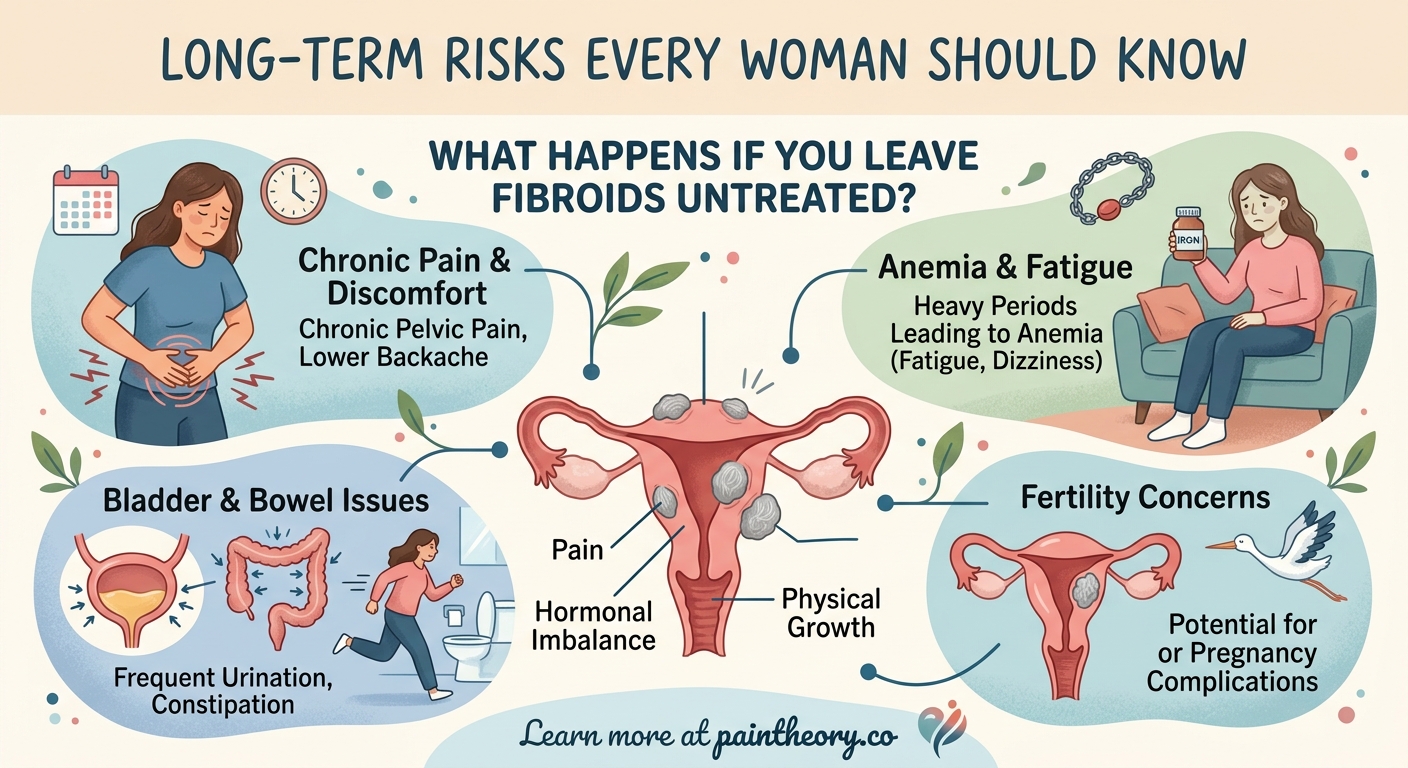
Fibroids don’t always prevent pregnancy, but they create obstacles that worsen over time as the tumors grow.
How untreated fibroids interfere with conception:
- Submucosal fibroids bulge into the uterine cavity, leaving less room for embryo implantation
- Large fibroids block fallopian tubes, preventing sperm from reaching eggs
- Fibroids alter uterine contractions needed to transport sperm
- Blood flow to the uterine lining decreases, creating a hostile environment for embryos
If you do conceive with fibroids, the risks multiply. Fibroids compete with the growing fetus for space and blood supply. They increase the likelihood of:
- Miscarriage, especially in the first trimester
- Placental abruption (placenta separating from the uterine wall)
- Preterm labor and delivery
- Abnormal fetal positioning requiring cesarean delivery
- Postpartum hemorrhage
Many women delay fibroid treatment, thinking they’ll address it after having children. But fibroids typically grow larger during your reproductive years. A 3 cm fibroid at age 32 might be 8 cm by age 37, significantly reducing your fertility options.
The relationship between fibroids and weight changes can also affect hormonal balance and ovulation patterns.
Bladder and Bowel Dysfunction
As fibroids grow, they don’t just stay within the uterus. They press against surrounding organs, creating a cascade of problems.
Bladder symptoms develop gradually. You might first notice you need to urinate more frequently. Then you start waking up multiple times at night. Eventually, you can’t make it through a meeting or car ride without a bathroom break.
Large fibroids can:
- Compress the bladder, reducing its capacity
- Prevent complete bladder emptying, leading to infections
- Block urine flow, causing kidney damage in severe cases
- Create a constant feeling of pressure or fullness
Bowel issues are equally disruptive. Fibroids pressing on the rectum cause:
- Chronic constipation resistant to dietary changes
- Painful bowel movements
- Hemorrhoids from straining
- Bloating and abdominal distension
| Fibroid Location | Primary Symptoms | Progression Timeline |
|---|---|---|
| Anterior (front) | Frequent urination, bladder pressure | 6-18 months |
| Posterior (back) | Constipation, rectal pressure, back pain | 12-24 months |
| Fundal (top) | Upper abdominal bloating, rib pain | 18-36 months |
| Lateral (side) | Unilateral pelvic pain, leg pain | Variable |
These symptoms don’t improve on their own. The fibroids continue growing, and the pressure intensifies.
Chronic Pelvic Pain and Quality of Life Decline
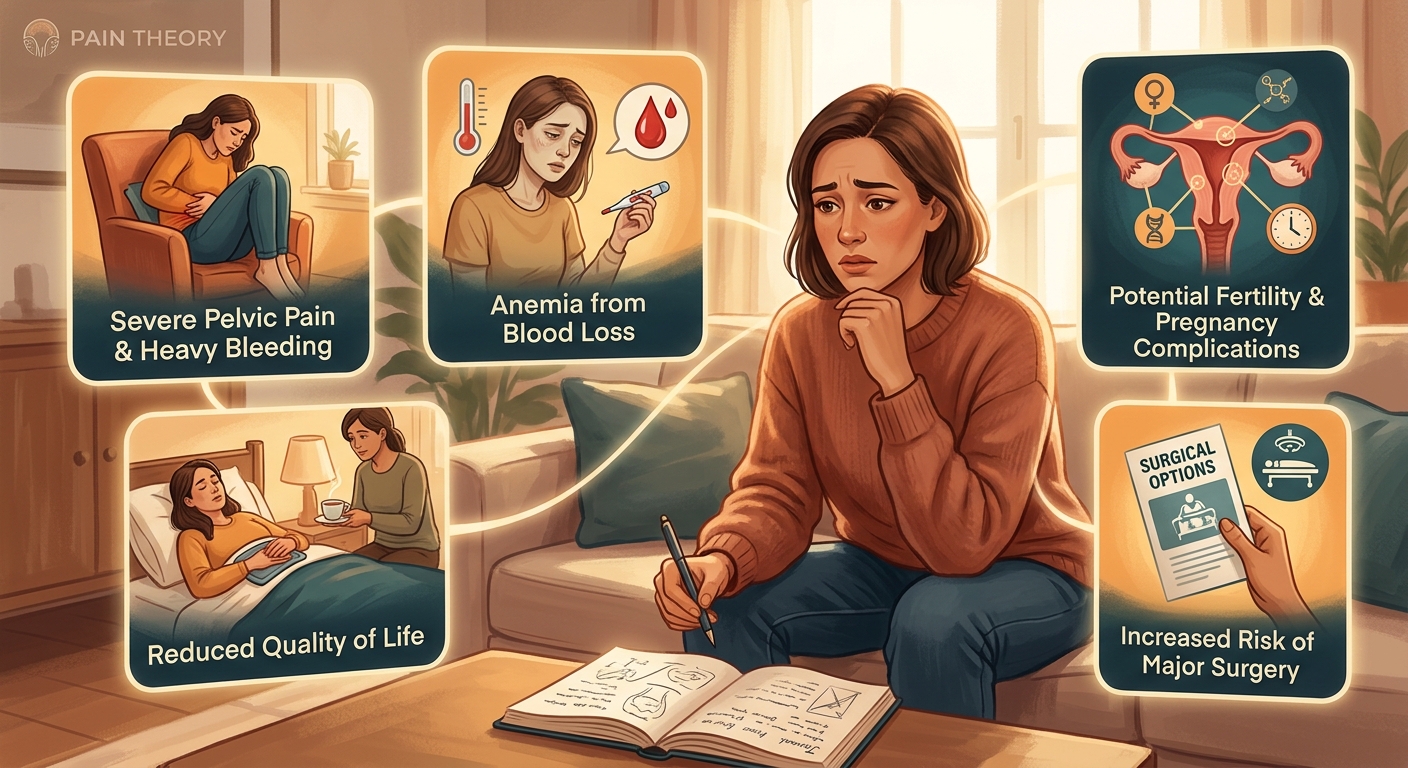
Pain from fibroids operates differently than acute injuries. It builds slowly, becoming part of your daily background noise until you can’t remember what normal felt like.
Fibroid pain has several sources:
The fibroid itself stretches the uterine wall and surrounding ligaments. Larger fibroids outgrow their blood supply, causing tissue death (degeneration) that triggers intense cramping. Some women describe it as labor-like contractions that last for days.
Nerve compression adds another layer. Fibroids pressing on pelvic nerves create:
- Sharp, shooting pains down the legs
- Lower back pain that radiates to the hips
- Pain during intercourse (dyspareunia)
- Constant pelvic heaviness or pressure
This chronic pain affects every aspect of life. Women with untreated symptomatic fibroids report:
- Missing an average of 2-3 workdays per month
- Avoiding social activities and exercise
- Relationship strain from painful intercourse
- Depression and anxiety from unrelenting symptoms
The pain can become self-perpetuating. Chronic pain changes how your nervous system processes signals, making you more sensitive to discomfort over time. This phenomenon, called central sensitization, means that even small fibroids can cause disproportionate pain once the nervous system has been primed.
Many women don’t recognize the early warning signs until symptoms have progressed significantly.
Risk of Rapid Growth and Malignancy
Most fibroids grow slowly and predictably. But some don’t follow the rules.
Rapid fibroid growth raises two concerns. First, it accelerates all the complications already discussed. A fibroid that doubles in size over six months creates urgent problems with bleeding, pain, and organ compression.
Second, though rare, rapid growth can indicate leiomyosarcoma, a malignant tumor that mimics benign fibroids. This cancer occurs in fewer than 1 in 1,000 women with fibroids, but the consequences are serious.
Warning signs that warrant immediate evaluation:
- Fibroid growth after menopause (when fibroids typically shrink)
- Rapid size increase on imaging studies
- Severe pain that doesn’t respond to typical treatments
- Unexplained weight loss
- Abnormal vaginal bleeding patterns
Here’s the challenge: you can’t distinguish benign from malignant fibroids without surgical removal and pathology testing. Most doctors recommend monitoring fibroid size with periodic ultrasounds. But if you’re not getting treatment, you might not be getting adequate monitoring either.
Postmenopausal women face unique risks. Estrogen typically fuels fibroid growth, so tumors should shrink after menopause. If yours are growing instead, that’s a red flag requiring investigation.
Treatment Becomes More Complex and Invasive
The longer you wait, the fewer options you have.
Small fibroids (under 5 cm) can often be managed with:
- Hormonal medications to control bleeding
- Minimally invasive procedures like uterine artery embolization
- Focused ultrasound ablation
- Laparoscopic myomectomy (fibroid removal through small incisions)
Large fibroids (over 10 cm) or multiple fibroids often require:
- Open abdominal myomectomy with longer recovery
- Hysterectomy (uterus removal)
- Multiple surgeries if you want to preserve fertility
- Higher complication rates and blood loss during surgery
Size matters because surgical difficulty increases exponentially. Removing a 4 cm fibroid is straightforward. Removing a 12 cm fibroid involves navigating distorted anatomy, controlling significant blood loss, and reconstructing the uterus.
Treatment complexity also affects recovery. Laparoscopic procedures typically mean 1-2 weeks of downtime. Open surgery requires 6-8 weeks. The longer you delay, the more likely you’ll need the more invasive option.
Some women hope natural approaches will eliminate the need for medical intervention. While lifestyle changes can help manage symptoms, they rarely shrink established fibroids significantly.
Managing Pain While You Decide
If you’re not ready for treatment but symptoms are affecting your life, certain strategies can help bridge the gap.
For severe cramping and pelvic pain, understanding whether heat or cold therapy works better for your specific symptoms makes a real difference in daily comfort.
Pain medication options vary in effectiveness. Learning about different pain medications and their mechanisms helps you work with your doctor to find the right approach.
Some women find that targeted stretching routines reduce pelvic tension and improve mobility, even when the underlying fibroids remain.
Sleep disruption from pain and frequent urination creates a vicious cycle. Strategies for managing sleep when pain interferes can improve your overall resilience and decision-making capacity.
For working women, adapting your workspace and daily routine helps maintain productivity despite symptoms.
The Timeline: What to Expect Year by Year
Fibroid progression isn’t linear, but patterns emerge.
Year 1: Symptoms are noticeable but manageable. You adapt your routine around heavier periods. Fatigue increases slightly.
Year 2-3: Symptoms worsen noticeably. You need time off work during your period. Iron levels drop despite supplements. Bladder symptoms develop.
Year 4-5: Quality of life significantly impaired. Chronic pain affects relationships and mental health. Anemia becomes severe. Fibroids are now large enough to limit treatment options.
Year 6+: Emergency situations become more likely. You might face hospitalization for severe bleeding or anemia. Surgery is often the only remaining option.
This timeline varies based on fibroid location, size, and your individual hormones. Some women progress faster. Others maintain stable symptoms for years.
The key question isn’t whether fibroids will cause problems, but when and how severe those problems will become.
Making the Treatment Decision
Choosing to treat fibroids isn’t about fear. It’s about maintaining control over your health and options.
Consider treatment when:
- Symptoms interfere with work, relationships, or activities you value
- Anemia develops despite iron supplementation
- You’re planning pregnancy within the next few years
- Fibroids are growing rapidly on imaging studies
- Bladder or bowel function is compromised
- Pain requires regular medication to manage
Watchful waiting makes sense when:
- Fibroids are small and asymptomatic
- You’re close to menopause (within 2-3 years)
- You have medical conditions that make surgery risky
- Symptoms are minimal and stable
The decision should be yours, made with complete information about both the risks of treatment and the risks of waiting.
Understanding Your Body’s Signals
Your body communicates clearly if you know what to listen for.
Increasing fatigue isn’t just about being busy. Track whether you feel winded doing activities that used to be easy. Notice if you’re craving ice or non-food items (a sign of severe iron deficiency called pica).
Pay attention to bleeding patterns. Soaking through a pad or tampon every hour, passing clots larger than a quarter, or bleeding lasting more than seven days all warrant medical evaluation.
Pelvic pressure that worsens over months, not days, suggests fibroid growth. The same applies to bladder symptoms that progressively interfere with sleep and daily activities.
Document your symptoms. Note frequency, severity, and impact on your life. This information helps your doctor understand progression and guides treatment timing.
If you’re experiencing multiple symptoms, checking for other conditions with similar presentations ensures accurate diagnosis and appropriate treatment.
When Waiting Becomes More Dangerous Than Acting
There’s a tipping point where monitoring becomes riskier than intervention.
Severe anemia (hemoglobin below 7 g/dL) can cause heart failure. Your heart works overtime trying to deliver oxygen with too few red blood cells. This isn’t theoretical. It happens to women who delay treatment too long.
Kidney damage from chronic urinary obstruction is often irreversible. By the time you notice decreased urine output or back pain, permanent damage may have occurred.
Fibroid degeneration causes sudden, severe pain that sometimes requires emergency surgery. You lose the ability to plan treatment on your terms.
Understanding when symptoms cross into emergency territory helps you recognize situations requiring immediate medical attention.
These aren’t scare tactics. They’re realities that affect thousands of women who thought they had more time.
Your Health Deserves Attention Now
Fibroids don’t define you, but ignoring them won’t make them disappear.
You deserve to sleep through the night without waking up to change pads or use the bathroom. You deserve energy to exercise, work, and enjoy time with people you love. You deserve intimacy without pain.
Treatment isn’t about being weak or giving up. It’s about reclaiming your life from symptoms that have slowly taken over.
Start by scheduling a comprehensive evaluation if you haven’t had one recently. Get updated imaging to assess current fibroid size. Have your iron levels checked. Ask about all available treatment options, from least to most invasive.
Then make a decision based on your values, your timeline, and your tolerance for current symptoms. Not based on fear of treatment or hope that things will magically improve.
Your future self will thank you for taking action while you still have choices.