You’ve been dealing with heavy periods, pelvic pressure, or that nagging lower back pain that just won’t quit. Maybe your ultrasound report mentioned “uterine fibroids” and now your mind is racing. You have a doctor’s appointment coming up, and you want to make the most of it. But once you’re in that exam room, it’s easy to forget half the things you wanted to ask. That’s why having a solid list of questions to ask your doctor about fibroids can change everything. It turns you from a passive patient into an active partner in your care.
Asking the right questions about fibroids helps you understand your diagnosis, evaluate treatment options, and avoid unnecessary procedures. Focus on five areas: confirmation of diagnosis, symptom impact, treatment risks and benefits, fertility considerations, and long-term management. Prepare a list before your visit and don’t leave until you feel heard.
Why the Right Questions Change Everything
A typical doctor’s appointment runs about 15 to 20 minutes. That is not a lot of time to process complex medical information while sitting in a paper gown. When you walk in with a prepared set of questions to ask your doctor about fibroids, you skip the awkward “um, I had a question but now I forgot it” moment.
Research shows that patients who actively ask questions during appointments report higher satisfaction and better treatment outcomes. You are not being difficult. You are being smart. Your body is the only one you have, and fibroids affect your quality of life in ways that matter most to you, not to a textbook.
Before we get into the specific questions, let’s talk about how to set yourself up for a productive visit.
Step-by-Step: How to Prepare for Your Fibroid Appointment
- Track your symptoms for at least one full cycle. Write down the number of pads or tampons you use per day, the intensity of cramps on a scale of 1 to 10, and any bloating or back pain. This data is gold for your doctor.
- Bring a list of your medications and supplements. Some natural remedies thin the blood, which matters if you might need surgery. Include everything, even herbal teas.
- Write down your questions in order of priority. If you only get through the first three, you have already won. Put the most important ones at the top.
- Bring a trusted friend or family member. They can take notes, ask follow-ups, and help you remember the answers later. Two sets of ears are better than one.
- Ask for clarification if something doesn’t make sense. It is okay to say, “Can you explain that again in plain English?” Doctors appreciate engaged patients.
Now let’s get into the actual questions to ask your doctor about fibroids. I have grouped them into categories so you can find what matters most to you.
Confirming Your Diagnosis and Understanding Your Fibroids
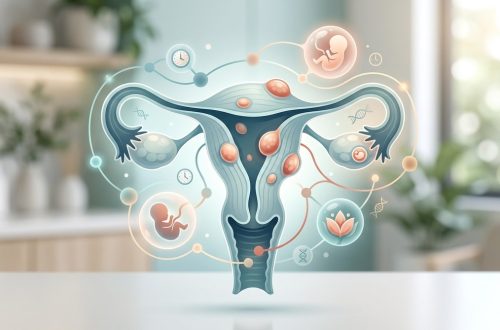
Not all fibroids are the same. Their size, location, and number all affect your symptoms and treatment options. Start here.
- What type of fibroids do I have? (Subserosal, intramural, submucosal, or pedunculated?)
- How many fibroids are there, and what are their sizes?
- Could anything else be causing my symptoms? (This is especially important if you also have endometriosis or adenomyosis.)
- Do I need additional imaging like an MRI or a saline infusion sonogram to get a clearer picture?
Many women discover they have fibroids during a routine pelvic exam or ultrasound. But sometimes what looks like a fibroid could be an ovarian cyst or another condition. Getting a firm diagnosis prevents the wrong treatment path. If you experience pelvic pain that feels different from typical cramps, it helps to understand the difference between conditions like fibroids and endometriosis. You can read more in our guide on
Tracking Symptoms That Matter
Your doctor will ask about symptoms, but they often don’t ask the specific questions that reveal how much fibroids are disrupting your life. Bring these up yourself.
- Is my bleeding considered heavy? What is the normal range?
- Could my fatigue or shortness of breath be caused by anemia from heavy periods?
- Why do I feel pressure in my lower abdomen or need to urinate frequently?
- Is it normal to have lower back pain that gets worse around my period?
It helps to keep a symptom diary for at least two weeks before your appointment. Note the date, the symptom, its severity, and any triggers. For example: “Day 3 of period: used 8 super tampons plus a pad, cramps were a 7/10, missed work.” This kind of detail helps your doctor see the full picture.
Some early warning signs of fibroids are easy to brush off as normal period troubles. If you want to know which signs women often miss, check out our article on
Treatment Options: What Actually Works and What Are the Trade-Offs
This is where the big decisions happen. Treatment for fibroids ranges from watchful waiting to major surgery, and the right option depends on your age, your symptoms, and whether you want to get pregnant in the future.
Here is a table that compares the most common treatments in 2026. Use it to guide your conversation.
| Treatment | How It Works | Recovery Time | Best For |
|---|---|---|---|
| Watchful waiting | Monitor with regular ultrasounds, no active treatment | None | Women with mild symptoms or nearing menopause |
| Hormonal birth control (pills, IUD, shot) | Regulates periods, reduces bleeding | Immediate | Symptom relief without surgery; no effect on fibroid size |
| GnRH agonists (like Lupron) | Temporarily shrinks fibroids by lowering estrogen | Weeks to months | Pre-surgery shrinkage; short-term use only |
| Uterine fibroid embolization (UFE) | Blocks blood flow to fibroids, causing them to shrink | 1 to 2 weeks recovery | Women who want to keep their uterus and avoid major surgery |
| Radiofrequency ablation | Uses heat to destroy fibroid tissue | A few days | Women who want a minimally invasive option; may not be covered by all insurers |
| Myomectomy | Surgical removal of fibroids while leaving the uterus intact | 2 to 6 weeks | Women who want to preserve fertility or avoid hysterectomy |
| Hysterectomy | Removal of the entire uterus | 6 to 8 weeks | Women who are done childbearing and want definitive relief |
When you talk to your doctor, ask these specific questions:
- Which treatments are appropriate for my type and size of fibroids?
- What are the success rates for each option? How likely is it that the fibroids will come back?
- What are the risks? For example, can UFE affect my ovarian function? Can myomectomy lead to scar tissue?
- How long will it take to feel better after the procedure?
- What are the costs, and will my insurance cover them?
“The best treatment for fibroids is the one that aligns with your personal goals. If you want to preserve fertility, myomectomy or UFE may be better than hysterectomy. If you are done having children and want a permanent solution, hysterectomy might be right for you. Ask your doctor directly: ‘Based on my age, my health, and my family plans, what would you recommend for someone like me?'” — Dr. Sarah Chen, Gynecologic Surgeon
If you are leaning toward non-surgical options, you can learn more about https://paintheory.co/effective-non-surgical-treatments-for-uterine-fibroids-you-should-know/ and whether natural strategies can complement your treatment plan. Many women also ask about https://paintheory.co/how-to-shrink-fibroids-naturally-evidence-based-strategies-that-actually-work/ for symptom management.
Fertility, Pregnancy, and Future Planning
If you are still in your childbearing years, this category is critical. Many women worry that fibroids will make it hard to get pregnant or cause pregnancy complications. The truth depends on the location of the fibroids.
- Could my fibroids affect my ability to conceive?
- If I get pregnant, will the fibroids increase my risk of miscarriage, preterm labor, or cesarean delivery?
- Will removing the fibroids improve my chances of a healthy pregnancy? Or could the surgery create scar tissue that makes pregnancy harder?
- If I need a myomectomy, how long should I wait before trying to conceive?
For some women, fibroids can also cause weight gain and bloating that feels like they are gaining weight even when they are not. This can be confusing if you are also trying to get pregnant. Read more about that connection in
Long-Term Management and Quality of Life
Fibroids are not one-and-done for most women. They can grow back after treatment, and symptoms can change over time. Ask about the long game.
- How often should I have follow-up ultrasounds or exams?
- What lifestyle changes (diet, exercise, stress management) might help reduce my symptoms?
- Are there any foods I should avoid or eat more of to support hormone balance?
- What should I do if my symptoms suddenly get worse or I develop new pain?
Managing fibroids is often about finding a routine that works for you. Some women find that an anti-inflammatory diet helps with bloating and pain. Others benefit from gentle movement. If you are considering a hysterectomy, weigh the pros and cons carefully. Our guide on https://paintheory.co/should-you-get-a-hysterectomy-for-fibroids-weighing-your-options-in-2026/ can help you think through that decision.
Putting It All Together: A Quick Reference Checklist
Before your appointment, print out this list and circle the ones that matter to you.
- [ ] What type of fibroids do I have, and where are they located?
- [ ] How large are they, and how fast have they grown?
- [ ] Are my symptoms definitely caused by fibroids, or could something else be going on?
- [ ] What are my treatment options, ranked from least to most invasive?
- [ ] How will each treatment affect my fertility and my future pregnancy plans?
- [ ] What are the side effects and recovery times for each option?
- [ ] Are there any natural or lifestyle approaches that could help alongside medical treatment?
- [ ] What signs should I watch for that would mean I need to come back sooner?
- [ ] Can I get a second opinion before making a decision?
Your doctor should take these questions seriously. If they brush you off or make you feel silly for asking, that is a red flag. You deserve a provider who respects your concerns and partners with you.
Your Next Step: Walk Into That Appointment Ready
You now have a powerful set of questions to ask your doctor about fibroids. The hardest part is usually the first step, getting the appointment booked. Once you are in the room, remember that you are the expert on your own body. The doctor brings medical knowledge, but you bring the lived experience of how fibroids affect your sleep, your work, your relationships, and your peace of mind.
Write down your top five questions on a notecard. Bring it with you. Ask them one at a time. Take notes. If something doesn’t feel right, say so. And if you need more time to think about a recommendation, it is perfectly okay to say, “I would like to go home and think about this before I decide.”
You are not alone in this journey. Thousands of women in the United States navigate fibroids every year. With the right questions and a doctor who listens, you can find a path that works for your body and your life.
Now go make that call. Your future self will thank you.