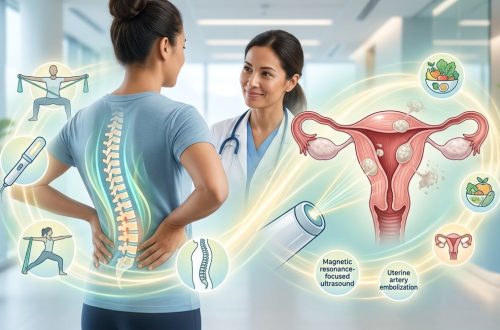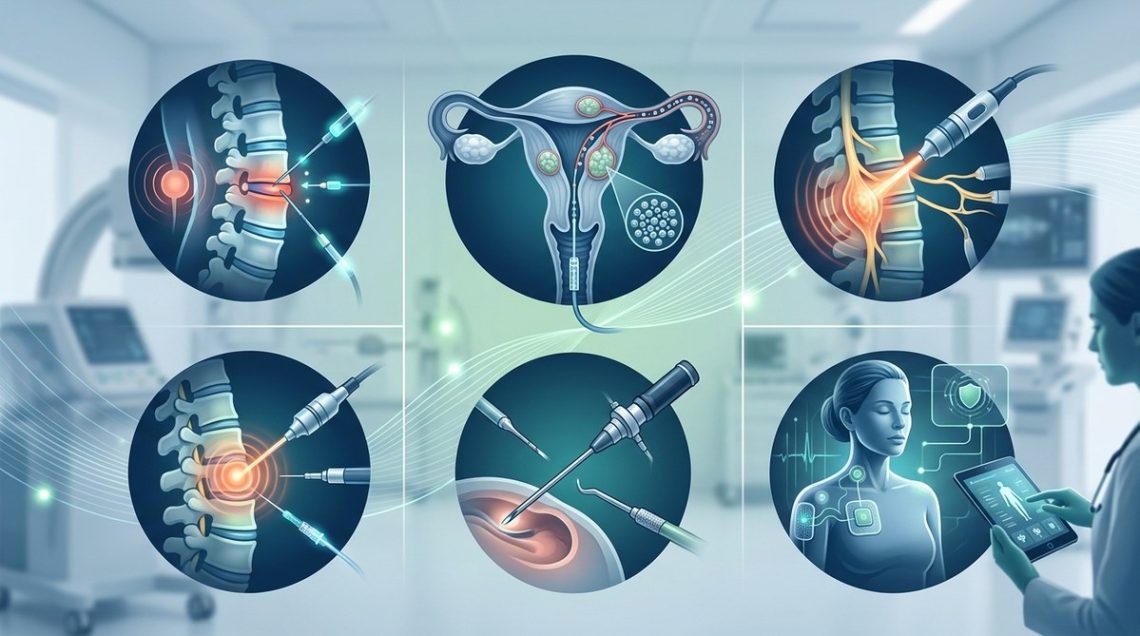
Living with chronic pain from uterine fibroids or a stubborn back condition can feel like a full-time job. You might spend your days managing symptoms, researching options, and wondering if major surgery is your only way out. The good news is that 2026 has brought a wave of advanced, low-downtime treatments that target pain at its source without requiring a hospital stay.
Five key procedures are changing the game for fibroid and back pain relief: radiofrequency ablation, microdiscectomy, laparoscopic myomectomy, spinal decompression therapy, and endometrial ablation. Each offers a targeted approach that reduces recovery time and preserves more healthy tissue. This guide breaks down how they work, who they help most, and what to expect.
Why Minimally Invasive Care Is Growing So Fast
Americans are increasingly choosing procedures that let them return to work and family life within days instead of weeks. Traditional open surgery for fibroids or back pain often requires general anesthesia, large incisions, and a recovery period that can stretch into months. In contrast, the minimally invasive procedures for fibroids and back pain we cover here use small incisions, precise imaging, and advanced energy delivery systems. They reduce blood loss, lower infection risk, and often allow patients to go home the same day.
For women in their 30s, 40s, and 50s who are juggling careers, caregiving, and personal health, this shift is a game changer. You no longer have to choose between getting relief and keeping your life on track.
The Five Procedures Reshaping Treatment in 2026
Let’s walk through each of these modern approaches. We will look at how they work, what conditions they treat best, and what the recovery looks like.
1. Radiofrequency Ablation for Fibroids
Radiofrequency ablation (RFA) delivers targeted heat energy directly into a fibroid. A thin probe is inserted through the cervix or a small abdominal incision. Guided by ultrasound, the probe heats the center of the fibroid to a temperature that destroys the tissue. Over the next few months, your body naturally absorbs the treated cells.
This procedure works best for fibroids that are causing heavy bleeding or pelvic pressure. It is not ideal for very large fibroids that extend above the belly button. Most women describe the sensation as mild cramping. Recovery usually means one to two days of rest.
2. Microdiscectomy for Back Pain
Microdiscectomy is a surgery for herniated discs in the lower back. The surgeon makes a small incision less than an inch long. Using a microscope, they remove the portion of the disc that is pressing on a nerve root. The surrounding muscles and ligaments stay mostly untouched.
This procedure is highly effective for sciatica and radicular pain. Patients often feel relief immediately after surgery. Recovery involves gentle walking and avoiding heavy lifting for about four weeks. Many people return to desk jobs within a week.
3. Laparoscopic Myomectomy
Laparoscopic myomectomy removes fibroids through small keyhole incisions. The surgeon inflates the abdomen with gas to create space, then uses long instruments and a camera to cut out the fibroids. The uterus stays intact, which is important if you plan to become pregnant.
This option is best for women with a moderate number of fibroids that are not too large. Recovery takes about two weeks before you feel back to normal. You will need to avoid strenuous activity for six weeks.
4. Spinal Decompression Therapy
Spinal decompression therapy uses a specialized table or device to gently stretch the spine. This reduces pressure on discs and nerves. Some clinics in 2026 now combine this with traction therapy for better outcomes.
This treatment is non-invasive and can be done in a clinic setting. It helps with general lower back pain, bulging discs, and stiffness. Sessions last about 20 minutes. Many patients go weekly for a few months.
5. Endometrial Ablation
Endometrial ablation destroys the lining of the uterus. It is a good option for women whose fibroids cause very heavy periods but who do not need the fibroids themselves removed. The procedure uses heat, cold, or radiofrequency energy.
Recovery is very short. Most women go back to normal activities the next day. This procedure is not recommended if you want to get pregnant in the future.
Comparing the Options
Here is a table that helps you see the key differences at a glance.
| Procedure | Best For | Typical Recovery | Anesthesia |
|---|---|---|---|
| Radiofrequency ablation | Medium fibroids, heavy bleeding | 1 to 2 days | Local or light sedation |
| Microdiscectomy | Herniated disc, sciatica | 1 to 4 weeks | General anesthesia |
| Laparoscopic myomectomy | Multiple fibroids, future pregnancy | 2 to 6 weeks | General anesthesia |
| Spinal decompression | General back pain, stiffness | None | None |
| Endometrial ablation | Heavy periods from fibroids | 1 day | Local or light sedation |
How to Choose the Right Procedure for You
Selecting the best path depends on your specific situation. Here is a simple process to follow.
- Get a clear diagnosis. Know whether your pain comes from a fibroid, a herniated disc, or something else.
- List your priorities. Do you want to preserve fertility? Do you need to be back at work in three days?
- Talk to a specialist. Ask specifically about the minimally invasive options they offer.
- Review the recovery plan. Be honest about how much time you can take off.
- Consider your pain tolerance. Some procedures use only local numbing, while others require sedation.
What to Expect During Recovery
Recovery varies by procedure, but there are common threads.
- You will likely feel some soreness for the first few days.
- Most patients can walk gently the day after treatment.
- Heavy lifting and intense exercise are usually off limits for two to six weeks.
- Your doctor will give you specific instructions about bathing, driving, and returning to work.
“The biggest mistake I see patients make is rushing back to full activity too soon. Give your body the full recovery window. It pays off in the long run.” Dr. Elena Marquez, minimally invasive surgery specialist.
Common Questions About Minimally Invasive Procedures
Are these procedures covered by insurance?
Most major health plans cover medically necessary procedures. Check with your provider about prior authorization requirements.
Will I need someone to drive me home?
Yes, if you receive any sedation or anesthesia. Plan ahead for a ride.
How do I know if I am a good candidate?
A thorough evaluation with imaging and a physical exam is the only way to know for sure. Many clinics offer free initial consultations.
Can I combine treatments?
Sometimes. For example, a woman might have radiofrequency ablation for fibroids and later get spinal decompression for unrelated back pain. Talk to your care team.
Signs You Might Need a Minimally Invasive Procedure
Pay attention to these warning signals.
- Your pain is not improving with rest, ice, or over the counter medication.
- You are missing work or social events because of symptoms.
- You have tried physical therapy or lifestyle changes without full relief.
- Your fibroids are causing heavy bleeding that affects your daily life.
- You have a herniated disc that is not healing on its own.
If any of these sound familiar, it may be time to schedule a consultation. You can read more about the warning signs of fibroids in our guide on 7 early warning signs of fibroids most women ignore until it’s too late.
The Role of Lifestyle in Supporting Your Recovery
Procedures do a lot of the heavy lifting, but your habits matter too. Here are a few things that help.
- Stay hydrated. Water supports tissue repair.
- Eat anti-inflammatory foods. Berries, leafy greens, and fatty fish are great choices. Our article on anti-inflammatory foods that may reduce fibroid symptoms has more details.
- Get gentle movement. Walking is excellent.
- Avoid smoking and limit alcohol. Both slow healing.
When Surgery Still Makes Sense
Minimally invasive options are not right for everyone. Very large fibroids, severe spinal instability, or complex cases might still require traditional surgery. If you have a condition that needs open surgery, that is okay. The key is to have an honest conversation with your surgeon about all your options.
For women considering hysterectomy, we have a detailed look at the decision in should you get a hysterectomy for fibroids? Weighing your options in 2026.
Your Next Steps Toward Pain Relief
You do not have to live with chronic pain. The minimally invasive procedures for fibroids and back pain available in 2026 offer real hope. They are safer, faster, and more comfortable than ever before.
Start by writing down your symptoms and your goals. Then find a provider who specializes in these techniques. Ask questions. Bring a list. Trust your instincts.
Your path to relief starts with one step. Pick up the phone or send an email today. Your future self will thank you.