
Pain doesn’t always respond to pills or rest. When standard treatments fall short, nerve blocks offer a targeted approach that interrupts pain signals before they reach your brain. This technique has helped millions manage everything from surgical recovery to debilitating chronic conditions, and understanding how it works can help you decide if it’s right for your situation.
Nerve blocks for pain relief use local anesthetics or other medications injected near specific nerves to interrupt pain signals. They can provide temporary or long-term relief for chronic pain, surgical procedures, and acute conditions. The procedure typically takes 15 to 30 minutes, with effects lasting from hours to months depending on the type used. Most patients experience minimal side effects and can resume normal activities within a day.
What Are Nerve Blocks and How Do They Stop Pain?
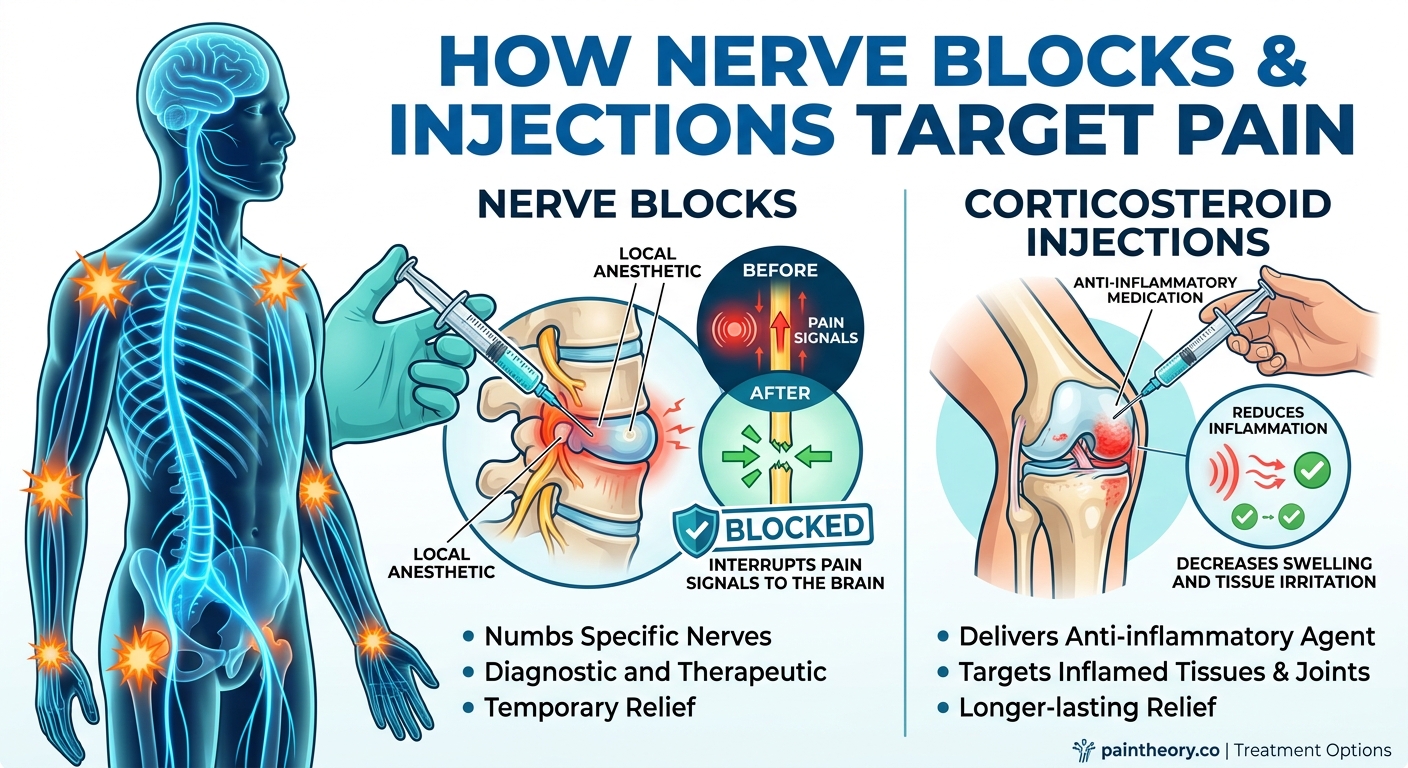
A nerve block is a targeted injection that delivers medication directly to nerves responsible for transmitting pain signals. Think of your nervous system as a network of communication cables. When you injure yourself or develop a chronic condition, these cables send distress signals to your brain. A nerve block temporarily or permanently interrupts those signals.
The medication used depends on your specific needs. Local anesthetics like lidocaine or bupivacaine numb the area for hours. Steroids reduce inflammation around irritated nerves. In some cases, doctors use neurolytic agents that create longer-lasting effects by damaging the nerve’s ability to transmit signals.
The precision matters here. Unlike oral pain medications that affect your entire body, nerve blocks target only the nerves causing your discomfort. This focused approach often means better pain control with fewer systemic side effects.
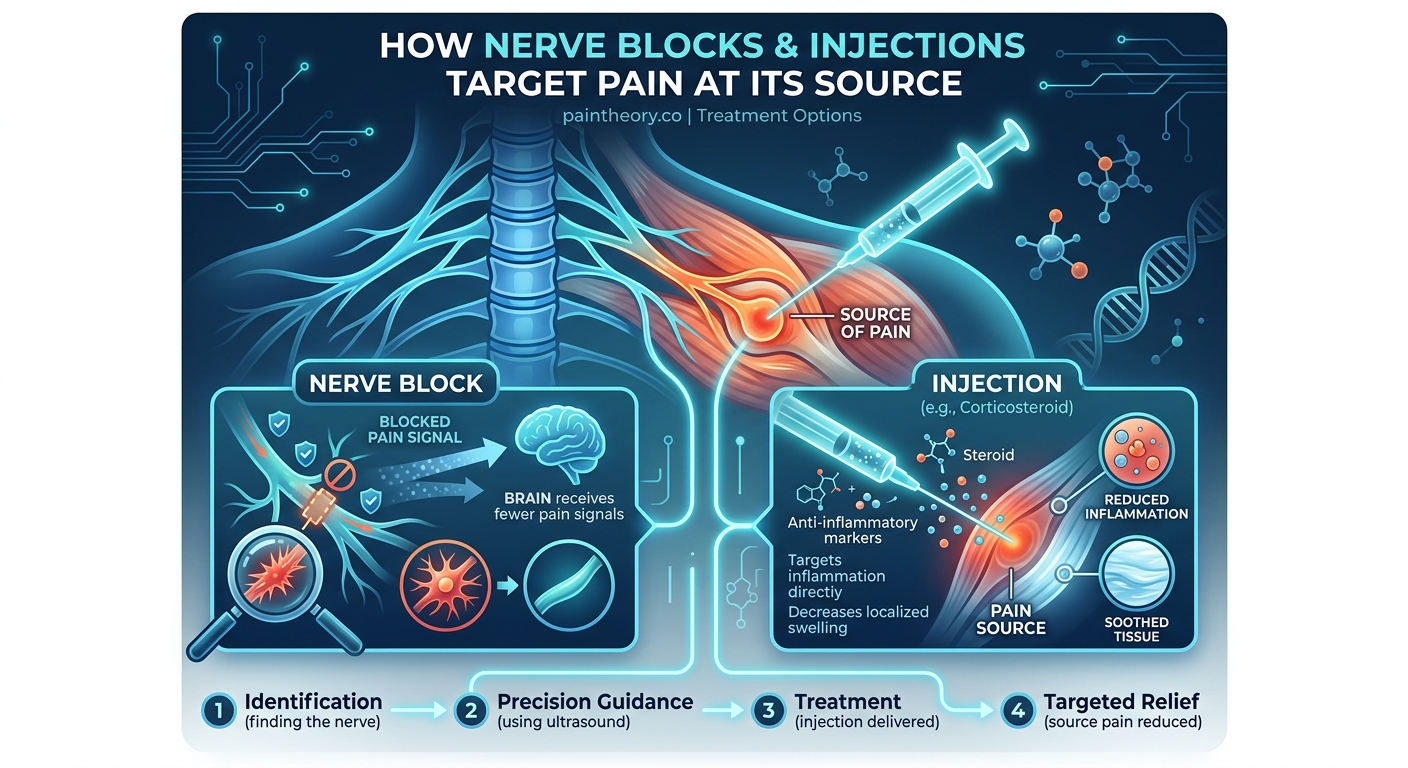
Your doctor identifies the problematic nerve through physical examination, imaging studies, or diagnostic blocks. Once located, they use ultrasound or fluoroscopy (real-time X-ray) to guide the needle to the exact spot. This imaging ensures the medication reaches the right place without damaging surrounding tissue.
Conditions That Respond Well to Nerve Block Treatment
Nerve blocks aren’t a one-size-fits-all solution, but they work remarkably well for specific pain conditions.
Chronic pain conditions:
* Complex regional pain syndrome (CRPS)
* Sciatica and radicular pain
* Trigeminal neuralgia
* Phantom limb pain
* Occipital neuralgia
* Pudendal neuralgia
Surgical applications:
* Post-operative pain management
* Labor and delivery
* Joint replacement procedures
* Abdominal surgeries
* Thoracic procedures
Acute pain scenarios:
* Severe back pain episodes
* Herniated disc flare-ups
* Shingles (herpes zoster)
* Rib fractures
* Cancer-related pain
Many patients find nerve blocks particularly helpful when why does pain become chronic becomes a concern. By breaking the pain cycle early, these injections can prevent acute problems from developing into long-term issues.
For those dealing with back pain that disrupts sleep, nerve blocks may offer relief where other treatments have failed. Some patients report better rest after receiving blocks for spinal conditions, addressing problems similar to why your lower back pain gets worse at night.
Types of Nerve Blocks and Their Specific Uses
Different nerve blocks target different areas and serve distinct purposes. Understanding these categories helps you have informed conversations with your healthcare provider.
| Block Type | Target Area | Primary Uses | Duration |
|---|---|---|---|
| Peripheral | Single nerve or nerve group | Localized pain, surgical anesthesia | 4-24 hours |
| Sympathetic | Sympathetic nerve chain | CRPS, vascular pain | Days to months |
| Epidural | Spinal nerve roots | Back pain, labor, surgery | Hours to days |
| Facet joint | Spine joints | Arthritis, mechanical back pain | Weeks to months |
| Stellate ganglion | Neck/upper extremity nerves | CRPS, vascular issues | Variable |
| Celiac plexus | Abdominal nerves | Pancreatic cancer pain | Months |
Peripheral nerve blocks are the most common. Your doctor might use one for knee surgery, carpal tunnel pain, or shoulder procedures. These blocks numb a specific region without affecting your consciousness or breathing.
Sympathetic blocks target the sympathetic nervous system, which controls involuntary functions like blood flow and sweating. These prove especially valuable for CRPS and certain vascular conditions where the sympathetic system amplifies pain signals.
Epidural blocks inject medication into the space around your spinal cord. You’ve probably heard of these in the context of childbirth, but they also treat herniated discs and spinal stenosis.
Facet joint blocks address pain from the small joints connecting your vertebrae. Arthritis in these joints causes significant discomfort, particularly during movement or after sitting for extended periods.
What Happens During a Nerve Block Procedure
Knowing what to expect reduces anxiety and helps you prepare properly. Here’s the typical sequence:
- You’ll arrive at an outpatient clinic or surgical center and change into a gown.
- A nurse checks your vital signs and confirms which side needs treatment.
- You’ll lie on a procedure table in a position that gives the doctor clear access to the target area.
- The skin is cleaned with antiseptic solution and draped with sterile towels.
- The doctor numbs the skin with a small injection of local anesthetic.
- Using imaging guidance, they advance a thin needle to the target nerve.
- A small test dose confirms proper placement.
- The full medication dose is injected slowly.
- The needle is removed and a small bandage applied.
- You rest in a recovery area for 15 to 30 minutes while staff monitors you.
Most procedures take 15 to 30 minutes from start to finish. You’ll feel pressure during needle placement, but the initial numbing injection minimizes discomfort. Some patients describe a brief tingling or warmth as the medication spreads.
The imaging equipment looks intimidating, but it’s there for your safety. Real-time visualization ensures precision and reduces the risk of complications.
You’ll need someone to drive you home. Even if you feel fine, the medications can affect your coordination temporarily. Plan to take it easy for the rest of the day.
“The most successful nerve block outcomes happen when patients understand that pain relief may not be immediate. Some blocks work within minutes, while others take days to reach full effect as inflammation subsides. Patience during this window is crucial.” — Dr. Sarah Mitchell, Pain Management Specialist
How Long Relief Lasts and What Affects Duration
The million-dollar question: how long will this actually help?
Duration varies widely based on several factors. A diagnostic block with short-acting anesthetic might last only a few hours. Its purpose is to confirm which nerve causes your pain, not provide long-term relief.
Therapeutic blocks using longer-acting medications typically provide relief for days to weeks. Adding steroids can extend this to months for some patients.
Radiofrequency ablation, a related technique that uses heat to interrupt nerve signals, can provide relief for six months to two years. This option makes sense for patients who respond well to temporary blocks but need longer-lasting solutions.
Factors affecting duration:
* Type of medication used
* Severity of underlying condition
* Individual metabolism and response
* Accuracy of needle placement
* Presence of inflammation
* Whether this is your first block or a repeat procedure
Some patients experience relief that outlasts the medication’s pharmacological effects. This happens because breaking the pain cycle allows inflamed tissues to heal and resets sensitized nerve pathways. Understanding how your brain creates and amplifies pain sensations helps explain why temporary blocks sometimes produce lasting benefits.
For chronic conditions, you might need repeat blocks. Many patients receive a series of three injections spaced weeks apart. This approach builds on the relief from each previous block.
Comparing Nerve Blocks to Other Pain Management Approaches
Nerve blocks occupy a specific niche in pain treatment. They’re not always the first choice, but they excel in certain situations.
Oral medications affect your entire body. Pain pills work for many conditions, but they come with side effects like drowsiness, constipation, or dependency risks. Nerve blocks deliver medication exactly where you need it, minimizing systemic effects. For a detailed comparison, see comparing pain medications and their applications.
Physical therapy addresses pain through movement and strengthening. It’s excellent for musculoskeletal issues but takes weeks to show results. Nerve blocks can provide immediate relief that makes physical therapy more tolerable and effective.
Surgery permanently alters anatomy to remove pain sources. It’s definitive but carries significant risks and recovery time. Nerve blocks serve as both a diagnostic tool (does blocking this nerve help?) and a way to avoid or delay surgery. When should you consider surgery for chronic pain relief becomes clearer after trying less invasive options like blocks.
Ablation techniques create longer-lasting effects than injections but aren’t as easily reversible. If a nerve block doesn’t help, the medication wears off harmlessly. If an ablation doesn’t work or causes unexpected numbness, you’re stuck with the results until nerves regenerate.
Potential Risks and Side Effects You Should Know About
Nerve blocks are generally safe, but no medical procedure is risk-free. Understanding possible complications helps you make informed decisions and recognize problems early.
Common, minor side effects:
* Temporary numbness or weakness in the blocked area
* Bruising or soreness at the injection site
* Lightheadedness immediately after the procedure
* Temporary increase in pain (post-injection flare)
Less common but more serious risks:
* Infection at the injection site
* Bleeding or hematoma formation
* Nerve damage from needle trauma
* Allergic reaction to medications
* Unintended block of nearby nerves
The risk of serious complications is quite low, typically less than 1%. Using imaging guidance has dramatically improved safety by ensuring precise needle placement.
Some patients experience a paradoxical increase in pain for 24 to 48 hours after injection. This flare reaction happens when the needle irritates tissues. It doesn’t mean the block failed. Ice and over-the-counter anti-inflammatories usually manage this temporary discomfort.
Nerve damage is the concern most patients ask about. Modern techniques and imaging make this rare. When it does occur, it’s usually temporary. Permanent nerve injury from a properly performed block is exceptionally uncommon.
If you have certain conditions, your doctor might recommend against nerve blocks or take extra precautions:
* Active infection near the injection site
* Bleeding disorders or blood-thinning medications
* Allergy to local anesthetics
* Severe heart or lung disease
* Pregnancy (for certain block types)
Preparing for Your Procedure and Recovery Expectations
Proper preparation improves outcomes and reduces anxiety. Your doctor will provide specific instructions, but here are general guidelines.
Before the procedure:
* Inform your doctor about all medications, especially blood thinners
* Ask whether to continue or stop specific medications
* Arrange transportation home
* Wear comfortable, loose-fitting clothing
* Avoid eating for a few hours if receiving sedation
* Bring a list of questions you want answered
After the procedure:
* Rest for the remainder of the day
* Apply ice to the injection site if sore
* Avoid strenuous activity for 24 hours
* Keep the injection site clean and dry
* Monitor for signs of infection (increasing redness, warmth, fever)
* Track your pain levels to report at follow-up
You might feel immediate numbness or weakness in the blocked area. This is normal and expected. Don’t panic if your leg feels heavy or your arm seems clumsy. The sensation wears off as the anesthetic metabolizes.
Some patients worry they won’t know if the block worked because the numbing effect masks everything. Your doctor accounts for this. They’ll schedule a follow-up to assess your response once the immediate anesthetic effects fade but the therapeutic benefits remain.
Keep a pain diary for the first week. Note your pain levels at different times of day and during various activities. This information helps your doctor determine whether additional blocks would help and guides long-term treatment planning.
Making the Decision That’s Right for Your Pain
Nerve blocks work best as part of a comprehensive pain management strategy, not as a standalone cure. They buy you time and relief while you address underlying causes through physical therapy, lifestyle changes, or other treatments.
The decision to try a nerve block should involve weighing potential benefits against risks, considering your specific condition, and understanding realistic expectations. If oral medications aren’t controlling your pain adequately, if side effects limit your ability to take effective doses, or if you want to avoid or delay surgery, nerve blocks deserve serious consideration.
Talk with your doctor about your goals. Are you hoping to get through a specific event, like a family wedding or important work presentation? Are you trying to participate in physical therapy that’s currently too painful? Do you need diagnostic information to guide surgical decisions? Your objectives shape which type of block makes sense and how to measure success.
Many patients find that nerve blocks for pain relief provide the breakthrough they needed to reclaim activities they’d given up. Whether that means playing with grandchildren, returning to work, or simply sleeping better when chronic pain keeps you awake, targeted nerve blocks offer a valuable tool in the fight against persistent pain.