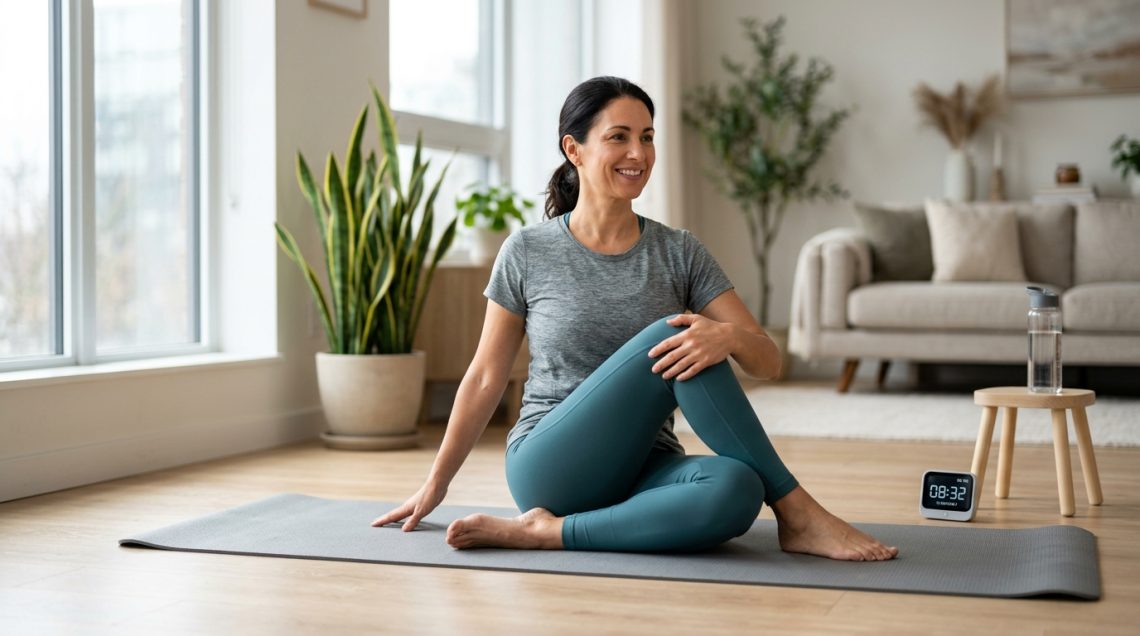
Living with chronic pain changes how you move through your day. You might skip social events, avoid activities you used to love, or feel like your body is working against you. The good news is that a consistent daily stretching routine for chronic pain can help you regain control without relying solely on medications or expensive treatments.
A structured 15-minute daily stretching routine can reduce chronic pain intensity by improving flexibility, circulation, and muscle tension. This evidence-based approach targets common conditions like back pain, arthritis, and fibromyalgia using gentle movements that work with your nervous system to calm pain signals. Consistency matters more than intensity, and most people notice improvements within two to four weeks of regular practice.
Why Stretching Works for Chronic Pain
Your nervous system learns pain patterns over time. When you hurt for months or years, your brain creates and amplifies pain sensations even after the initial injury heals.
Stretching interrupts this cycle in several ways.
First, it increases blood flow to tight muscles and stiff joints. Better circulation means more oxygen and nutrients reach damaged tissues, which speeds healing and reduces inflammation.
Second, gentle stretching activates mechanoreceptors in your muscles and joints. These sensors send non-pain signals to your spinal cord that compete with pain signals. Think of it as turning down the volume on your pain alarm system.
Third, regular movement prevents the muscle guarding and protective postures that make pain worse over time. You know that feeling when you tense up because something hurts, and then the tension itself creates more pain? Stretching breaks that pattern.
Research shows that people who maintain a consistent stretching routine report 30-40% reductions in pain intensity after eight weeks. That’s comparable to some pain medications, but without the side effects.
Understanding Your Pain Before You Start
Not all chronic pain responds the same way to stretching. You need to match your routine to your specific condition.
Back pain often stems from tight hip flexors, weak core muscles, and stiff spinal joints. Your stretching should focus on lengthening the muscles that pull your spine out of alignment.
Arthritis pain comes from inflamed joints and reduced range of motion. You want gentle movements that maintain joint mobility without triggering inflammation.
Fibromyalgia involves widespread muscle pain and nervous system sensitivity. Your approach needs to be extra gentle because pain receptors work differently when you have this condition.
If your lower back pain gets worse at night, morning stretches become especially important. They reset your spine after hours of stillness.
Watch for warning signs that mean you should stop and consult a doctor:
- Sharp, shooting pain that radiates down your legs
- Numbness or tingling in your hands or feet
- Loss of bladder or bowel control
- Pain that worsens progressively despite stretching
- Fever or unexplained weight loss alongside pain
These are back pain red flags that require medical evaluation.
The 15-Minute Daily Stretching Routine
This routine targets the most common chronic pain areas. Do these movements in order, breathing deeply throughout.
1. Cat-Cow Stretch (2 minutes)
Start on your hands and knees. Your wrists should align under your shoulders, knees under your hips.
Inhale as you drop your belly toward the floor and lift your chest and tailbone. This is cow position.
Exhale as you round your spine toward the ceiling, tucking your chin and tailbone. This is cat position.
Move slowly between these positions for two minutes. This mobilizes your entire spine and warms up your back muscles.
2. Child’s Pose (2 minutes)
From hands and knees, sit your hips back toward your heels. Extend your arms forward and rest your forehead on the floor or a pillow.
Breathe into your lower back. You should feel a gentle stretch along your spine and hips.
If your hips don’t reach your heels comfortably, place a folded blanket between your thighs and calves for support.
3. Supine Knee-to-Chest (2 minutes per side)
Lie on your back. Bend your right knee and pull it gently toward your chest with both hands.
Keep your left leg extended on the floor or bent if that feels better.
Hold for 30 seconds, then switch legs. Repeat three times per side.
This releases tight lower back muscles and hip flexors.
4. Seated Spinal Twist (1 minute per side)
Sit on the floor with your legs extended. Bend your right knee and place your right foot on the outside of your left knee.
Place your right hand on the floor behind you. Wrap your left arm around your right knee.
Gently twist to the right, looking over your right shoulder. Hold for one minute, breathing deeply.
Switch sides and repeat.
5. Hip Flexor Stretch (1 minute per side)
Kneel on your right knee with your left foot forward, forming a 90-degree angle with your left knee.
Gently push your hips forward until you feel a stretch in the front of your right hip.
Keep your torso upright. Don’t arch your back.
Hold for one minute, then switch sides.
Tight hip flexors pull on your lower back and contribute to chronic pain.
6. Hamstring Stretch (1 minute per side)
Sit on the floor with your right leg extended and your left leg bent, foot against your right inner thigh.
Hinge forward from your hips, reaching toward your right foot. Keep your back straight.
You should feel the stretch in the back of your right thigh, not your lower back.
Hold for one minute, then switch sides.
7. Neck Rolls (2 minutes)
Sit or stand with good posture. Drop your right ear toward your right shoulder.
Slowly roll your head forward, bringing your chin toward your chest, then to the left shoulder.
Continue these slow circles for one minute in each direction.
Many people hold tension in their necks, which contributes to headaches and upper back pain.
Common Mistakes That Make Pain Worse
| Mistake | Why It Hurts | Better Approach |
|---|---|---|
| Bouncing during stretches | Triggers protective muscle contraction | Hold steady positions for 30-60 seconds |
| Pushing through sharp pain | Causes micro-tears and inflammation | Stop at mild tension, never sharp pain |
| Holding your breath | Increases muscle tension | Breathe deeply and continuously |
| Skipping warm-up | Cold muscles tear more easily | Start with gentle movement before deeper stretches |
| Stretching only when pain flares | Doesn’t address underlying tightness | Maintain daily consistency |
The biggest mistake is expecting immediate results. Your body developed these pain patterns over months or years. Give your nervous system time to learn new patterns.
Most people notice small improvements within two weeks. Significant pain reduction typically takes four to eight weeks of daily practice.
Adapting Your Routine to Different Conditions
For arthritis: Do your routine after a warm shower when joints are less stiff. Consider doing stretches in a heated pool if available. Water supports your joints and reduces stress on inflamed tissues.
For fibromyalgia: Cut the routine in half if 15 minutes feels overwhelming. Start with just the cat-cow stretch and child’s pose. Add one new stretch each week as your tolerance builds.
For back pain: Add a pelvic tilt exercise before starting. Lie on your back with knees bent, feet flat. Gently press your lower back into the floor by tilting your pelvis. Hold for five seconds, repeat ten times.
For desk workers: Managing chronic pain at your desk job requires additional stretches throughout the day. Set a timer to do neck rolls and seated spinal twists every two hours.
When to Progress or Modify
Your routine should evolve as your pain changes.
Signs you’re ready to progress:
- You can complete the full routine without increased pain
- Your baseline pain level has decreased
- You have better range of motion than when you started
- You feel energized rather than exhausted after stretching
When you’re ready, hold each stretch for 90 seconds instead of 60. Add gentle resistance by pressing against your hand during neck stretches or using a yoga strap for hamstring stretches.
Signs you need to modify:
- Pain increases during or after stretching
- You feel extremely fatigued for hours afterward
- Morning stiffness worsens
- You develop new pain in different areas
If you need to scale back, reduce the duration of each stretch by half. Focus on breathing and gentle movement rather than deep stretches.
“The goal isn’t to become flexible like a gymnast. The goal is to maintain enough mobility that your nervous system stops perceiving normal movement as a threat. When your body trusts that movement is safe, pain signals decrease naturally.” – Dr. Sarah Mitchell, Physical Medicine Specialist
Building Consistency Without Burnout
The hardest part isn’t learning the stretches. It’s doing them every single day when you’re tired, busy, or hurting.
Here are strategies that help:
Anchor your routine to an existing habit. Do your stretches right after you brush your teeth in the morning or before your first cup of coffee. Your brain links the new habit to the established one.
Prepare your space the night before. Roll out your yoga mat, set out any props you need, and place them where you’ll see them first thing.
Track your progress visually. Mark an X on a calendar for each day you complete your routine. Seeing a chain of X marks motivates you to keep going.
Plan for obstacles. Traveling for work? Pack a printout of your routine. Feeling a pain flare? Have a modified version ready that you can do in bed.
Connect with others. Join an online community of people managing chronic pain. Share your progress and challenges. Accountability makes consistency easier.
If you miss a day, don’t spiral into missing a week. Just do your routine the next day. One missed session doesn’t erase your progress.
Combining Stretching With Other Pain Management Strategies
Stretching works best as part of a comprehensive approach.
Sleep quality matters. Better sleep when chronic pain keeps you awake helps your body recover and reduces pain sensitivity.
Consider your medications. If you’re currently taking pain medication, comparing what works best for your condition helps you make informed decisions. Some people gradually reduce medication as stretching improves their pain.
Address underlying causes. If you have conditions like fibroids or endometriosis contributing to your pain, stretching helps manage symptoms but doesn’t treat the root cause. Understanding why pain becomes chronic helps you take a more complete approach.
Use heat strategically. Gentle heat before stretching relaxes muscles and makes movements easier. A heating pad on your lower back for 10 minutes before your routine can make a significant difference.
Stay hydrated. Dehydrated muscles and connective tissues don’t stretch as well. Drink water before and after your routine.
Measuring Your Progress
Track these markers to see if your routine is working:
-
Pain intensity: Rate your pain from 0-10 each morning before and after stretching. Look for trends over weeks, not days.
-
Functional activities: Can you sit through a movie without shifting positions? Can you play with your kids or grandkids longer than before? These real-world improvements matter more than flexibility measurements.
-
Medication use: Are you taking pain medication less frequently? Even small reductions indicate progress.
-
Sleep quality: Are you waking up less often due to pain? Is it easier to fall asleep?
-
Mood and energy: Chronic pain affects mental health. Improvements in mood and energy levels suggest your nervous system is calming down.
Write these observations in a journal. On difficult days when you feel discouraged, review your notes from a month ago. You’ll likely see progress you forgot about.
Making Peace With Your Timeline
Some people feel better within days. Others need months of consistent practice before noticing significant changes.
Your timeline depends on several factors:
- How long you’ve had chronic pain
- The severity of your condition
- Your overall health and stress levels
- Whether you’re addressing other contributing factors
- Your body’s individual healing capacity
Comparing yourself to others creates unnecessary frustration. Your journey is your own.
Focus on what you can control: showing up for your routine, breathing deeply, moving gently, and giving your body time to respond.
Your Body Deserves This Time
Fifteen minutes feels like a lot when you’re juggling work, family, and everything else life throws at you. But chronic pain already takes time from your life. It limits what you can do and steals your energy.
This daily stretching routine for chronic pain gives you back some of that time. It’s an investment in moving through your days with less suffering and more freedom.
Start tomorrow morning. Set your alarm 15 minutes earlier. Roll out a mat or towel. Move through the sequence slowly and gently.
Your body has been asking for this kind of attention. Give it the gift of consistent, caring movement. The relief you’re looking for builds gradually, one mindful stretch at a time.