
Living with chronic pain changes everything. It affects your sleep, your relationships, your ability to work, and your mental health. You’ve probably tried physical therapy, medications, injections, and lifestyle changes. Some worked for a while. Others didn’t help at all. Now you’re wondering if surgery might be the answer.
Surgery for chronic pain becomes worth considering when conservative treatments fail after six months, pain severely limits daily function, imaging confirms a correctable structural problem, and you understand both the realistic outcomes and recovery commitment. The decision requires careful evaluation with specialists who can assess your specific condition and explain whether surgical intervention offers meaningful improvement over your current quality of life.
Understanding When Conservative Care Stops Working
Most doctors follow a treatment ladder. They start with the least invasive options and move up only when necessary. This makes sense. Surgery carries risks that pills and physical therapy don’t.
But this approach has a timeline. If you’ve spent six months doing everything right and your pain hasn’t improved, something needs to change.
Conservative treatments include medications, physical therapy, chiropractic care, acupuncture, nerve blocks, and lifestyle modifications. When these fail to provide meaningful relief, you’re not giving up too early by considering surgery. You’re being realistic.
The key word here is meaningful. Some improvement isn’t enough if you still can’t work, play with your kids, or sleep through the night. You deserve better than just getting by.
Clear Signs Surgery Might Be Right
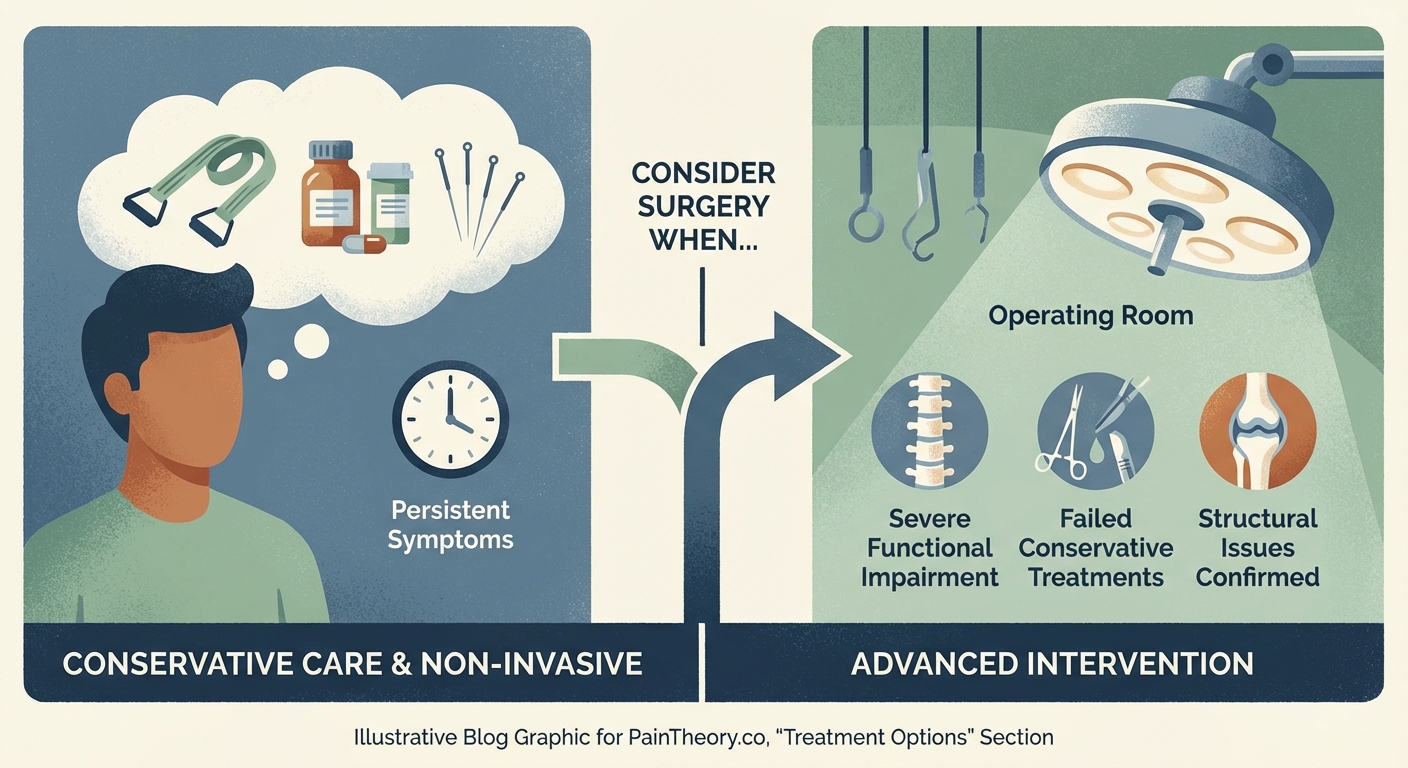
Certain situations point toward surgical intervention more strongly than others. Recognizing these signs helps you have better conversations with your doctor.
Your Imaging Shows a Specific Problem
MRI, CT scans, and X-rays can reveal structural issues that conservative care cannot fix. A herniated disc pressing on a nerve. Bone spurs narrowing your spinal canal. A torn ligament that won’t heal on its own.
When your pain matches what the imaging shows, surgery has a clear target. Surgeons can remove the herniated disc material, create more space in the spinal canal, or repair the damaged tissue.
Imaging without pain or pain without imaging findings creates a more complicated picture. Surgery works best when there’s a visible problem causing your symptoms.
Pain Limits Your Basic Functions
Think about what you could do before the pain started. Now think about what you can do today.
If the gap between those two realities keeps growing, surgery deserves consideration. Basic functions include:
- Walking more than one block
- Sitting through a meal with family
- Sleeping four consecutive hours
- Dressing yourself without help
- Working your job or managing your household
When pain steals these abilities, you’re not being dramatic by exploring all options. You’re fighting for your life back.
Medications Create Their Own Problems
Pain medications help many people function. But long-term use of opioids, muscle relaxants, or even anti-inflammatories brings serious risks.
Opioids can lead to dependence, tolerance, and dangerous side effects. NSAIDs damage your stomach and kidneys over time. Muscle relaxants make you too drowsy to drive or work safely.
If you need increasing doses to get the same relief, or if side effects rival the original pain, surgery might offer a better path forward.
Nerve Damage Is Progressing
Some pain conditions cause progressive nerve damage. You might notice numbness spreading in your hands or feet. Weakness that makes you drop things or trip more often. Loss of bowel or bladder control.
These symptoms signal that nerves are being compressed or damaged. Time matters here. Nerves can only tolerate so much pressure before the damage becomes permanent.
Surgery to relieve nerve compression works best before permanent injury occurs. Waiting too long can mean living with numbness or weakness even after successful surgery.
What Different Surgeries Actually Do
Not all pain surgeries are created equal. Understanding your options helps you ask better questions and set realistic expectations.
| Surgery Type | What It Treats | Recovery Time | Success Rate Range |
|---|---|---|---|
| Spinal fusion | Unstable spine, severe arthritis | 3-6 months | 60-80% |
| Discectomy | Herniated disc with nerve compression | 4-6 weeks | 80-90% |
| Laminectomy | Spinal stenosis | 6-12 weeks | 70-85% |
| Joint replacement | Severe arthritis in hip, knee, shoulder | 3-6 months | 85-95% |
| Nerve decompression | Carpal tunnel, cubital tunnel | 2-6 weeks | 75-90% |
These numbers represent averages. Your individual results depend on your specific condition, overall health, surgeon skill, and commitment to rehabilitation.
Questions to Ask Before Deciding
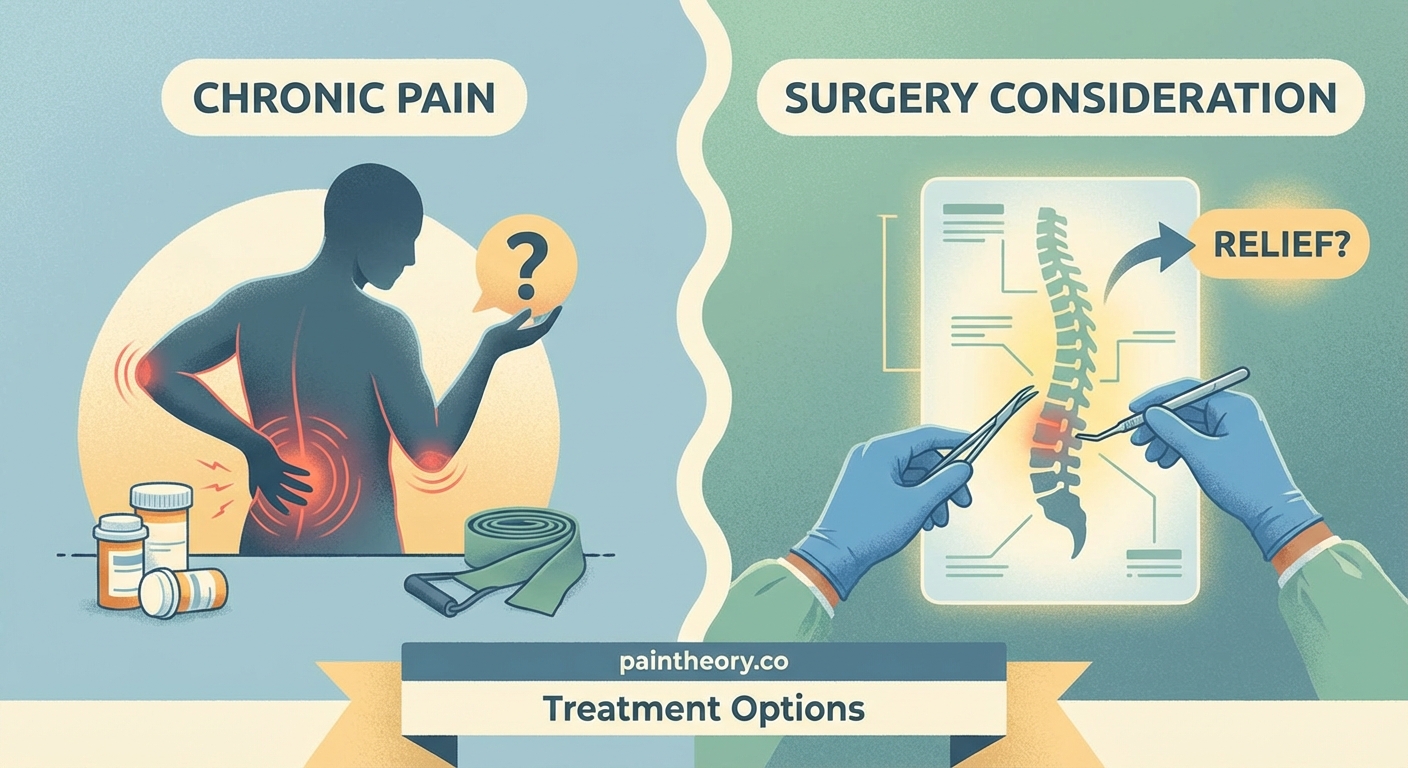
Making an informed decision requires honest conversations with your medical team. Don’t leave the consultation room until you understand these points.
- What exactly will the surgery fix, and what symptoms will likely remain?
- What happens if you don’t have surgery now?
- How many of these procedures has the surgeon performed, and what are their complication rates?
- What does recovery actually look like week by week?
- Will you need additional surgeries later?
- What percentage of the surgeon’s patients report meaningful improvement?
Write down these questions before your appointment. Bring someone with you to take notes. You’ll be anxious and might not remember everything discussed.
“The best surgical candidates are those who have a specific diagnosis confirmed by imaging, have tried appropriate conservative care for at least three to six months, understand what surgery can and cannot accomplish, and are committed to the rehabilitation process. Surgery is a tool, not a magic cure.”
The Recovery Reality Check
Surgery is just the beginning. Recovery determines your actual outcome.
Most people underestimate how challenging post-surgical rehabilitation can be. You’ll likely face:
- Significant pain for the first few weeks
- Restrictions on lifting, bending, and twisting
- Required physical therapy sessions
- Time off work ranging from weeks to months
- Potential setbacks and slower progress than expected
Some people heal faster than average. Others take longer. Your age, overall health, smoking status, and adherence to restrictions all play roles.
Plan for the longer timeline. If your surgeon says six weeks, prepare for eight. If they say three months, give yourself four. This mindset prevents frustration and helps you make practical arrangements for work and home responsibilities.
When Surgery Probably Isn’t the Answer
Surgical intervention doesn’t work well for every type of pain. Certain situations predict poor outcomes.
Surgery struggles with pain that has no clear structural cause. Conditions like fibromyalgia, complex regional pain syndrome, and central sensitization involve how your nervous system processes pain signals. Cutting or fixing tissue doesn’t change those processes.
Psychological factors matter too. Untreated depression, anxiety, or trauma can amplify pain and interfere with recovery. This doesn’t mean your pain is “all in your head.” It means your brain and body both need attention for the best results.
Active smoking dramatically increases complication risks and slows healing. Most surgeons require patients to quit at least four weeks before elective procedures.
Unrealistic expectations also predict disappointment. If you expect to feel 18 again after spinal fusion at age 55, you’ll likely feel let down even if the surgery succeeds by medical standards.
Getting a Second Opinion Matters
Never rush into surgery based on one consultation. Get at least two opinions, preferably from surgeons at different practices.
Different specialists may recommend different approaches. An orthopedic surgeon might suggest fusion while a neurosurgeon recommends disc replacement. A pain management specialist might offer spinal cord stimulation instead.
These aren’t contradictions. They reflect different training, experience, and philosophies. Hearing multiple perspectives helps you make a truly informed choice.
Insurance usually covers second opinions. Even if you pay out of pocket, a few hundred dollars is a small price for peace of mind about a major decision.
The Role of Minimally Invasive Options
Surgical techniques have improved dramatically. Many procedures that once required large incisions and hospital stays now happen through tiny cuts with same-day discharge.
Minimally invasive approaches typically mean:
- Smaller scars
- Less tissue damage
- Reduced infection risk
- Faster recovery
- Lower complication rates
But minimally invasive isn’t always better. Some conditions require traditional open surgery for the best results. Don’t choose a surgeon based solely on their minimally invasive marketing. Choose based on their outcomes for your specific problem.
Making Peace with Your Decision
Whether you choose surgery or decide to continue with other treatments, second-guessing yourself helps no one.
You can only make the best decision with the information you have right now. Gather facts, listen to experts, consider your values and goals, then commit to your choice.
If you proceed with surgery, trust your decision and focus on recovery. If you decide against it, explore other pain management strategies without regret.
Your situation may change. Pain that doesn’t warrant surgery today might cross that threshold in a year. Or you might find a non-surgical approach that finally provides relief. Stay open to reassessing as circumstances evolve.
Moving Forward with Confidence
Deciding about surgery for chronic pain ranks among life’s toughest choices. There’s no perfect answer, only the right decision for your unique situation.
Take your time. Ask questions. Get multiple opinions. Consider both the potential benefits and realistic risks. Think about your quality of life now and what you hope to achieve.
Surgery works best for people with specific structural problems confirmed by imaging, who have exhausted appropriate conservative care, and who understand both the possibilities and limitations of surgical intervention. If that describes you, scheduling a consultation with a qualified surgeon makes sense. If it doesn’t, continuing to work with pain management specialists on non-surgical options may serve you better. Either way, you deserve care that acknowledges your suffering and works toward meaningful improvement.