Waking up with back pain can ruin your entire day before it even starts. You toss and turn all night, searching for a comfortable position, only to wake up feeling worse than when you went to bed. The frustration builds when you realize your mattress isn’t the problem. Your sleeping position is.
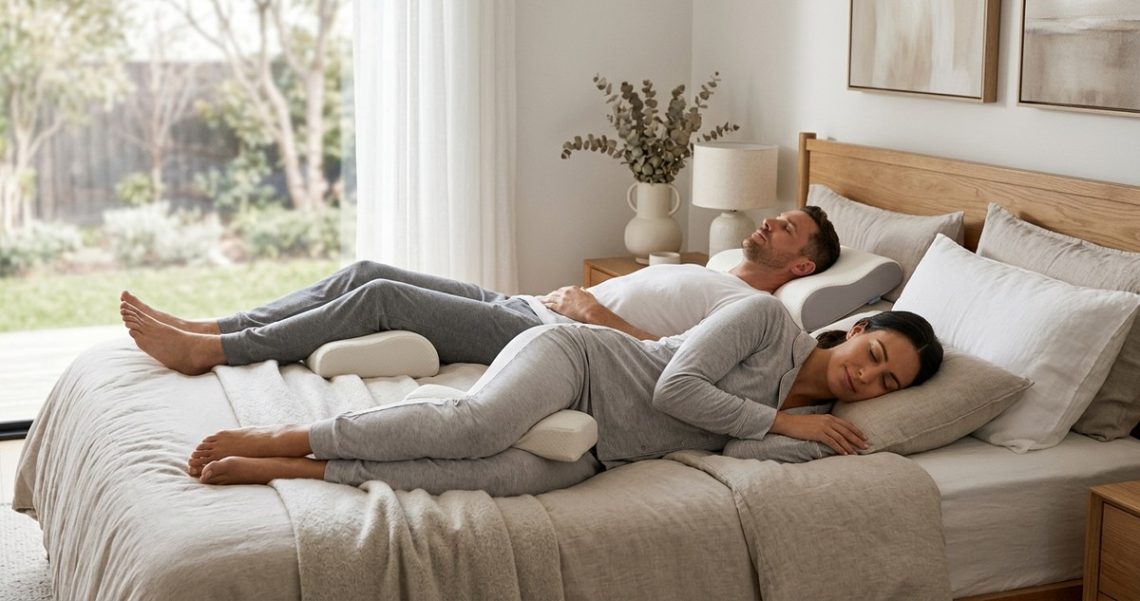
Your sleeping position directly impacts spinal alignment and back pain intensity. The best positions keep your spine neutral: side sleeping with a pillow between your knees, back sleeping with knee support, or modified stomach sleeping with pelvic cushioning. Small adjustments to pillow placement and body positioning can dramatically reduce morning stiffness and nighttime discomfort without medication or medical intervention.
Why your sleeping position matters more than you think
Your spine supports your body weight all day. At night, it needs proper alignment to recover and heal.
Poor sleeping positions create pressure points. These points compress nerves and strain muscles. Over eight hours, this compression amplifies inflammation and pain.
The right position distributes your body weight evenly. It maintains the natural curve of your spine. This allows muscles to relax and tissues to repair.
Most people never learn proper sleep positioning. They copy what feels comfortable in the moment, not what supports long-term spinal health.
The best sleeping positions for different types of back pain
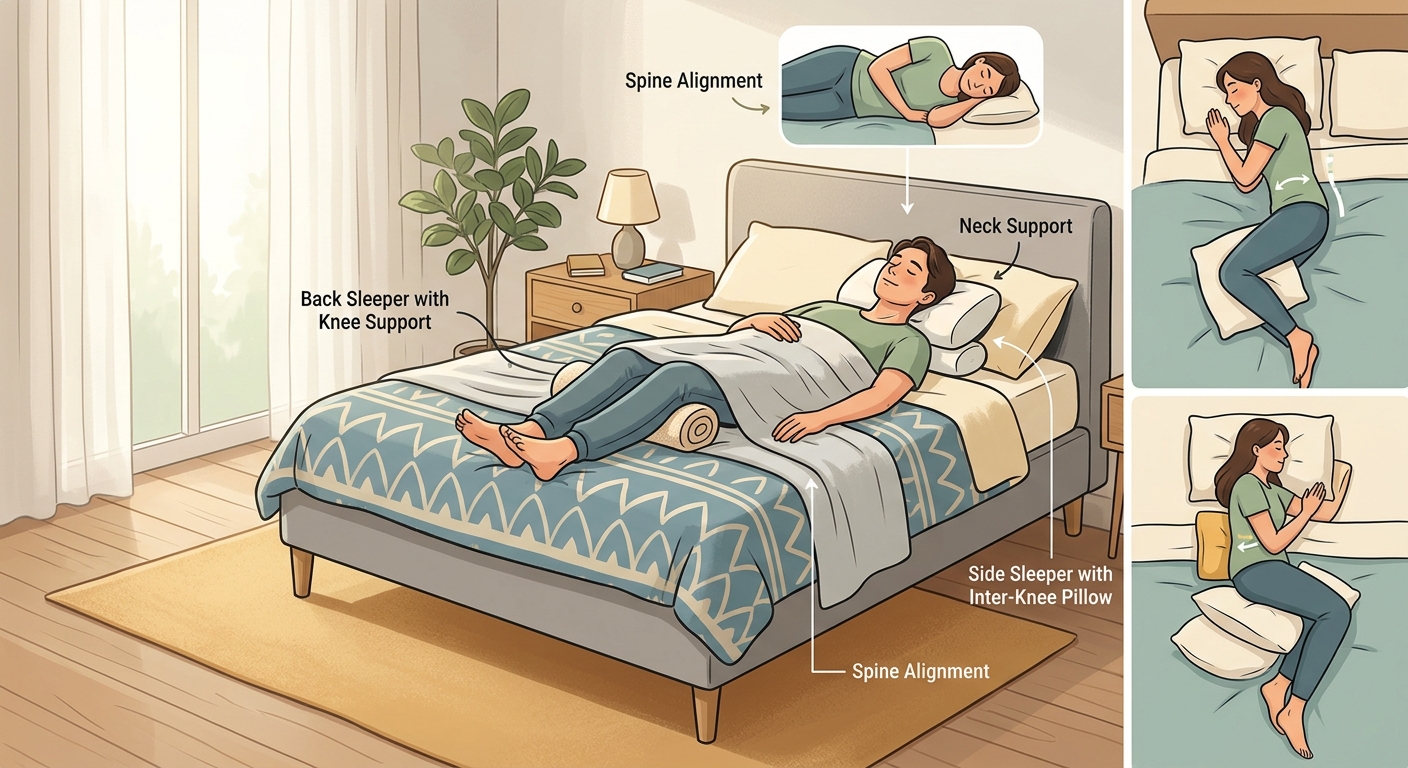
Not all back pain responds to the same sleeping position. Your pain location determines which position works best.
Side sleeping for lower back pain
Side sleeping ranks as the top choice for most back pain sufferers.
This position keeps your spine elongated and aligned. It reduces pressure on your lower back discs.
How to do it correctly:
- Lie on your side with your knees slightly bent
- Place a firm pillow between your knees
- Keep your top leg aligned with your hip
- Use a pillow that keeps your neck level with your spine
- Avoid curling into a tight fetal position
The pillow between your knees is critical. It prevents your top leg from pulling your spine out of alignment. Without it, your pelvis rotates and strains your lower back.
Choose your better side. Some people feel more relief sleeping on their left side, others prefer the right. Test both for a few nights.
Back sleeping for upper back and neck pain
Sleeping on your back maintains natural spinal curves better than any other position.
This position evenly distributes weight across your body. It prevents asymmetrical pressure that causes morning stiffness.
Proper back sleeping technique:
- Lie flat on your back
- Place a pillow under your knees to maintain lumbar curve
- Use a cervical pillow or rolled towel under your neck
- Keep your arms at your sides or on your chest
- Avoid stacking multiple pillows under your head
The knee pillow makes the difference. It prevents your lower back from flattening completely, which strains the lumbar spine.
If you snore or have sleep apnea, this position might not work. Breathing issues can disrupt sleep quality, which worsens pain perception.
Modified stomach sleeping (only if you must)
Stomach sleeping generally ranks worst for back pain. It forces your neck to rotate and flattens your lumbar curve.
But some people cannot sleep any other way. If you’re one of them, modifications help.
How to minimize damage:
- Place a thin pillow under your pelvis and lower abdomen
- Use a very flat pillow for your head, or none at all
- Keep one leg straight and bend the other at the knee
- Switch which leg you bend each night
- Gradually train yourself to transition to side sleeping
The pelvic pillow elevates your midsection slightly. This reduces the extreme arch in your lower back.
Common sleeping position mistakes that worsen back pain
Even people who know the right positions make critical errors.
| Mistake | Why It Hurts | Better Alternative |
|---|---|---|
| Using too many pillows | Pushes neck forward, strains upper back | One supportive pillow that keeps neck neutral |
| Sleeping without knee support | Allows pelvis to rotate, strains lumbar spine | Pillow between or under knees |
| Sleeping on a sagging mattress | Creates uneven pressure points | Replace mattress every 7-10 years |
| Switching positions frequently | Prevents deep sleep, increases pain sensitivity | Commit to one position per night |
| Sleeping on your arm | Compresses nerves, causes referred pain | Keep arms alongside body or on pillow |
Your pillow height matters as much as your position. A pillow too high or too flat disrupts cervical alignment.
Test your pillow by lying down. Your nose should point straight ahead, not tilted up or down.
Setting up your sleep environment for pain relief
Your bedroom setup either supports or sabotages your sleeping position.
Essential adjustments:
- Mattress firmness: Medium-firm works best for most back pain sufferers. Too soft allows sagging. Too firm creates pressure points.
- Pillow count: Keep extra pillows nearby for positioning, not just your head.
- Room temperature: Cooler rooms (65-68°F) reduce inflammation and improve sleep quality.
- Bed height: Your bed should allow you to sit with feet flat on the floor and knees at 90 degrees.
Replace your mattress if it sags more than 1.5 inches when you lie on it. A sagging mattress makes proper positioning impossible.
Body pillows help side sleepers maintain alignment. They prevent rolling onto your stomach during sleep.
The transition period: what to expect when changing positions
Switching sleeping positions feels uncomfortable at first. Your body adapted to your old position, even if it caused pain.
Give yourself two full weeks. Most people adjust within 10-14 nights.
Week one challenges:
- Falling asleep takes longer
- You wake up in your old position
- Muscles feel sore in new places
- You question whether the change helps
These reactions are normal. Your muscles are relearning how to relax in proper alignment.
Week two improvements:
- You fall asleep faster in the new position
- You stay in position longer through the night
- Morning stiffness decreases
- Pain intensity drops
Track your pain levels each morning on a 1-10 scale. This objective measure shows progress when you feel discouraged.
Some people benefit from understanding why your lower back pain gets worse at night, which can help identify other factors beyond position.
Additional support strategies for better sleep
Position alone might not solve severe back pain. Combine it with other evidence-based approaches.
“Sleep position optimization works best when paired with daytime posture awareness and gentle stretching. The body maintains whatever position you train it to hold most often.” – Physical Therapy Research, 2023
Complementary strategies:
- Gentle stretching 30 minutes before bed loosens tight muscles
- Heat therapy relaxes muscle spasms that prevent comfortable positioning
- Consistent sleep schedule regulates pain-modulating hormones
- Limiting screen time reduces cortisol that amplifies pain signals
How to sleep better when chronic pain keeps you awake offers additional techniques for managing nighttime discomfort.
Anti-inflammatory foods support tissue healing during sleep. The anti-inflammatory diet for back pain explains which foods help most.
When sleeping position changes aren’t enough
Sometimes proper positioning reduces pain but doesn’t eliminate it. This signals a need for professional evaluation.
Watch for these warning signs:
- Pain that wakes you multiple times per night despite position changes
- Morning stiffness lasting more than 30 minutes
- Pain radiating down your legs or into your arms
- Numbness or tingling in your extremities
- Pain that progressively worsens over weeks
These symptoms might indicate disc herniation, nerve compression, or other conditions requiring medical treatment. 5 back pain red flags that mean you should see a doctor immediately helps identify serious warning signs.
Professional treatment options include physical therapy, targeted injections, or other interventions. Understanding how long does it really take for different types of back injuries to heal sets realistic expectations.
Your nervous system plays a significant role in chronic pain. Why does pain become chronic? Understanding your nervous system’s role explains the pain-sleep connection.
Adjusting your position as your pain changes
Back pain evolves. Acute injuries heal differently than chronic conditions.
For acute pain (recent injury):
- Change positions more frequently the first few nights
- Use ice before bed to reduce initial inflammation
- Expect more discomfort as inflammation peaks
- Prioritize positions that reduce nerve pressure
For chronic pain (lasting more than 12 weeks):
- Stick with one position consistently
- Focus on muscle relaxation over inflammation control
- Build supporting habits like stretching routines
- Consider how daytime activities affect nighttime pain
Pregnancy changes everything for women with back pain. Pregnancy-related back and pelvic pain: what’s normal and what’s not addresses special positioning needs.
Your workday posture impacts sleep positioning needs. The working woman’s guide to managing chronic pain at your desk job connects daytime and nighttime positioning.
Making position changes stick for long-term relief
Temporary improvements don’t solve chronic back pain. You need sustainable changes.
Building lasting habits:
- Set a bedtime reminder to check your pillow placement
- Keep positioning aids (extra pillows, rolled towels) within reach
- Take progress photos of your setup for consistency
- Journal your pain levels to identify what works
- Reward yourself for consecutive nights in proper position
Stress management supports better sleep positioning. Tense muscles resist proper alignment. 5 stress management techniques that actually reduce physical pain provides practical tools.
Daily stretching reinforces nighttime positioning benefits. The 15-minute daily stretching routine for chronic pain management complements sleep position changes.
Your path to pain-free mornings starts tonight
You don’t need expensive equipment or medical procedures to improve your sleep positioning. You need knowledge, patience, and consistency.
Start with one change tonight. Add a pillow between your knees if you sleep on your side. Place one under your knees if you sleep on your back. Notice how you feel tomorrow morning.
Small adjustments compound over weeks and months. The position that feels awkward tonight becomes automatic within two weeks. The morning stiffness that seems permanent can decrease significantly.
Your spine deserves eight hours of proper support each night. Give it that support, and you’ll notice the difference in how you move, work, and live each day.