You stub your toe on the coffee table and immediately grab it, rubbing the spot hard. Within seconds, the pain dulls. Why does that work? The answer lies in a revolutionary concept called the gate control theory of pain, which changed how scientists understand pain processing forever.
The gate control theory of pain explains that your spinal cord acts like a gatekeeper, filtering pain signals before they reach your brain. Non-painful touch sensations can close this gate and reduce pain intensity, which is why rubbing an injury provides relief. This theory revolutionized pain science by showing that pain is not simply a direct pathway from injury to perception but a complex, modifiable process influenced by physical, emotional, and cognitive factors.
What Makes the Gate Control Theory Different
Before 1965, most scientists believed pain worked like a simple alarm system. Damage your tissue, and pain signals travel straight to your brain. Simple cause and effect.
Then psychologist Ronald Melzack and neuroscientist Patrick Wall published their groundbreaking paper. They proposed something radical: your nervous system actively filters and modifies pain signals before they reach your brain.
Think of it like a security checkpoint at an airport. Not every person who shows up at the gate gets through. Some get stopped, some get waved through, and some get extra screening. Your spinal cord does the same thing with pain signals.
This theory explained mysteries that the old model couldn’t. Why does chronic pain persist long after injuries heal? Why do athletes sometimes not notice injuries during competition? Why does pain become chronic in some people but not others?
The gate control theory provided answers.
How the Pain Gate Actually Works
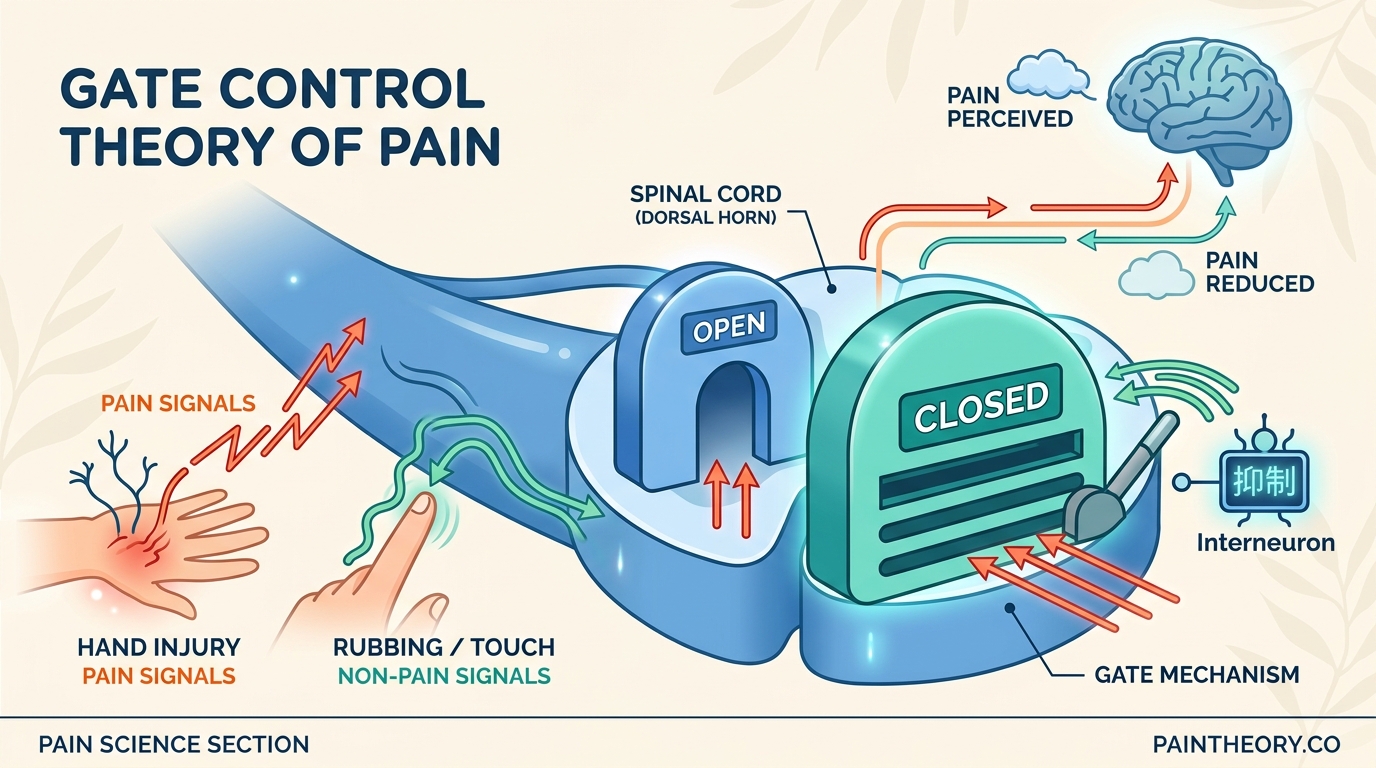
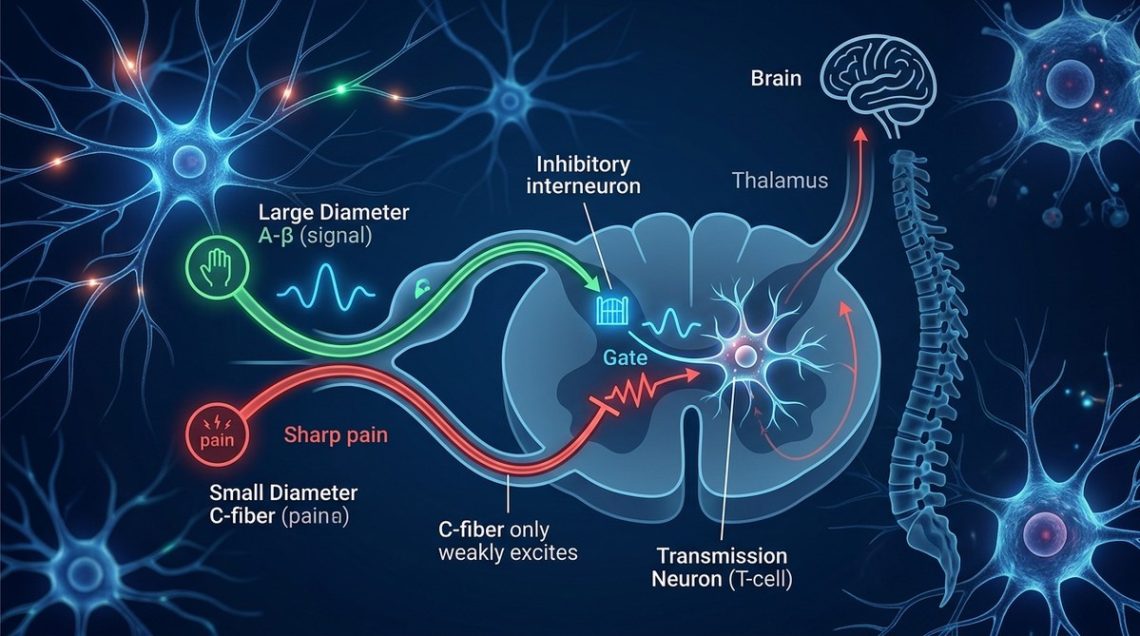
Your spinal cord contains specialized nerve cells in an area called the dorsal horn. This is where the gate lives.
Three types of nerve fibers send signals toward this gate:
- A-beta fibers carry touch and pressure sensations (large, fast fibers)
- A-delta fibers transmit sharp, immediate pain (medium-sized fibers)
- C fibers carry dull, aching pain (small, slow fibers)
The gate mechanism involves inhibitory interneurons. These are tiny nerve cells that can block pain signals from continuing up to your brain.
When you activate A-beta fibers through touch, pressure, or vibration, they stimulate these inhibitory interneurons. The interneurons then reduce the transmission of pain signals from A-delta and C fibers.
The gate closes, and less pain gets through.
When only pain fibers are active and touch fibers are quiet, the inhibitory interneurons stay inactive. The gate opens wide, and pain signals flood through to your brain.
This happens automatically, without conscious thought.
Why Rubbing Really Does Help
Now that stubbed toe makes sense.
When you rub the injured area, you activate thousands of A-beta touch fibers. These fibers send their signals to the spinal cord faster than the pain signals traveling through the slower C fibers.
The touch signals arrive first and close the gate.
By the time the pain signals arrive, the gate is partially closed. Fewer pain signals get through to your brain, and you feel less pain.
This is not placebo effect or distraction. It is a real, measurable change in how your nervous system processes signals.
The same principle explains why these techniques provide relief:
- Massage therapy
- Transcutaneous electrical nerve stimulation (TENS units)
- Acupuncture
- Gentle movement
- Warm compresses
All of these activate non-painful sensory fibers that help close the pain gate.
The Brain’s Role in Opening and Closing the Gate
The gate is not just controlled from below by sensory input. Your brain can also send signals down to open or close it.
This is called descending modulation.
When you feel anxious, stressed, or focused on pain, your brain sends signals that open the gate wider. Pain signals flow more freely, and you hurt more.
When you feel calm, distracted, or engaged in something enjoyable, your brain sends different signals that help close the gate. Pain decreases.
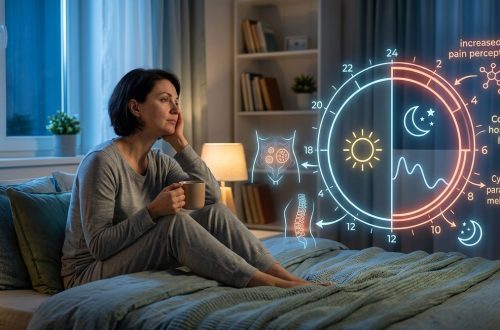
This explains why pain often feels worse at night when you have nothing to distract you. Your lower back pain gets worse at night partly because your brain is not busy closing the gate.
“Pain is not just a sensation. It is an experience shaped by our thoughts, emotions, memories, and expectations. The gate control theory was the first scientific model to acknowledge this complexity.” — Dr. Ronald Melzack
Practical Applications You Can Use Today
Understanding the gate control theory gives you real tools for managing pain.
1. Activate Touch Sensations Near the Pain
Apply gentle pressure, massage, or vibration to the painful area or nearby regions. This stimulates A-beta fibers and helps close the gate.
2. Use Temperature Therapy Strategically
Heat and cold both activate sensory nerve fibers. Does heat or cold work better depends on your specific condition, but both can help close the gate through sensory activation.
3. Keep Your Brain Busy
Engage in activities that capture your attention. This encourages your brain to send gate-closing signals down your spinal cord.
4. Manage Stress and Anxiety
Emotional distress opens the pain gate. Breathing exercises, meditation, or talking with friends can help your brain send gate-closing signals instead.
5. Stay Gently Active
Movement activates proprioceptive fibers (position sensors) that help close the gate. This is why gentle stretching or walking often reduces pain.
Common Techniques Based on Gate Control Theory
| Technique | How It Closes the Gate | Best Used For |
|---|---|---|
| TENS therapy | Electrical stimulation of touch fibers | Chronic back pain, arthritis, nerve pain |
| Massage | Manual activation of pressure receptors | Muscle tension, general pain relief |
| Acupuncture | Stimulation of sensory nerve endings | Chronic pain conditions, headaches |
| Vibration therapy | Rapid activation of touch receptors | Localized pain, muscle soreness |
| Counterirritants (menthol creams) | Activation of temperature receptors | Joint pain, minor injuries |
Why Some Pain Treatments Work Better Than Others
The gate control theory helps explain why identical injuries can cause different amounts of pain in different people.
Your gate’s sensitivity varies based on:
- Previous pain experiences
- Current stress levels
- Sleep quality
- Emotional state
- Attention and focus
- Cultural beliefs about pain
- Expectations about recovery
Two people with the same herniated disc might experience vastly different pain levels because their gates operate differently.
This is not about pain tolerance or toughness. It is about how effectively each person’s nervous system filters signals.
Understanding this removes shame from the pain experience. Your pain is real, even if scans look normal. Your gate might simply be stuck open.
The Theory’s Limitations and Updates
The original gate control theory was published in 1965. Scientists have refined it significantly since then.
We now know the system is more complex than a simple gate. Multiple gates exist at different levels of the nervous system. Chemical messengers called neurotransmitters play crucial roles. Immune system signals can influence the gate. Genetic factors affect gate sensitivity.
But the core insight remains valid: pain is not a direct readout of tissue damage. It is a constructed experience that your nervous system actively shapes.
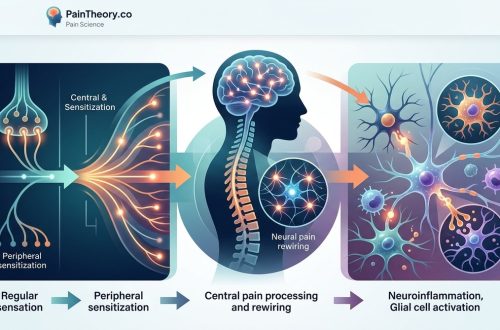
Modern pain science has built on this foundation. Researchers now understand that chronic pain involves changes throughout the nervous system, not just at the gate.
When Gate Control Strategies Are Not Enough
Sometimes the gate gets stuck open. Chronic pain conditions can rewire your nervous system so that even gentle touch becomes painful (allodynia).
In these cases, simple gate-closing techniques may not provide enough relief.
You might need:
- Medications that target specific neurotransmitters
- Cognitive behavioral therapy to address brain-level gate control
- Physical therapy to gradually retrain your nervous system
- Nerve blocks or other interventional procedures
- Surgery for chronic pain relief in specific structural problems
The gate control theory does not replace medical treatment. It complements it by giving you additional tools for self-management.
Teaching Your Nervous System to Keep the Gate Closed
You can gradually train your nervous system to keep the gate more closed.
-
Start with gentle sensory input. Begin with light touch or gentle movement that does not increase pain.
-
Gradually increase stimulation. As your nervous system adapts, slowly add more pressure, movement, or activity.
-
Practice consistently. Daily gentle activation of non-painful sensory fibers helps retrain the gate mechanism.
-
Pair physical techniques with mental strategies. Combine touch-based approaches with relaxation or positive visualization.
-
Track what works. Keep notes on which techniques help most and when they work best.
This retraining takes time. Your nervous system learned to keep the gate open over weeks or months. It needs similar time to learn new patterns.
How Healthcare Providers Use This Knowledge
Physical therapists, chiropractors, massage therapists, and pain specialists all apply gate control principles in their treatments.
They might:
- Use manual therapy to activate touch receptors
- Apply electrical stimulation to close the gate
- Teach you self-massage techniques
- Recommend specific movement patterns
- Help you understand why certain activities reduce pain
When a provider explains that gentle movement will help, they are applying gate control theory. When they suggest heat or massage, they are using the same principle.
Understanding the theory helps you become an active participant in your treatment rather than a passive recipient.
Why This Changes How We Think About Pain
The gate control theory revolutionized pain science because it showed that pain is not inevitable.
You are not helpless against pain. You have multiple ways to influence how much pain you feel, even when you cannot change the underlying injury or condition.
This empowers people with chronic pain. It removes the false dichotomy between “real” physical pain and “psychological” pain. All pain involves both body and mind because the gate is influenced by both.
It also explains why multidisciplinary pain programs work better than single-treatment approaches. Addressing pain from multiple angles gives you more ways to close the gate.
Your Nervous System Is More Flexible Than You Think
The gate control theory of pain reveals something hopeful: your experience of pain is not fixed.
Your nervous system constantly adjusts how it processes signals. This plasticity means you can influence your pain through simple actions like touch, movement, distraction, and stress management.
Start with one technique today. Rub a sore spot. Apply warmth. Take a gentle walk. Each action sends gate-closing signals to your spinal cord.
Your pain may not disappear completely, but understanding how the gate works gives you real tools to turn down the volume. That knowledge alone can change how you relate to pain and how much control you feel over your own experience.