
Chronic pain doesn’t just hurt. It steals your sleep, limits your movement, and changes how you live every single day. If you’ve been dealing with persistent back pain, arthritis, or fibromyalgia, you’ve probably wondered whether physical therapy can actually help or if it’s just another appointment that won’t change anything. The truth is that specific physical therapy techniques have strong evidence behind them, but not all approaches work equally well for everyone.
Physical therapy offers seven evidence-based techniques that effectively manage chronic pain: manual therapy, therapeutic exercise, dry needling, heat and cold therapy, electrical stimulation, ultrasound treatment, and movement education. These methods work by addressing tissue dysfunction, reducing inflammation, retraining movement patterns, and calming overactive pain signals. Most people see meaningful improvement within 6-8 weeks when techniques are properly matched to their specific condition and combined with consistent home practice.
What Makes Physical Therapy Different From Other Pain Treatments
Physical therapy targets the root causes of pain rather than just masking symptoms. While medications can provide temporary relief, they don’t address the muscle imbalances, joint restrictions, or movement patterns that keep pain coming back.
A physical therapist evaluates how your body moves, where tissues are restricted, and which muscles have become weak or overactive. This assessment guides treatment that’s specific to your condition.
The goal isn’t just pain reduction. It’s restoring function so you can return to activities that matter to you.
Most chronic pain conditions involve multiple factors. Your nervous system’s role in maintaining pain becomes just as important as the original injury or condition.
Manual Therapy for Tissue Mobility
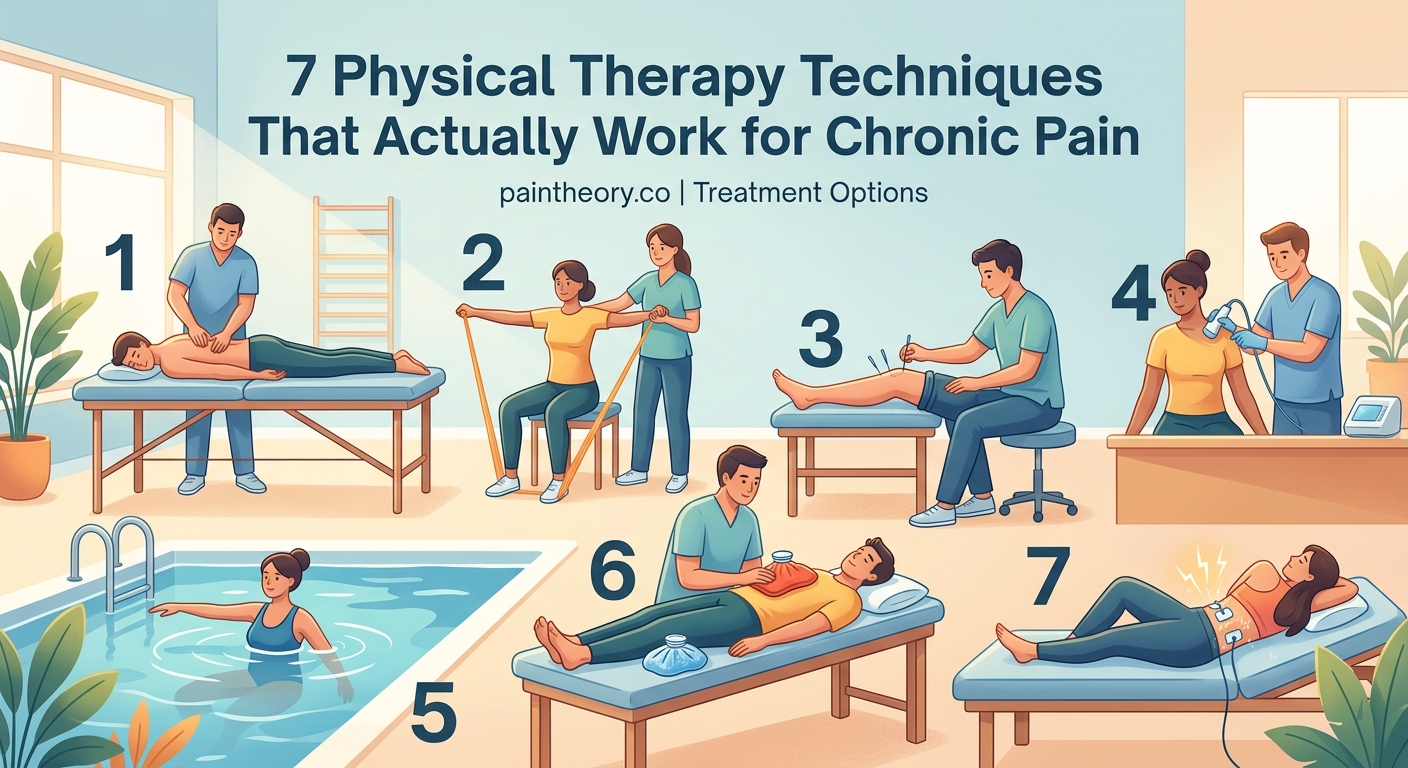
Manual therapy involves hands-on techniques that improve how tissues move and function. Your therapist uses their hands to mobilize joints, release tight muscles, and improve circulation to painful areas.
Joint mobilization applies controlled pressure to restore normal movement in stiff joints. This technique works particularly well for arthritis and spinal pain.
Soft tissue mobilization targets muscles, tendons, and fascia. The therapist applies pressure and stretching to break up adhesions and reduce muscle tension.
Myofascial release focuses on the connective tissue that surrounds muscles. Sustained pressure helps tissues relax and lengthen, reducing pain and improving flexibility.
“Manual therapy provides immediate feedback. We feel tissue changes under our hands and can adjust pressure and direction based on how your body responds. This real-time adaptation makes treatment more effective than generic approaches.”
Research shows that manual therapy combined with exercise produces better outcomes than either approach alone. The hands-on work prepares tissues for movement, while exercise maintains the improvements.
Therapeutic Exercise Programs
Exercise might seem counterintuitive when you’re in pain, but the right movements actually reduce chronic pain by improving strength, flexibility, and endurance.
Strengthening exercises target weak muscles that can’t properly support joints. When muscles are strong, they take pressure off painful structures.
Flexibility work addresses tight tissues that restrict movement and create compensatory patterns. Gentle stretching reduces tension and improves range of motion.
Aerobic conditioning improves overall fitness and triggers the release of natural pain-relieving chemicals called endorphins.
Your therapist designs a program specific to your condition:
- Back pain programs focus on core stability and hip mobility
- Arthritis protocols emphasize joint protection and gradual loading
- Fibromyalgia plans start with gentle movement and slowly increase intensity
The key is starting at the right level. Too much too soon increases pain and discourages continuation. Too little provides no benefit.
Dry Needling for Trigger Point Release
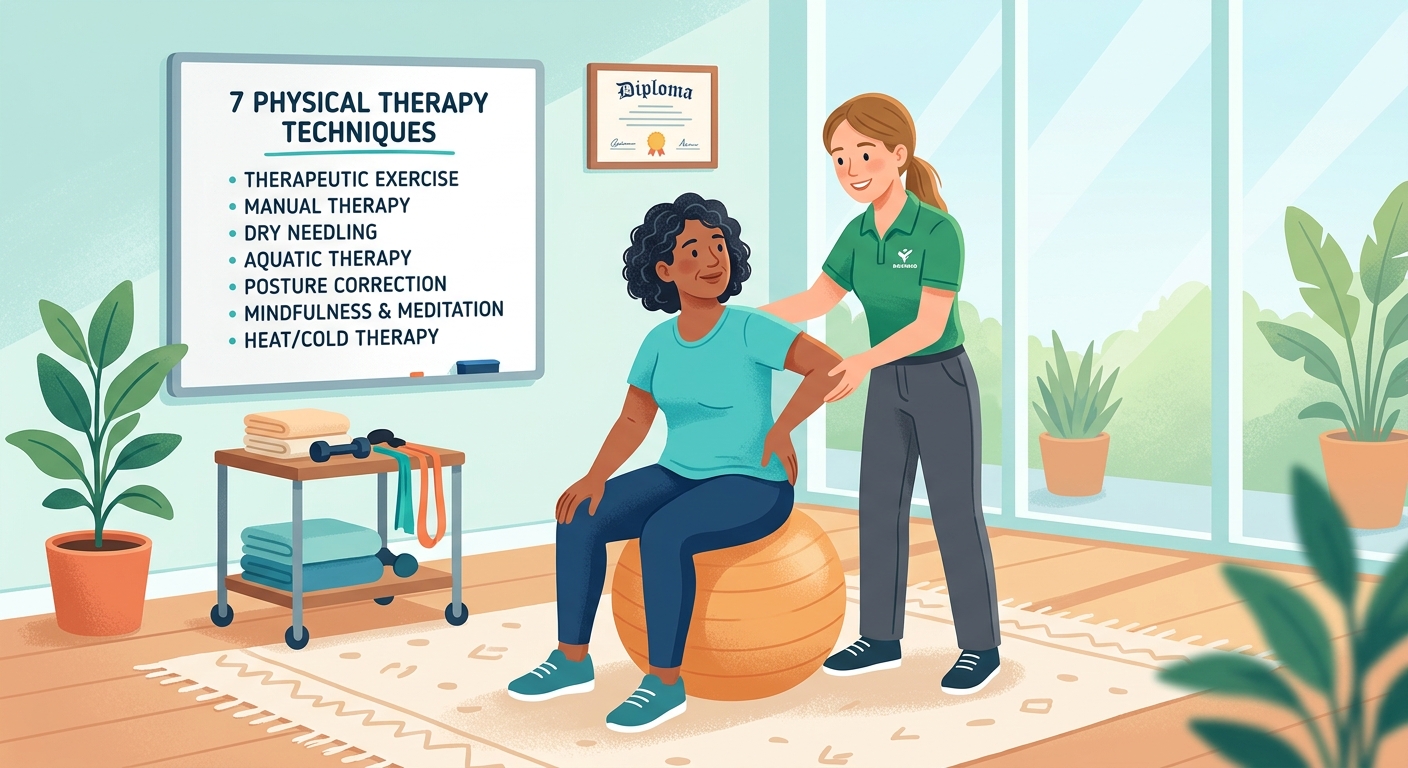
Dry needling inserts thin needles into trigger points, which are tight bands within muscles that refer pain to other areas. This technique differs from acupuncture in its approach and goals.
The needle creates a local twitch response that releases muscle tension. Blood flow increases to the area, bringing oxygen and nutrients while removing waste products.
Many people experience immediate relief after dry needling. The muscle relaxes, range of motion improves, and referred pain decreases.
Common treatment areas include:
- Upper trapezius for neck and shoulder pain
- Piriformis for hip and leg pain
- Quadratus lumborum for lower back pain
- Gluteal muscles for sciatic-type symptoms
Not everyone is a good candidate for dry needling. People taking blood thinners or with needle phobias may prefer other techniques.
Heat and Cold Applications
Temperature therapy reduces pain through different mechanisms. Understanding when to use each helps you get better results.
Cold therapy works best for acute flare-ups and inflammation. It numbs pain signals, reduces swelling, and slows metabolic activity in tissues.
Apply cold for 15-20 minutes at a time. Use a barrier between ice and skin to prevent tissue damage.
Heat therapy helps chronic pain by relaxing muscles, improving blood flow, and reducing stiffness. Warmth feels soothing and allows tissues to move more easily.
Use heat before stretching or exercise to prepare tissues. Apply for 15-20 minutes.
| Condition | Best Temperature | Timing | Why It Works |
|---|---|---|---|
| Arthritis flare | Cold | During inflammation | Reduces swelling and numbs pain |
| Chronic back pain | Heat | Before activity | Relaxes tight muscles |
| Post-exercise soreness | Cold | Within 2 hours | Limits inflammatory response |
| Morning stiffness | Heat | Upon waking | Improves tissue flexibility |
Some people benefit from contrast therapy, alternating between heat and cold. This pumps fluid through tissues and can reduce both pain and swelling.
Electrical Stimulation Methods
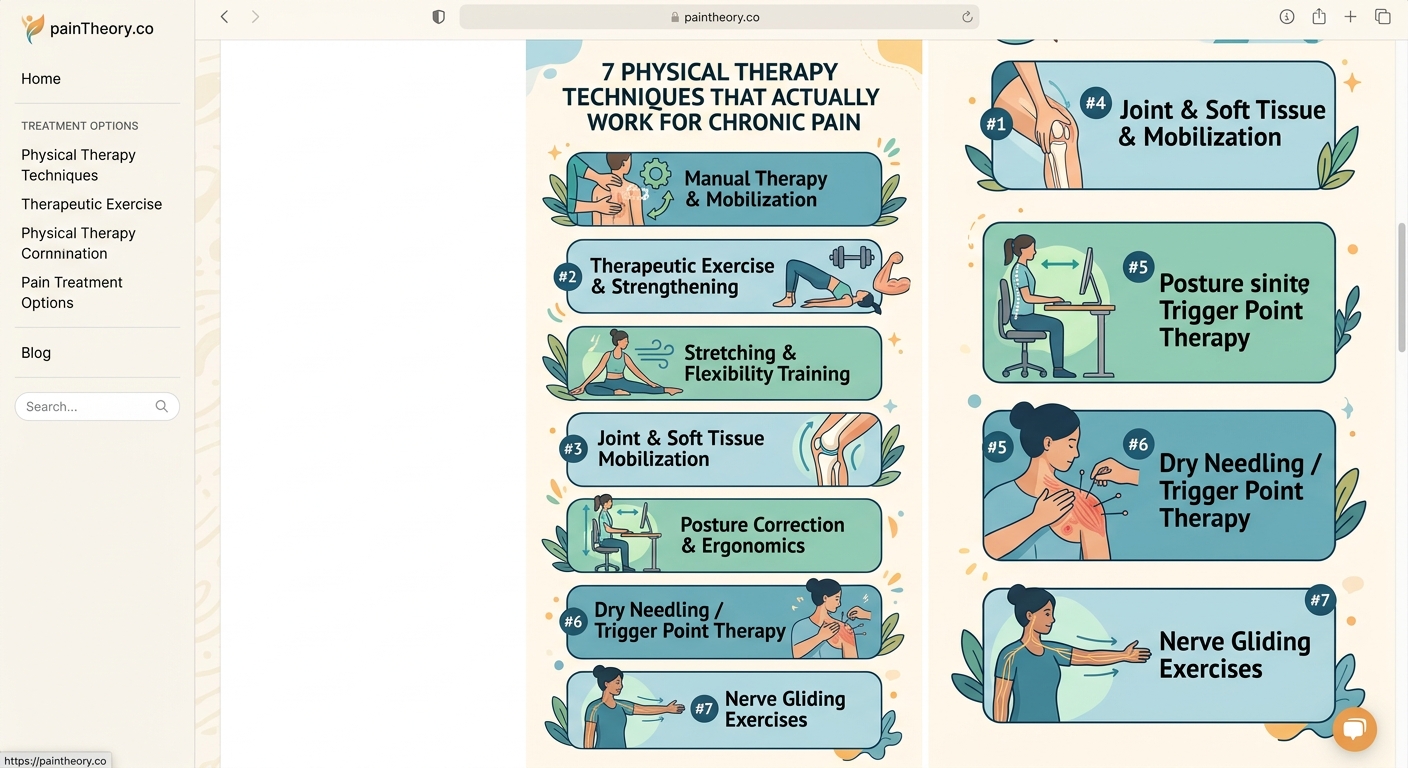
Electrical stimulation uses controlled electrical currents to reduce pain and improve muscle function. Several types exist, each working differently.
TENS (transcutaneous electrical nerve stimulation) blocks pain signals from reaching your brain. Small electrodes on your skin deliver gentle electrical pulses that create a tingling sensation.
You can use TENS units at home once your therapist teaches you proper placement. Many people use them during activities that typically increase pain.
Interferential current penetrates deeper than TENS. It reduces pain and inflammation in joints and deep tissues.
Neuromuscular electrical stimulation makes muscles contract, which helps maintain strength when pain limits voluntary exercise. This technique works well after surgery or during severe flare-ups.
Russian stimulation builds muscle strength through high-frequency currents. Athletes and active individuals often use this to maintain conditioning during recovery.
Ultrasound Therapy Benefits
Therapeutic ultrasound uses sound waves to treat deep tissues. The waves create gentle heat that increases blood flow and promotes healing.
Continuous ultrasound produces a warming effect that reduces muscle spasm and increases tissue flexibility. It works well before stretching tight structures.
Pulsed ultrasound delivers energy without heat buildup. This mode reduces inflammation and accelerates tissue repair at the cellular level.
Treatment typically lasts 5-10 minutes per area. Your therapist moves the ultrasound head in slow circles to evenly distribute energy.
Ultrasound helps conditions like:
- Tendinitis in shoulders, elbows, or knees
- Muscle strains that haven’t fully healed
- Scar tissue that limits movement
- Joint capsule tightness
The technique works best when combined with other treatments. Ultrasound prepares tissues, then manual therapy or exercise maintains the improvements.
Movement Pattern Education
How you move throughout the day affects pain levels just as much as formal exercise. Poor movement patterns create excessive stress on already painful structures.
Your physical therapist analyzes how you perform daily activities. They identify movements that aggravate pain and teach modifications that reduce strain.
Body mechanics training teaches you to:
- Lift objects without stressing your back
- Sit at a desk without increasing neck tension
- Get in and out of bed without triggering pain
- Carry groceries or children safely
Posture correction addresses positions that compress nerves or overload joints. Small adjustments often produce significant pain reduction.
Ergonomic recommendations modify your work and home environment. Proper chair height, monitor position, and tool placement prevent repetitive strain.
Many people find that nighttime pain improves when they adjust sleeping positions and use supportive pillows correctly.
Matching Techniques to Your Specific Condition
Different chronic pain conditions respond better to certain techniques. Your physical therapist considers your diagnosis, pain pattern, and goals when designing treatment.
For osteoarthritis:
– Joint mobilization to maintain movement
– Strengthening to support affected joints
– Heat before activity to reduce stiffness
– Movement education to protect joints
For chronic back pain:
– Core stabilization exercises
– Manual therapy for spinal mobility
– Posture correction
– Ergonomic modifications
For fibromyalgia:
– Gentle aerobic exercise starting at low intensity
– Heat for muscle relaxation
– TENS for pain management
– Gradual progression to avoid flare-ups
Your treatment plan evolves as you improve. Early sessions focus on pain reduction and restoring basic movement. Later sessions emphasize strengthening and return to full activity.
What to Expect During Physical Therapy Sessions
Your first appointment involves a comprehensive evaluation. The therapist asks about your pain history, medical conditions, medications, and how pain affects daily life.
Physical examination includes:
- Range of motion testing
- Strength assessment
- Posture analysis
- Movement pattern observation
- Special tests for specific conditions
Based on this evaluation, your therapist explains which techniques will likely help and why. They set realistic goals and create a treatment timeline.
Typical sessions last 45-60 minutes. You’ll receive hands-on treatment, perform exercises with guidance, and learn techniques to use at home.
Home programs are essential. The exercises and strategies you practice between appointments determine how much improvement you achieve.
Most people attend physical therapy 2-3 times per week initially. As you improve, frequency decreases while you take more responsibility for your own care.
Common Mistakes That Limit Results
Many people unknowingly sabotage their progress. Avoiding these mistakes helps you get better results faster.
Skipping home exercises: The 2-3 hours per week in the clinic can’t overcome 165 hours of poor habits. Home practice reinforces what you learn during sessions.
Doing too much too soon: Enthusiasm is great, but overexertion causes flare-ups that set you back. Follow your therapist’s progression guidelines.
Stopping when pain decreases: Feeling better doesn’t mean tissues are fully healed or that movement patterns are corrected. Completing your full program prevents recurrence.
Not communicating about pain changes: Your therapist adjusts treatment based on your feedback. Report both improvements and setbacks so they can modify your program.
Expecting passive treatment alone: Techniques like ultrasound or electrical stimulation support healing, but they won’t fix chronic pain without active participation in exercise and movement modification.
How Long Before You Notice Improvement
Timeline varies based on how long you’ve had pain, your overall health, and how consistently you follow your program.
Most people notice some improvement within 2-3 weeks. Pain might not disappear completely, but you’ll likely move more easily and have less severe flare-ups.
Significant improvement typically occurs within 6-8 weeks of consistent treatment. You’ll have less frequent pain, better function, and more confidence in your body.
Complete resolution of chronic pain can take 3-6 months or longer. Remember that chronic means the pain has been present for months or years. Reversing those changes takes time.
Some people continue maintenance sessions even after pain resolves. Monthly or quarterly visits help catch problems early and prevent recurrence.
Factors that speed recovery:
- Younger age and better overall fitness
- Shorter duration of chronic pain
- Consistent home program adherence
- Good sleep quality
- Stress management
- Adequate nutrition
When Physical Therapy Isn’t Enough
Physical therapy helps most people with chronic pain, but it’s not always sufficient on its own. Sometimes additional interventions are necessary.
Signs you might need more than physical therapy alone:
- No improvement after 8-12 weeks of consistent treatment
- Pain that prevents you from performing prescribed exercises
- Severe sleep disruption despite treatment
- Progressive weakness or numbness
- Pain that’s spreading rather than improving
Your physical therapist will recognize when progress has stalled. They’ll communicate with your doctor about additional options.
Complementary treatments that often help include:
- Pain psychology to address fear and catastrophizing
- Medications to manage severe flare-ups
- Injections to reduce inflammation in specific structures
- Alternative therapies like acupuncture or massage
In rare cases, surgical intervention becomes necessary when conservative treatment fails and pain significantly limits quality of life.
Finding the Right Physical Therapist
Not all physical therapists have the same training or experience with chronic pain. Finding someone who specializes in your condition improves your chances of success.
Look for therapists with:
- Certification in orthopedic or pain management
- Experience treating your specific condition
- A treatment philosophy that matches your preferences
- Good communication skills and willingness to answer questions
- Positive reviews from patients with similar problems
Ask potential therapists:
- How many patients with my condition have you treated?
- What techniques do you typically use for this problem?
- What should I expect in terms of timeline and outcomes?
- How much will treatment involve hands-on work versus exercise?
The relationship matters. You’ll work closely with this person for weeks or months. Choose someone you trust and feel comfortable with.
Building Your Recovery Plan
Physical therapy works best as part of a comprehensive approach to chronic pain management. Multiple strategies working together produce better results than any single intervention.
Your complete plan might include:
- Physical therapy 2-3 times weekly
- Daily home exercise program
- Improved sleep habits that reduce nighttime pain
- Stress reduction techniques
- Anti-inflammatory nutrition
- Regular low-impact aerobic activity
Track your progress using a pain journal. Note pain levels, activities that help or hurt, sleep quality, and mood. This information helps you and your therapist identify patterns and adjust treatment.
Set realistic short-term goals. Rather than “eliminate all pain,” aim for specific functional improvements like “walk 20 minutes without increased pain” or “sleep through the night four times this week.”
Celebrate small victories. Each improvement, no matter how minor it seems, represents real progress in managing chronic pain.
Making Physical Therapy Part of Your Life
The techniques you learn in physical therapy become tools you can use for the rest of your life. Even after formal treatment ends, you’ll have strategies to manage flare-ups and maintain function.
Many people continue modified versions of their exercise programs indefinitely. These movements keep you strong, flexible, and resilient against future pain episodes.
You’ll recognize early warning signs of problems. Increased stiffness, minor aches, or movement restrictions alert you to address issues before they become severe.
The movement education you receive changes how you approach daily activities permanently. Better body mechanics and awareness prevent reinjury and reduce wear on your joints.
Physical therapy teaches you that you have more control over chronic pain than you might have thought. While you can’t always eliminate pain completely, you can significantly reduce its impact on your life through consistent application of evidence-based techniques.
Your body has remarkable capacity to adapt and heal, even after years of chronic pain. The right physical therapy techniques, applied consistently and progressed appropriately, give your tissues the support they need to function better and hurt less.