You lie down after a long day, ready to rest, but instead of relief, your pain seems to dial up. Your back throbs. Your joints ache. Your head pounds. It’s not your imagination. Countless people find that their pain feels significantly worse once the sun goes down. If you’ve ever wondered why this happens, you’re not alone. The answer lies deep inside your body’s internal clock.
Your circadian rhythm directly controls pain sensitivity, inflammation levels, and stress hormones. At night, your body produces less cortisol (a natural painkiller) and more melatonin, which can actually increase pain perception. Distractions disappear, allowing your brain to focus fully on discomfort. Understanding these mechanisms helps you time treatments and adjust habits for better sleep and less pain.
The Nighttime Pain Paradox
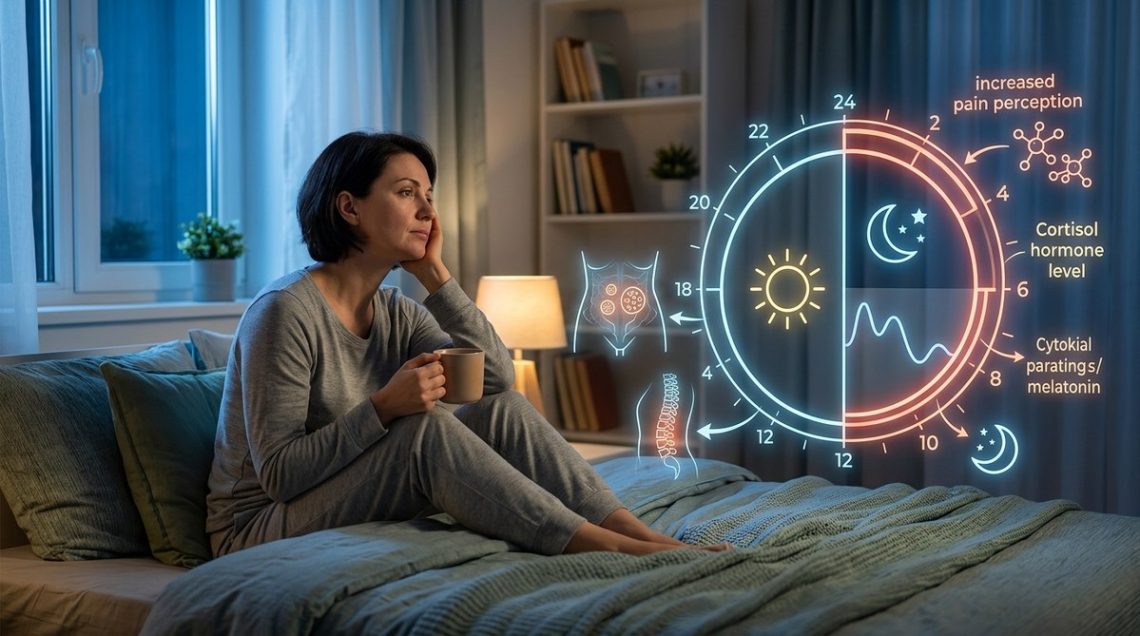
Research confirms that pain perception follows a 24-hour cycle. For many people, that cycle peaks in the late evening and early morning hours. A study published in the journal Pain found that pain sensitivity is highest around 3 a.m. and lowest in the late afternoon. That means the moment you’re trying to drift off, your nervous system is actually more alert to pain signals.
This isn’t random. It’s tied to your suprachiasmatic nucleus (SCN), a tiny region in your brain that acts as your master clock. The SCN coordinates every cell in your body, including those that process pain. When the sun sets, your SCN sends out signals that change how your body responds to injury and inflammation.
Your Body Clock and Pain Perception
Your circadian rhythm does more than regulate sleep. It also controls:
- Production of natural painkillers like endorphins
- Release of cortisol, an anti-inflammatory hormone
- Sensitivity of pain receptors (nociceptors)
- Activity of immune cells that promote inflammation
During the day, your body typically keeps inflammation in check. Cortisol levels are highest in the morning, which helps suppress pain. As evening approaches, cortisol drops. Meanwhile, melatonin rises to prepare you for sleep. Here’s where it gets tricky: melatonin can sometimes increase pain sensitivity in certain types of chronic pain conditions.
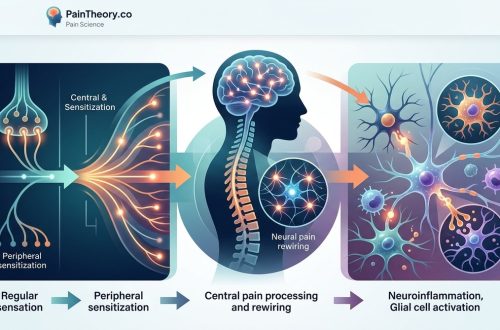
For a deeper look at how your nervous system can amplify pain, read our article on 5 Surprising Ways Your Brain Creates and Amplifies Pain Sensations.
How Melatonin and Cortisol Play a Role
Let’s break down the hormonal dance that makes nighttime pain worse.
Cortisol is your body’s natural anti-inflammatory. It peaks around 8 a.m. and steadily declines throughout the day. By 10 p.m., levels are at their lowest. Without cortisol’s dampening effect, inflammation can flare more easily. That means conditions like arthritis, tendonitis, and fibromyalgia often feel more intense at night.
Melatonin rises as darkness falls. While it’s essential for sleep, some research suggests melatonin can lower your pain threshold. In other words, it may make your nervous system more sensitive to pain signals. For people with migraines or neuropathic pain, this can be a double-edged sword.
If you experience pelvic pain, estrogen levels also influence pain perception. Learn more in The Estrogen-Pain Connection: How Hormones Amplify Chronic Pain in Women.
Why Inflammation Flares at Night
Your immune system follows its own clock. Inflammatory cytokines (proteins that promote inflammation) tend to increase at night. This is part of the body’s natural repair cycle. While you sleep, your immune system works to heal damage. But for someone with chronic inflammation, this night-time ramp-up can cause significant discomfort.
Conditions particularly affected include:
- Rheumatoid arthritis
- Lower back pain
- Fibromyalgia
- Migraines
- Endometriosis
For more on the chemistry behind your discomfort, see Inflammation and Pain: The Chemical Messengers Behind Your Discomfort.
The Role of Distraction and Psychology
Daytime is full of distractions. Work, family, screens, conversations. Your brain has many inputs competing for attention. Pain signals are one of many. At night, distractions vanish. The room is quiet. Your mind has nothing to focus on except the ache in your knee or the throb in your lower back.
This psychological amplification is real. The brain has a finite capacity for attention. When you remove other stimuli, pain takes center stage. Anxiety about not sleeping can also ramp up your sympathetic nervous system (fight or flight), which further increases pain. It becomes a vicious cycle.
One way to break this cycle is through understanding the Gate Control Theory of Pain: How Your Body Decides What Hurts.
Practical Strategies That Actually Help
You don’t have to suffer through every night. Here is a numbered list of steps you can take, backed by science, to reduce nighttime pain.
- Time your medication wisely. If you take anti-inflammatories, consider a dose in the evening so it peaks when cortisol is low. Always consult your doctor first.
- Create a cool, dark sleep environment. A cooler room reduces core body temperature, which can lower inflammation. Use blackout curtains to support melatonin’s natural rise.
- Practice gentle movement before bed. Light stretching or yoga can release tension without triggering more inflammation. Try 7 Gentle Yoga Poses That Actually Help Lower Back Pain.
- Use heat or cold therapy strategically. Heat relaxes muscles; cold reduces acute inflammation. For fibroid pain, see Does Heat or Cold Work Better for Fibroid Pain Relief?.
- Engage your brain with non-painful stimuli. Listen to an audiobook, try a guided meditation, or use a white noise machine. This occupies your attention and reduces pain perception.
- Adjust your sleep position. Poor posture can aggravate pain. Improve your setup with Sleep Positions That Won’t Aggravate Your Back Pain.
Common Mistakes That Make Night Pain Worse
Many people unknowingly sabotage their sleep. Here’s a table of what to avoid and what to try instead.
| Mistake | Why It Hurts | Better Alternative |
|---|---|---|
| Eating a heavy meal close to bedtime | Digestion increases inflammation and raises body temperature | Eat at least 3 hours before bed; choose anti-inflammatory snacks |
| Using alcohol to fall asleep | Alcohol disrupts sleep cycles and increases pain sensitivity | Limit alcohol; try chamomile tea |
| Staring at screens in bed | Blue light suppresses melatonin, delaying sleep and pain relief | Use blue light filters or read a physical book |
| Staying in bed when pain wakes you | Lying awake reinforces the association between bed and pain | Get up, do a quiet activity, return to bed when drowsy |
When to See a Doctor
Persistent nighttime pain that disrupts sleep is a sign that something needs attention. It could be a symptom of an underlying condition like fibroids, endometriosis, or a herniated disk. Don’t try to push through it.
“Night pain is one of the most reliable red flags for serious pathology,” says Dr. Sarah Chen, a pain management specialist. “If your pain wakes you up consistently or requires you to change sleep positions frequently, it’s time to get evaluated.”
If you notice any of these signs, seek medical help:
- Pain that wakes you up every night
- Accompanied by fever, weight loss, or numbness
- New or worsening symptoms
- Pain that doesn’t respond to over-the-counter treatments
Learn about 5 Back Pain Red Flags That Mean You Should See a Doctor Immediately.
A Deeper Connection Between Your Sleep and Your Pain
The relationship between pain and sleep is bidirectional. Pain disrupts sleep, and poor sleep makes pain worse. By addressing nighttime pain directly, you can start to break that cycle. The strategies above are not just about surviving the night. They are about retraining your body’s clock and your nervous system to calm down when it’s time to rest.
Remember that every small change adds up. Maybe tonight you try the cool room and a guided sleep meditation. Tomorrow you adjust your eating schedule. Over time, these habits can shift your pain profile and give you back the restorative sleep you deserve.
For more on the science of pain and sleep, explore How Chronic Pain Alters Your Brain and Nervous System and Building Your Multimodal Pain Management Plan: A Step-by-Step Guide.
You don’t have to fight this battle alone. Understanding why pain feels worse at night is the first step. Taking action, even one step at a time, can bring you closer to peaceful nights and more comfortable days.