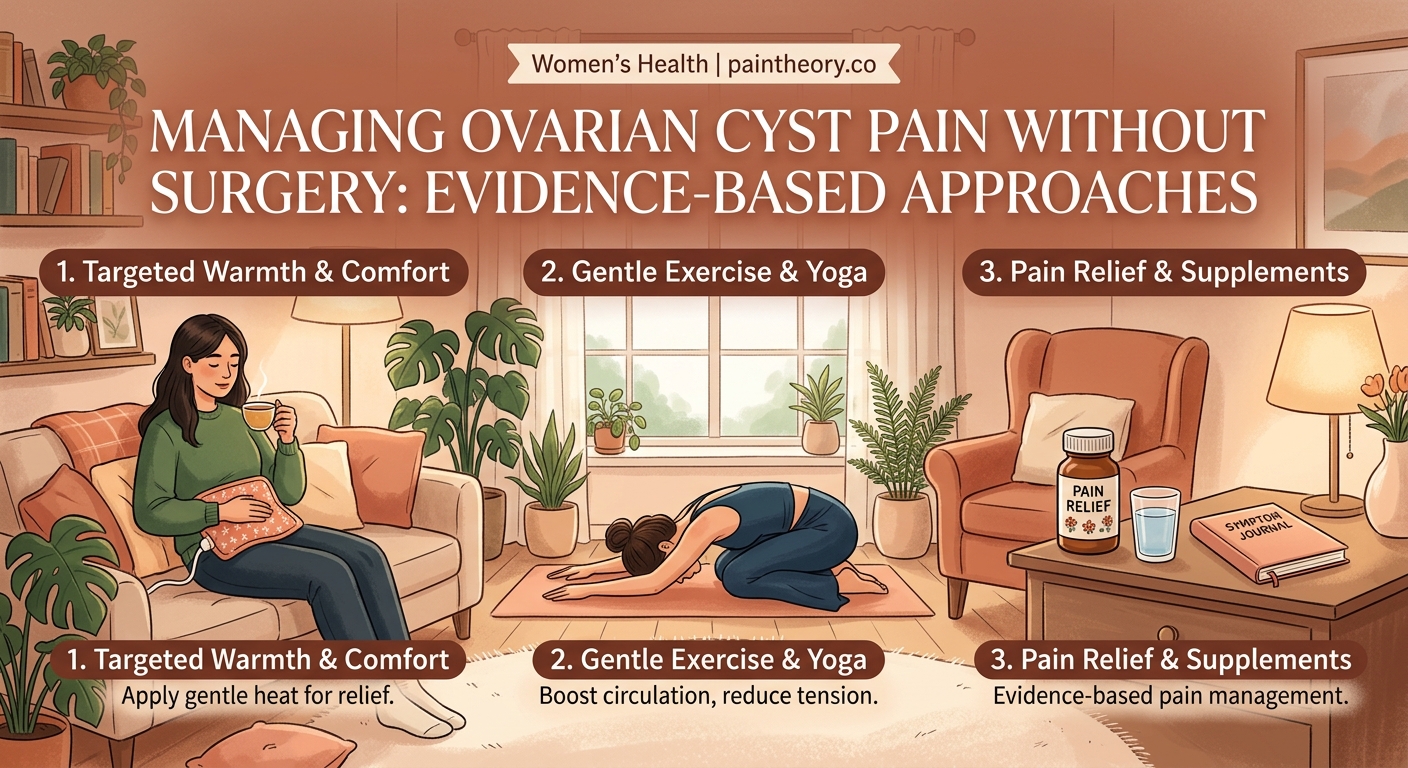
You just got the diagnosis. Ovarian cysts. The ultrasound images look foreign and scary, and the cramping in your lower abdomen feels impossible to ignore. Your doctor mentions monitoring them, maybe surgery down the line, but you’re not ready to jump straight to an operating room. You want answers about what you can do right now to feel better.
Most [ovarian cysts](https://www.ncbi.nlm.nih.gov/books/NBK560541/) resolve naturally within 8 to 12 weeks without intervention. Conservative pain management combines hormonal regulation, targeted pain relief medications, heat therapy, and lifestyle modifications. Tracking symptoms helps identify which cysts need medical intervention versus those that respond well to non-surgical approaches. Success depends on cyst type, size, and your individual pain threshold.
Understanding which cysts respond to conservative treatment
Not all ovarian cysts are created equal. Functional cysts, which form during your normal menstrual cycle, account for roughly 80% of all ovarian cysts in women of reproductive age. These include follicular cysts and corpus luteum cysts.
Functional cysts typically disappear on their own within two to three menstrual cycles. They’re the best candidates for non-surgical management.
Dermoid cysts, endometriomas, and cystadenomas are less likely to resolve without intervention. But even these types can be managed conservatively if they’re small and not causing severe symptoms.
Size matters here. Cysts under 5 centimeters usually cause minimal discomfort and rarely require surgery. Between 5 and 10 centimeters, your doctor will likely recommend watchful waiting with regular ultrasounds. Above 10 centimeters, surgical options become more pressing.
Your pain level doesn’t always correlate with cyst size. A 3-centimeter cyst positioned near sensitive structures can hurt more than a 7-centimeter one floating freely in your pelvis.
Hormonal regulation as first-line defense
Birth control pills are often the first recommendation for managing ovarian cyst pain. They work by preventing ovulation, which stops new functional cysts from forming.
The hormones in birth control also help existing cysts shrink faster. Studies show that combined oral contraceptives reduce the recurrence rate of functional cysts by up to 78%.
You won’t see results overnight. Most women notice improvement after two to three months of consistent use.
Options include:
- Combined oral contraceptives (estrogen plus progestin)
- Progestin-only pills for women who can’t take estrogen
- Hormonal IUDs that release localized progestin
- Contraceptive patches or vaginal rings
Your healthcare provider will consider your medical history before prescribing. Women with certain conditions like blood clotting disorders, migraines with aura, or breast cancer history may need alternative approaches.
The pill doesn’t shrink existing dermoid cysts or endometriomas, but it can prevent new ones and reduce associated inflammation.
Pain medication strategies that actually work
Over-the-counter NSAIDs form the backbone of ovarian cyst pain management. Ibuprofen and naproxen reduce prostaglandin production, which decreases both inflammation and pain signals.
Timing your medication matters. Take NSAIDs with food to protect your stomach lining. Start them at the first sign of discomfort rather than waiting until pain becomes unbearable.
Maximum recommended doses:
– Ibuprofen: 800 mg every 8 hours (2400 mg daily maximum)
– Naproxen: 500 mg every 12 hours (1000 mg daily maximum)
Acetaminophen offers an alternative if you can’t tolerate NSAIDs. It won’t reduce inflammation but does help with pain perception. You can safely combine acetaminophen with NSAIDs for breakthrough pain.
Some women find relief with prescription medications when over-the-counter options fall short. These include stronger NSAIDs like mefenamic acid or short courses of muscle relaxants for pelvic floor tension.
Understanding how comparing pain medications work for different conditions helps you make informed choices about your treatment plan.
Avoid long-term opioid use. These medications carry addiction risks and don’t address the underlying inflammation causing your pain.
Heat therapy and physical approaches
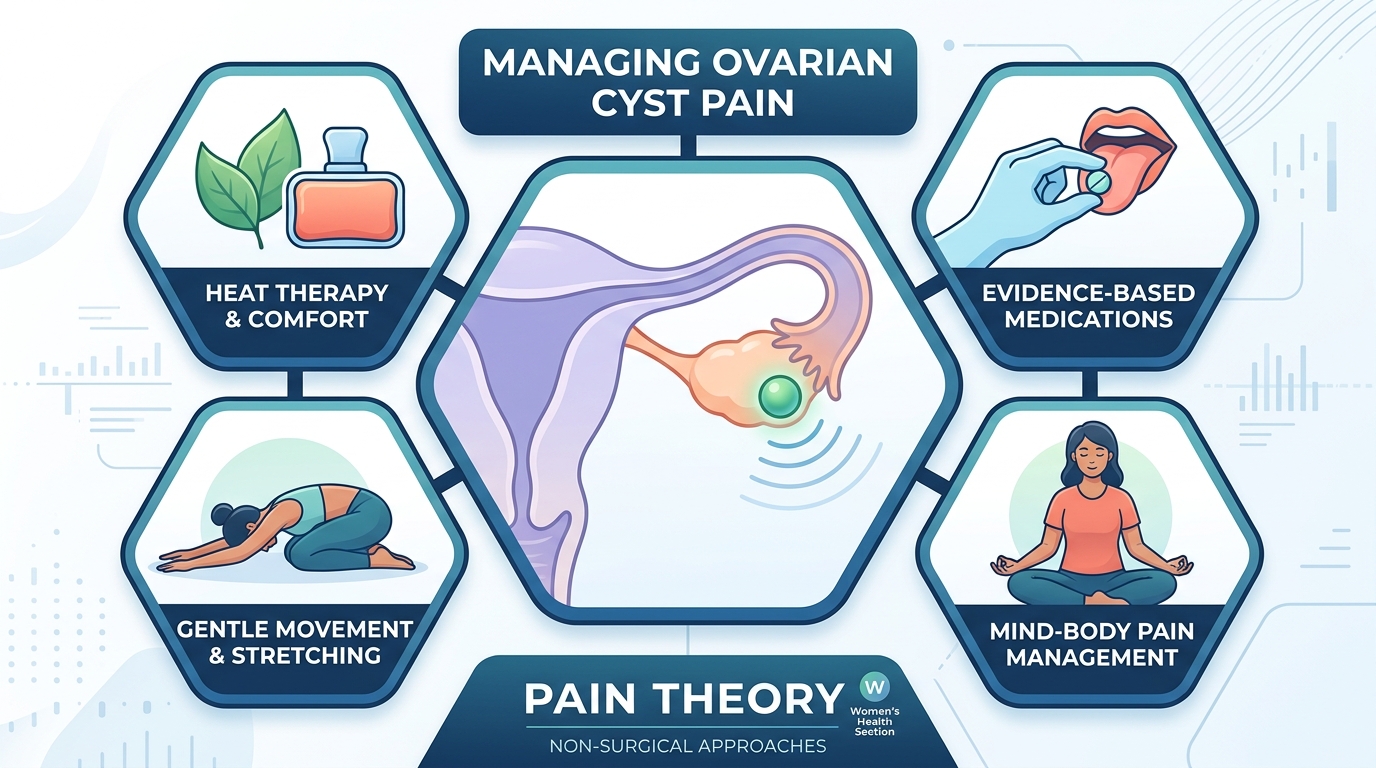
A heating pad on your lower abdomen can provide immediate relief during painful episodes. Heat increases blood flow to the area, relaxes tense muscles, and interrupts pain signals traveling to your brain.
Apply heat for 15 to 20 minutes at a time. Use a barrier like a thin towel between the heating pad and your skin to prevent burns.
Warm baths work similarly. Add Epsom salts to potentially reduce inflammation, though scientific evidence for this remains limited.
Some women prefer cold therapy. Ice packs can numb acute pain and reduce swelling. Try alternating heat and cold to see which provides better relief for your specific symptoms.
Gentle movement helps too. Light walking, swimming, or yoga can reduce pelvic congestion and improve circulation. Avoid high-impact exercises that might cause cyst rupture.
Pelvic floor physical therapy addresses muscle tension that often accompanies ovarian cyst pain. A specialized therapist can teach you relaxation techniques and stretches that reduce referred pain patterns.
The connection between pain and sleep creates a difficult cycle. Learning how to sleep better when chronic pain keeps you awake becomes essential for overall symptom management.
Dietary modifications that reduce inflammation
What you eat influences inflammation levels throughout your body, including your pelvis. An anti-inflammatory diet won’t shrink cysts, but it can reduce associated discomfort.
Foods to emphasize:
– Fatty fish rich in omega-3s (salmon, sardines, mackerel)
– Colorful vegetables and berries high in antioxidants
– Whole grains instead of refined carbohydrates
– Nuts, seeds, and olive oil
– Turmeric and ginger for their anti-inflammatory compounds
Foods to limit:
– Processed meats and red meat
– Refined sugars and white flour products
– Trans fats and excessive omega-6 oils
– Alcohol and caffeine in large amounts
Some women with endometriomas find relief by reducing dairy and gluten, though this varies individually. Keep a food diary to identify personal triggers.
Staying hydrated helps your body flush out inflammatory compounds. Aim for eight glasses of water daily, more if you exercise regularly.
Certain supplements show promise for ovarian cyst management. Vitamin D deficiency correlates with increased cyst formation in some studies. Magnesium may help reduce menstrual cramping associated with cysts.
Always discuss supplements with your healthcare provider. They can interact with medications or worsen certain conditions.
Creating your symptom tracking system
Monitoring your symptoms helps you and your doctor determine if conservative management is working. It also reveals patterns that might otherwise go unnoticed.
Track these elements daily:
- Pain intensity on a 0 to 10 scale
- Pain location and quality (sharp, dull, cramping)
- Timing relative to your menstrual cycle
- Activities that worsen or improve symptoms
- Medications taken and their effectiveness
- Associated symptoms like bloating or nausea
Use a paper journal, smartphone app, or simple spreadsheet. The format matters less than consistency.
After three months of tracking, patterns emerge. You might notice pain peaks during ovulation or right before your period. Certain foods or stress levels might correlate with flare-ups.
This data proves invaluable during medical appointments. Instead of vague descriptions, you can show concrete trends that guide treatment decisions.
Red flags that warrant immediate medical attention include sudden severe pain, fever, vomiting, or dizziness. These could indicate cyst rupture or torsion requiring emergency care.
When conservative approaches aren’t enough
Most functional cysts resolve within three menstrual cycles with conservative management. If yours persists beyond that timeframe, your doctor may recommend additional imaging or different approaches.
Growing cysts need closer monitoring. An ultrasound every four to eight weeks tracks size changes and helps determine if intervention becomes necessary.
Some situations call for moving beyond conservative treatment:
| Scenario | Typical Recommendation |
|---|---|
| Cyst larger than 10 cm | Surgical evaluation |
| Rapid growth over 4-6 weeks | Repeat imaging, possible biopsy |
| Solid components on ultrasound | Rule out malignancy |
| Severe pain uncontrolled by medication | Consider drainage or removal |
| Cyst torsion symptoms | Emergency surgery |
| Fertility concerns with endometriomas | Specialist consultation |
Age factors into decision-making too. Postmenopausal women with new cysts require more aggressive evaluation since functional cysts shouldn’t form without ovulation.
Understanding when you should consider surgery for chronic pain relief helps you have informed conversations with your healthcare team.
Blood tests measuring CA-125 levels help assess cancer risk in certain situations. Elevated levels don’t automatically mean cancer, but they guide further testing decisions.
Complementary therapies worth considering
Acupuncture shows promise for pelvic pain management in several studies. While it won’t shrink cysts, some women report significant pain reduction after regular sessions.
Look for a licensed acupuncturist with experience treating gynecological conditions. Expect to attend weekly sessions for at least six to eight weeks before assessing effectiveness.
Massage therapy targeting the abdomen and lower back can release muscle tension and improve lymphatic drainage. Avoid deep abdominal massage if you have large cysts, as excessive pressure could cause rupture.
Mind-body techniques address the stress-pain cycle. Chronic pain triggers stress hormones, which can worsen inflammation and pain perception. Breaking this cycle improves quality of life even if the cyst remains.
Try these evidence-based approaches:
– Progressive muscle relaxation
– Guided imagery focused on healing
– Meditation apps designed for chronic pain
– Cognitive behavioral therapy with a pain specialist
Research into why your brain creates and amplifies pain sensations reveals how powerful these mental techniques can be.
Castor oil packs applied to the lower abdomen have traditional use for ovarian cysts. Scientific evidence remains limited, but the warmth and ritual may provide comfort. Avoid this method if you’re trying to conceive or during menstruation.
Managing expectations and timeline
Conservative management requires patience. You won’t feel dramatically better tomorrow or next week.
Most women following a comprehensive non-surgical approach notice gradual improvement over eight to twelve weeks. Pain intensity decreases, episodes become less frequent, and daily activities become more manageable.
Set realistic milestones:
– Week 2: Medication routine established, tracking system in place
– Week 4: Identifying pain patterns, adjusting strategies as needed
– Week 8: Noticeable reduction in pain frequency or intensity
– Week 12: Follow-up ultrasound to assess cyst changes
Some days will feel worse than others. Hormonal fluctuations, stress, and random variation all affect pain levels. A bad day doesn’t mean your approach is failing.
“Conservative management works best when patients actively participate in their care rather than passively waiting for cysts to disappear. The combination of medical treatment, lifestyle modifications, and symptom awareness creates the foundation for successful non-surgical outcomes.” – Dr. Sarah Chen, Reproductive Endocrinologist
Communication with your healthcare provider throughout this process is essential. Report significant changes promptly rather than waiting for scheduled appointments.
Building your personalized management plan
No single approach works for everyone. Your ideal strategy combines multiple elements tailored to your specific situation.
Start with these foundational steps:
- Schedule a thorough evaluation with your gynecologist to confirm cyst type and size
- Discuss hormonal contraception options based on your medical history
- Establish a pain medication routine using the lowest effective dose
- Implement heat therapy during painful episodes
- Begin tracking symptoms in a consistent format
- Make gradual dietary changes focusing on anti-inflammatory foods
- Add stress-reduction techniques that fit your lifestyle
- Set a three-month review point to assess progress
Adjust your plan based on results. If hormonal contraception causes unacceptable side effects, try a different formulation or non-hormonal alternatives. If NSAIDs upset your stomach, switch to acetaminophen or add a stomach protectant.
Consider your lifestyle realistically. A complex supplement routine you won’t maintain helps nobody. Simple, sustainable changes produce better long-term results than perfect plans you abandon after two weeks.
Cost matters too. Heating pads and over-the-counter medications cost far less than regular acupuncture sessions. Prioritize approaches that fit your budget while remaining effective.
The relationship between ovarian cysts and other reproductive health concerns sometimes overlaps. Women with endometriosis often experience worse pain during their period, and similar pain management principles apply.
Living well while managing ovarian cysts
Pain doesn’t have to control your life. Many women successfully manage ovarian cyst symptoms while maintaining careers, relationships, and active lifestyles.
Communicate your needs clearly. Tell your partner when you need extra support. Explain to your boss that occasional work-from-home days help you manage a medical condition. Real friends will understand when you need to reschedule plans.
Build a support network. Online communities connect you with other women managing similar challenges. Sharing experiences reduces isolation and provides practical tips you won’t find in medical journals.
Celebrate small victories. Getting through your work presentation despite pelvic pain deserves recognition. So does sticking with your tracking system for a full month.
Stay informed but avoid obsessive research. Spending hours reading worst-case scenarios increases anxiety without improving outcomes. Trust your healthcare team and focus on actions within your control.
Remember that conservative management isn’t failure. Choosing non-surgical approaches demonstrates wisdom and self-advocacy. Surgery always remains an option if needed, but starting with less invasive methods makes medical and personal sense.
Your path forward with confidence
Managing ovarian cyst pain without surgery combines medical treatment, self-care, and patience. The strategies outlined here give you concrete tools to reduce discomfort and improve daily functioning.
Start with one or two approaches rather than trying everything simultaneously. Build your management plan gradually, adding techniques as you determine what works for your body. Track your progress honestly, celebrate improvements, and adjust course when needed. Most importantly, remember that you’re not alone in this experience, and effective relief is absolutely possible without an operating room.