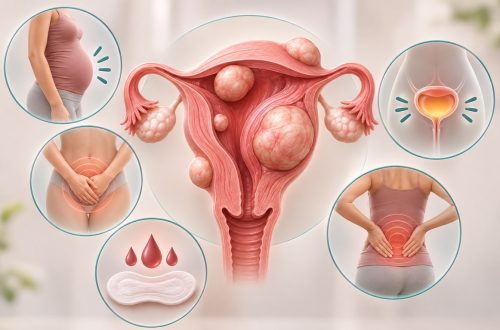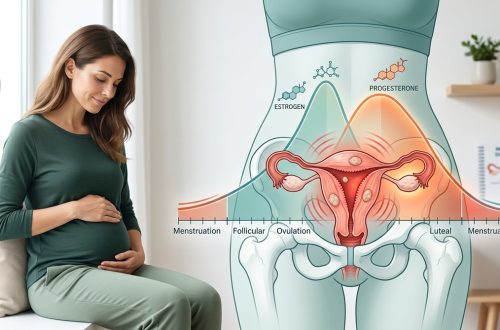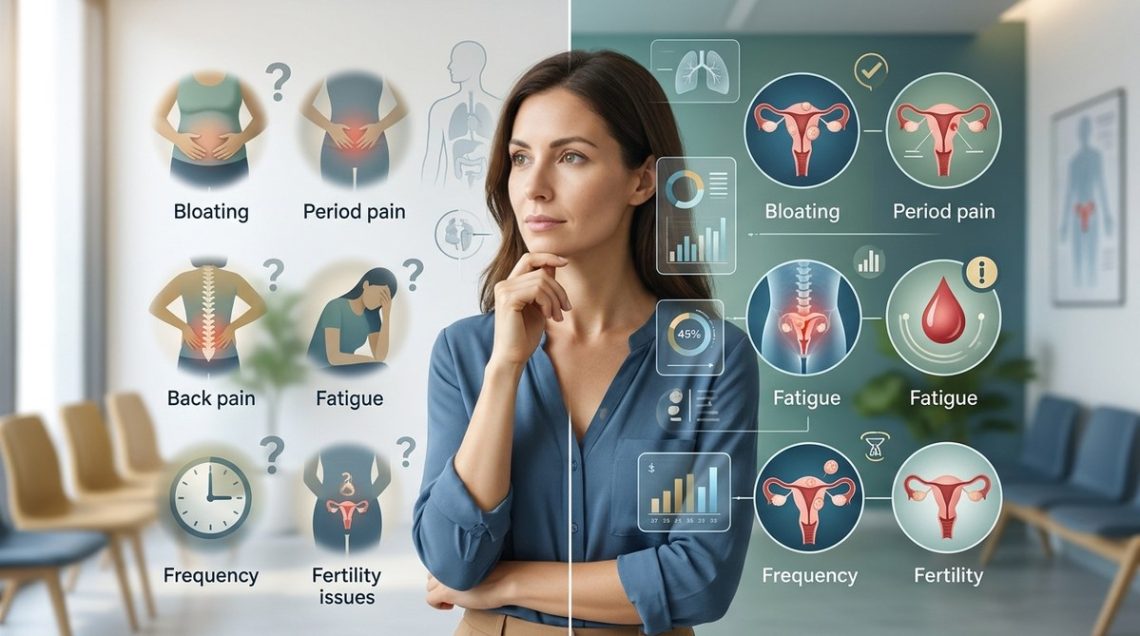
You’re curled up on the couch with a heating pad, wondering why your period feels like a scene from a horror movie. The bloating makes you look three months pregnant, and the pelvic pain is a dull, constant companion. Your doctor says it’s probably fibroids. But a friend with endometriosis describes almost the exact same symptoms. Another coworker was told she had adenomyosis. So who is right? And more importantly, how do you know what’s actually going on inside your body? This confusion isn’t rare. In fact, fibroid symptoms misdiagnosis happens every day in clinics across the United States. Understanding the overlap is the first step to getting the right treatment.
Fibroid symptoms are often mistaken for endometriosis, adenomyosis, PCOS, or even irritable bowel syndrome. This guide breaks down six specific symptoms that cause the most confusion. You will learn how to spot the subtle differences, what tests can confirm the diagnosis, and how to ask your doctor the right questions to avoid a misdiagnosis that delays real relief.
Why Fibroids Get Misdiagnosed So Often
Uterine fibroids are noncancerous growths in the uterus. They affect up to 80% of women by age 50. Yet they are frequently missed or confused with other conditions. Why? Because the symptoms are generic. Pain, bleeding, and pressure can come from many sources. A 2024 survey from the National Women’s Health Network found that nearly 40% of women with fibroids were initially told they had something else. The most common misdiagnoses include endometriosis, adenomyosis, ovarian cysts, and even irritable bowel syndrome.
The problem is not bad doctors. The problem is that these conditions share the same address: your pelvis. They also share similar hormonal triggers. Without specific imaging, it is very hard to tell them apart.
6 Fibroid Symptoms That Mimic Other Conditions
Here are the six most confusing symptoms and how to tell if fibroids are the real cause.
1. Heavy Menstrual Bleeding
Heavy bleeding is the hallmark of fibroids. But it is also a top symptom of adenomyosis, hormonal imbalances, and even thyroid disorders. The difference lies in the pattern.
Fibroid bleeding: Periods are often longer than seven days. You may pass clots the size of a quarter or larger. Bleeding can be so heavy that you need to change a super tampon or pad every hour.
Adenomyosis bleeding: Bleeding is also heavy, but it is usually accompanied by severe cramping that starts before your period and lasts through it.
Hormonal bleeding: Bleeding may be irregular, not just heavy. You might skip months or bleed between periods.
If your bleeding is consistently heavy and regular, fibroids are a strong suspect. If it is erratic, hormones or thyroid issues might be the culprit.
2. Chronic Pelvic Pain
Pelvic pain is the great imitator. Fibroids cause a dull, aching pressure. Endometriosis causes sharp, stabbing pain that often worsens during sex or bowel movements. Ovarian cysts can cause sudden, intense pain on one side.
How to tell the difference:
– Fibroids: Pain is often a constant, low-grade ache. It may feel like your pelvis is full or heavy.
– Endometriosis: Pain is cyclical. It flares up right before your period and eases after. Sex is often painful deep inside.
– Ovarian cysts: Pain is usually one-sided and can come on suddenly, like a sharp twist.
If your pain is constant and feels like pressure, fibroids are likely. If it comes and goes with your cycle, suspect endometriosis.
3. Bloating and Abdominal Swelling
Many women with fibroids say they look pregnant. This symptom is called “fibroid belly.” But bloating is also common in IBS, ovarian cysts, and even early ovarian cancer.
Fibroid bloating: The swelling is firm. It does not come and go with meals. It is constant and may get worse as your fibroids grow.
IBS bloating: The swelling fluctuates. It gets worse after eating certain foods and improves after a bowel movement.
Ovarian cyst bloating: This is often accompanied by a feeling of fullness, even after a small meal. It may be more noticeable on one side.
If your belly feels hard and swollen all the time, not just after eating, fibroids could be the cause. You can read more about this specific symptom in our guide on fibroids and bloating.
4. Lower Back Pain
Lower back pain is so common that it is often dismissed as a muscle issue or a bad mattress. But fibroids can press on nerves and muscles in your lower back, causing persistent pain.
Fibroid back pain: The pain is usually in the lower back, near the tailbone. It does not get better with stretching or changing your sleeping position. It may radiate down your legs.
Muscle back pain: This pain is often related to activity. It gets worse with certain movements and better with rest.
Sciatica from fibroids: A large fibroid can press on the sciatic nerve. This causes shooting pain down one leg. This is often mistaken for a disc problem.
If your back pain is accompanied by pelvic pressure or heavy periods, fibroids should be on your radar. For more on this connection, see our article on fibroids and back pain.
5. Pain During Sex
Painful intercourse is a classic symptom of endometriosis. But fibroids can cause it too. The difference is where you feel the pain.
Fibroid pain: The pain is often deep. It feels like pressure or a sharp jab deep inside your pelvis. It may be worse in certain positions.
Endometriosis pain: The pain is also deep, but it often lasts for hours after sex. You may feel sore and tender the next day.
Vaginismus or pelvic floor pain: This pain is more at the entrance. It feels like a burning or tearing sensation.
If the pain is deep and positional, fibroids are a possible cause. If it lingers for hours, endometriosis is more likely.
6. Frequent Urination and Constipation
Fibroids can press on your bladder and rectum. This leads to needing to pee all the time or struggling with constipation.
Fibroid bladder pressure: You feel like you need to pee constantly, even when your bladder is empty. You may wake up multiple times at night.
UTI or interstitial cystitis: These cause burning and urgency, but also pain when you pee. A urine test can rule these out.
Constipation from fibroids: The pressure is on your rectum. You may feel like you cannot fully empty your bowels. This is different from diet-related constipation, which usually improves with fiber and water.
If you have both urinary and bowel symptoms along with pelvic pain, fibroids are a strong suspect.
How to Spot the Difference: A Practical Guide
You do not need to be a doctor to start connecting the dots. Use this table to compare your symptoms.
| Symptom | Fibroids | Endometriosis | Adenomyosis | Ovarian Cysts |
|---|---|---|---|---|
| Bleeding | Heavy, long, clots | Heavy, painful | Heavy, severe cramps | Irregular, not always heavy |
| Pain | Dull pressure | Sharp, cyclical | Severe cramping | Sudden, one-sided |
| Bloating | Constant, firm | Cyclical | Present | One-sided fullness |
| Back pain | Lower back, tailbone | Lower back, hips | Lower back | Rare |
| Sex pain | Deep, positional | Deep, lingering | Deep, tender | Deep on one side |
| Bladder issues | Frequent urination | Rare | Rare | Rare |
The Three Tests That Confirm Fibroids
If you suspect fibroids, ask your doctor for these three tests. They are the gold standard for diagnosis.
- Pelvic ultrasound. This is the first step. It uses sound waves to create an image of your uterus. It can show the size, number, and location of fibroids.
- Saline infusion sonography (SIS). This is a special ultrasound where saline is injected into your uterus. It helps see fibroids that are inside the uterine cavity. These are the ones that cause heavy bleeding.
- MRI. An MRI gives a very detailed picture. It is especially useful if you have large fibroids or if your doctor suspects adenomyosis as well.
“Ultrasound is a great starting point, but it can miss small fibroids or confuse them with ovarian cysts. If your symptoms are severe and the ultrasound is normal, push for an MRI. It is the most accurate way to rule out other conditions.” — Dr. Sarah Mitchell, OB/GYN, Cleveland Clinic
What to Do If You Think You’ve Been Misdiagnosed
If you have been told you have endometriosis or IBS but the treatment is not working, consider this possibility: you might have fibroids. Here is a step-by-step plan.
- Gather your symptom diary. Write down your pain level, bleeding pattern, and bloating for two months. Be specific.
- Request imaging. Ask for a transvaginal ultrasound. If that is normal but your symptoms are severe, ask for an MRI.
- Get a second opinion. If your doctor dismisses your symptoms, find a specialist. A gynecologist who focuses on fibroids or a pelvic pain specialist is ideal.
- Consider a diagnostic laparoscopy. This is a minor surgery where a camera is inserted into your pelvis. It can see endometriosis and ovarian cysts that imaging might miss.
- Track your response to treatment. If birth control pills make your pain worse, that is a clue. Fibroids often grow with estrogen, and some hormonal treatments can aggravate them.
For more information on the full diagnostic journey, read our guide on how fibroids are diagnosed.
When Symptoms Overlap: The Most Confusing Cases
Sometimes you can have both fibroids and endometriosis. Or fibroids and adenomyosis. This is called concurrent conditions. It makes diagnosis even harder.
How to handle this: Focus on which condition is causing the most trouble. If heavy bleeding is your main issue, treat the fibroids first. If pain is the main issue, treat the endometriosis first. Your doctor can help you prioritize.
One clue: if your pain is severe during your period but also between periods, you may have adenomyosis along with fibroids. Our article on fibroids vs. adenomyosis explains the differences in more detail.
Your Next Steps Toward Clarity
You do not have to live in confusion. Fibroid symptoms misdiagnosis is frustrating, but it is also fixable. The key is knowing what to ask for. Start with a symptom diary. Request the right imaging. And do not be afraid to seek a second opinion.
Your body is sending you signals. With the right information, you can decode them. If you want to learn more about how fibroids affect your daily life, check out our piece on 7 early warning signs of fibroids most women ignore. And remember, you are the expert on your own body. Trust your instincts.