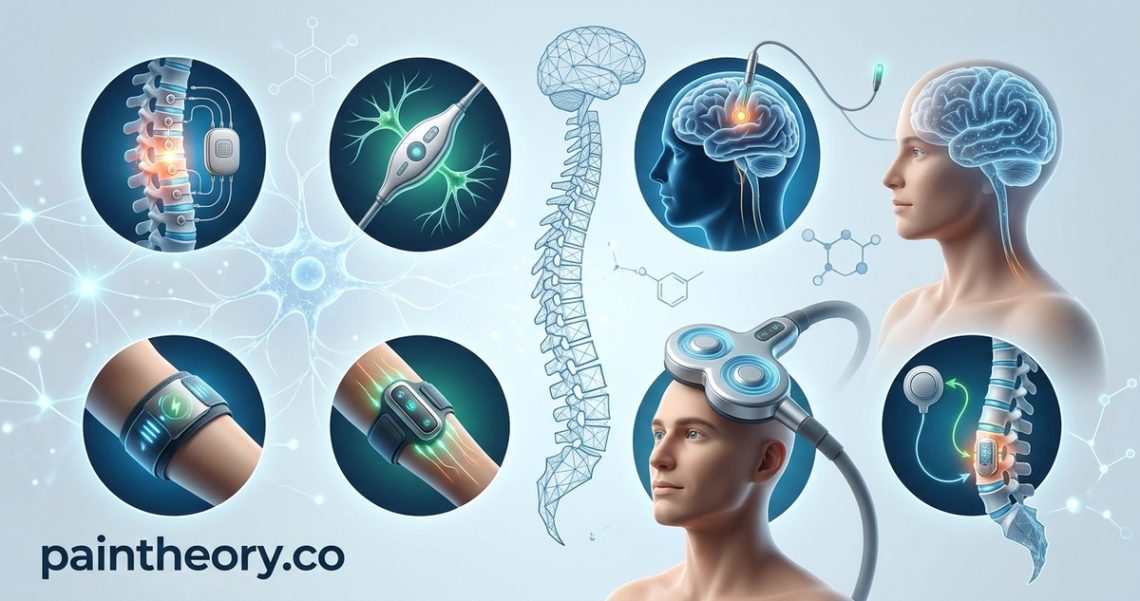
The field of neuromodulation is moving faster than many clinicians expected. For years, spinal cord stimulation (SCS) and dorsal root ganglion (DRG) stimulation were the main tools. But 2026 is shaping up to be a breakthrough year. New technologies are targeting pain pathways with greater precision, fewer side effects, and better long-term outcomes. If you treat patients with chronic pain, these six emerging therapies deserve your attention.
Six emerging neuromodulation therapies for chronic pain in 2026 are redefining how we treat conditions like failed back surgery syndrome, neuropathic pain, and complex regional pain syndrome. Closed-loop systems, focused ultrasound, and non-invasive nerve stimulation lead the pack. These technologies offer new hope for patients who have not responded to traditional treatments.
Why Neuromodulation Is Evolving Right Now
The opioid crisis taught us an important lesson. Medications alone are not the answer for chronic pain. Patients need targeted, non-pharmacological options. Neuromodulation fills that gap. It works by altering nerve activity through electrical or magnetic signals. The goal is to interrupt pain signals before they reach the brain.
In 2026, the market for these devices is expected to exceed eight billion dollars. That growth is driven by better battery life, smaller implants, and smarter algorithms. But the real story is about new mechanisms of action. Let us look at the six therapies that are generating the most excitement among pain specialists.
1. Closed-Loop Spinal Cord Stimulation
Traditional SCS delivers a constant level of stimulation. That works for many patients, but it can also cause overstimulation or understimulation as body position changes. Closed-loop SCS solves this problem.
These systems use real-time feedback from the spinal cord. They measure the neural response to each pulse and adjust the output instantly. Think of it like cruise control for your nervous system. The result is more consistent pain relief and fewer uncomfortable sensations.
A 2025 multicenter trial showed that closed-loop SCS reduced pain scores by an average of 67 percent in patients with failed back surgery syndrome. That is a significant jump over traditional open-loop systems.
2. Focused Ultrasound for Neuromodulation
Focused ultrasound uses sound waves to target deep brain structures without making any incisions. It is not new for essential tremor or Parkinson’s disease. But in 2026, it is being tested for chronic pain conditions like neuropathic pain and central pain syndrome.
The procedure works by heating a small area of tissue to disrupt abnormal pain circuits. It is non-invasive, requires no recovery time, and can be done in an outpatient setting. Early results from a trial at the University of Virginia show that 60 percent of patients with treatment-resistant neuropathic pain experienced at least 50 percent pain reduction for six months.
This therapy is especially promising for patients who cannot tolerate implants or who have failed multiple previous treatments.
3. Non-Invasive Vagus Nerve Stimulation
The vagus nerve is a major highway between the brain and the body. It plays a key role in inflammation and pain signaling. Non-invasive vagus nerve stimulation (nVNS) uses a handheld device placed on the neck or ear to send gentle electrical pulses.
In 2026, nVNS is gaining traction for fibromyalgia, migraine, and pelvic pain conditions. A recent study published in Pain Medicine found that daily nVNS reduced pain intensity by 40 percent in women with endometriosis-related pain. That is a big deal for a condition that often has limited treatment options.
The best part? Patients can use the device at home. No surgery, no needles, no daily pills.
4. Peripheral Nerve Stimulation with Ultrasound Guidance
Peripheral nerve stimulation (PNS) is not new, but the way we place the leads has changed. In 2026, ultrasound-guided placement is becoming the standard of care. This allows clinicians to target specific nerves with millimeter accuracy.
Common targets include the genicular nerves for knee pain, the suprascapular nerve for shoulder pain, and the occipital nerves for headache disorders. The procedure takes about 20 minutes and can provide relief that lasts for months.
A 2026 review in Regional Anesthesia & Pain Medicine concluded that ultrasound-guided PNS has a success rate above 80 percent for chronic post-surgical pain. That is a strong option for patients who want to avoid more surgery.
5. Transcranial Direct Current Stimulation for Central Pain
Transcranial direct current stimulation (tDCS) uses a weak electrical current applied to the scalp to modulate brain activity. It is non-invasive and has been studied for depression and stroke recovery. Now it is being refined for central pain syndromes.
The idea is to increase activity in the motor cortex, which in turn reduces pain perception. A 2026 meta-analysis of 18 trials found that tDCS significantly reduced pain in patients with spinal cord injury and multiple sclerosis. The effect was modest but meaningful, especially for patients who have exhausted other options.
Home-based tDCS devices are now available with a prescription. That makes it easier for patients to use the therapy daily without traveling to a clinic.
6. Bioelectronic Implants for Inflammatory Pain
This is one of the most exciting frontiers in neuromodulation. Bioelectronic implants are small devices placed near peripheral nerves that can detect inflammation and deliver electrical pulses to reduce it. They act like a smart pacemaker for the immune system.
In 2026, these implants are being tested for rheumatoid arthritis and inflammatory bowel disease. But the potential for chronic pain is huge. Many pain conditions, including fibromyalgia and low back pain, have an inflammatory component. If we can control inflammation at the nerve level, we may be able to prevent pain from starting.
Early data from a pilot study at the Feinstein Institutes showed that bioelectronic stimulation reduced joint swelling and pain scores by 50 percent in patients with rheumatoid arthritis.
How These Therapies Compare: A Quick Reference
| Therapy | Invasiveness | Best For | Evidence Level (2026) |
|---|---|---|---|
| Closed-loop SCS | Minimally invasive | Failed back surgery, neuropathic pain | Strong (multiple RCTs) |
| Focused ultrasound | Non-invasive | Central pain, neuropathic pain | Moderate (early trials) |
| Non-invasive VNS | Non-invasive | Fibromyalgia, migraine, pelvic pain | Moderate (growing) |
| Ultrasound-guided PNS | Minimally invasive | Joint pain, post-surgical pain | Strong (reviews) |
| tDCS | Non-invasive | Central pain, spinal cord injury | Moderate (meta-analyses) |
| Bioelectronic implants | Minimally invasive | Inflammatory pain, RA | Emerging (pilot data) |
What This Means for Your Practice in 2026
The shift toward non-invasive and closed-loop systems is real. Patients are asking for options that do not involve daily medications or major surgery. These six therapies give you more tools to offer.
Here are three practical steps to stay current:
- Attend a hands-on workshop for ultrasound-guided PNS placement. This skill is becoming essential for pain clinics.
- Review the latest closed-loop SCS data. Many device manufacturers offer free CME webinars.
- Consider adding non-invasive VNS or tDCS to your clinic. The devices are affordable and easy to integrate.
“The future of pain management is not about stronger drugs. It is about smarter devices that work with the body’s own wiring.” Dr. Sarah Lin, director of neuromodulation at Stanford Pain Center.
A Note on Patient Selection
Not every patient is a candidate for every therapy. That is why a thorough evaluation is critical. Look at the patient’s pain type, location, duration, and previous treatments. Some therapies work better for neuropathic pain, while others target inflammatory pain.
For example, a patient with chronic knee pain after total knee replacement might be an excellent candidate for ultrasound-guided PNS of the genicular nerves. A patient with widespread fibromyalgia might respond better to non-invasive VNS or tDCS.
If you want to understand how pain becomes chronic in the first place, read our guide on why does pain become chronic. It explains the nervous system changes that make neuromodulation so effective.
Where the Research Is Headed
The next five years will bring even more advances. Researchers are working on fully implantable closed-loop systems that can adapt to a patient’s activity level in real time. They are also testing combination therapies that pair neuromodulation with physical therapy or cognitive behavioral therapy.
One trial at the Cleveland Clinic is looking at whether focused ultrasound can be used to treat phantom limb pain. Another group in Germany is testing bioelectronic implants for chronic low back pain. The results should be available by late 2027.
For now, the six therapies listed here are the most promising options for clinicians who want to offer cutting-edge care without waiting for the future.
Bringing It All Together for Better Patient Outcomes
The era of one-size-fits-all neuromodulation is ending. In 2026, we have more choices than ever. Closed-loop systems, focused ultrasound, non-invasive nerve stimulation, and bioelectronic implants are changing what is possible for chronic pain patients.
Your job is to match the right therapy to the right patient. That takes knowledge, training, and a willingness to try new approaches. But the payoff is real. Patients who have suffered for years can finally find relief.
Start by reviewing your current patient panel. Identify two or three patients who have not responded to traditional treatments. Then consider whether one of these emerging therapies might be the answer. Even one success story can change how you practice.
For more on how pain signals work at the receptor level, check out our article on what are pain receptors and how do they actually work. It provides the foundation you need to explain these therapies to your patients with confidence.