You’ve been diagnosed with fibroids, and suddenly every workout feels like a gamble. Will that run trigger more bleeding? Could those squats make the pelvic pressure worse? The uncertainty can be paralyzing, especially when staying active matters to your mental health and overall wellbeing.
Exercise with fibroids is safe for most women when you choose low-impact activities, avoid movements that increase abdominal pressure, and listen to your body’s signals. Walking, swimming, yoga, and strength training with proper form can reduce symptoms while maintaining fitness. The key is modifying intensity during flare-ups and working with healthcare providers to create a personalized movement plan that supports your health goals.
Understanding How Fibroids Affect Your Body During Movement
Fibroids are non-cancerous growths in or around your uterus. They range from pea-sized to larger than a grapefruit.
Size and location matter more than you might think.
A small fibroid tucked inside your uterine wall might not affect your workouts at all. But a larger fibroid pressing on your bladder or bowel can make certain movements uncomfortable or even painful.
During exercise, increased blood flow and abdominal pressure can intensify symptoms. You might notice heavier bleeding, sharper cramps, or more pronounced pelvic pressure during or after certain activities.
This doesn’t mean you should stop moving. It means you need to be strategic about how you move.
Your symptoms provide valuable feedback. Pain during high-impact activities like running or jumping often signals that those movements are creating too much jostling or pressure. Increased bleeding after intense core work might indicate that abdominal compression is aggravating your fibroids.
Some women find their symptoms worsen during their menstrual cycle, making exercise more challenging during those specific days. Others notice consistent patterns regardless of their cycle.
The relationship between fibroids and physical changes can also affect how your body responds to different types of movement.
Safe Exercise Categories for Women with Fibroids
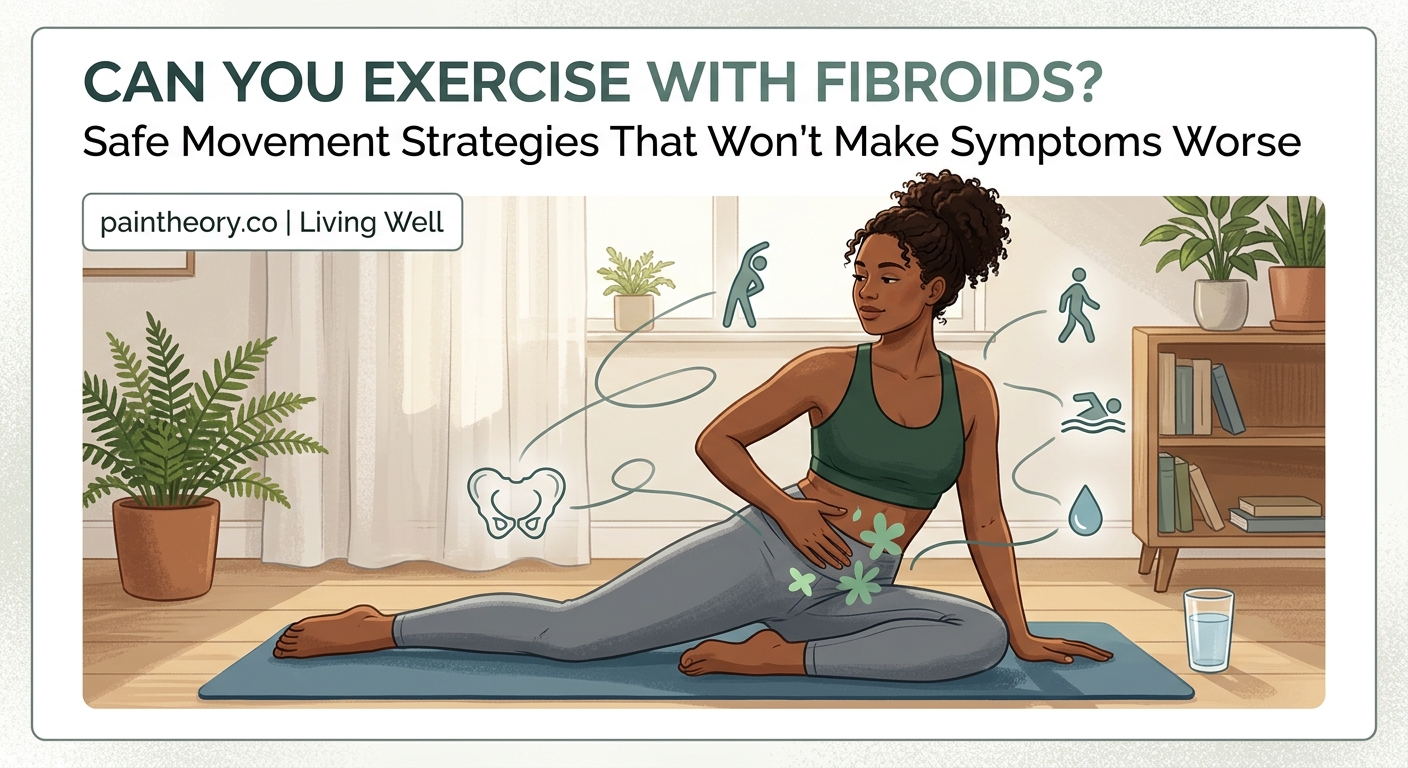
Not all movement creates equal stress on your pelvic region.
Low-impact cardiovascular activities:
- Walking at a moderate pace
- Swimming and water aerobics
- Cycling on flat terrain or stationary bikes
- Elliptical training with controlled movement
- Rowing with proper form
These activities keep your heart rate elevated without creating the jarring impact that can aggravate fibroid symptoms.
Flexibility and mind-body practices:
- Gentle yoga (avoiding deep twists and inversions)
- Pilates with modifications
- Tai chi
- Stretching routines
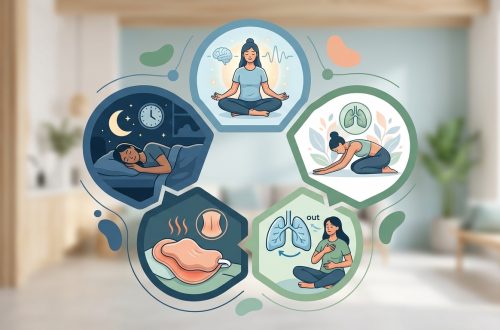
- Breathing exercises
These practices improve mobility while promoting relaxation and stress reduction, which can help manage pain perception.
Modified strength training:
- Resistance band exercises
- Light to moderate weight lifting
- Bodyweight exercises with proper form
- Isometric holds
- Upper body focused routines
Building muscle supports overall health and metabolism without necessarily increasing abdominal pressure.
The common thread? Control and gradual progression.
You want movements you can perform smoothly, without breath-holding or straining, and at an intensity you can sustain comfortably.
Step-by-Step Process for Starting Exercise with Fibroids
Starting or returning to exercise requires a thoughtful approach.
-
Get medical clearance from your healthcare provider. Discuss your specific fibroid situation, including size, location, and current symptoms. Ask about any movements or intensity levels you should avoid.
-
Start with baseline activities you can tolerate comfortably. This might be a 10-minute walk or five minutes of gentle stretching. The goal is establishing a foundation, not proving your fitness level.
-
Track your symptoms before, during, and after exercise. Note pain levels, bleeding changes, pelvic pressure, and energy levels. This data helps you identify patterns and make informed adjustments.
-
Gradually increase duration before intensity. Add five minutes to your walks before trying to walk faster. Complete more repetitions at your current weight before adding pounds.
-
Schedule rest days strategically. Your body needs recovery time, especially when managing a chronic condition. Plan at least two full rest days per week, more during symptom flare-ups.
-
Adjust your routine during your menstrual cycle. Many women need gentler activities during their period when fibroid symptoms often intensify. This isn’t failure; it’s smart management.
-
Reassess monthly. Review your symptom tracking and adjust your exercise plan based on what the data shows. Progress isn’t always linear, and that’s okay.
This systematic approach removes guesswork and builds confidence in your ability to move safely.
Exercises to Avoid or Modify
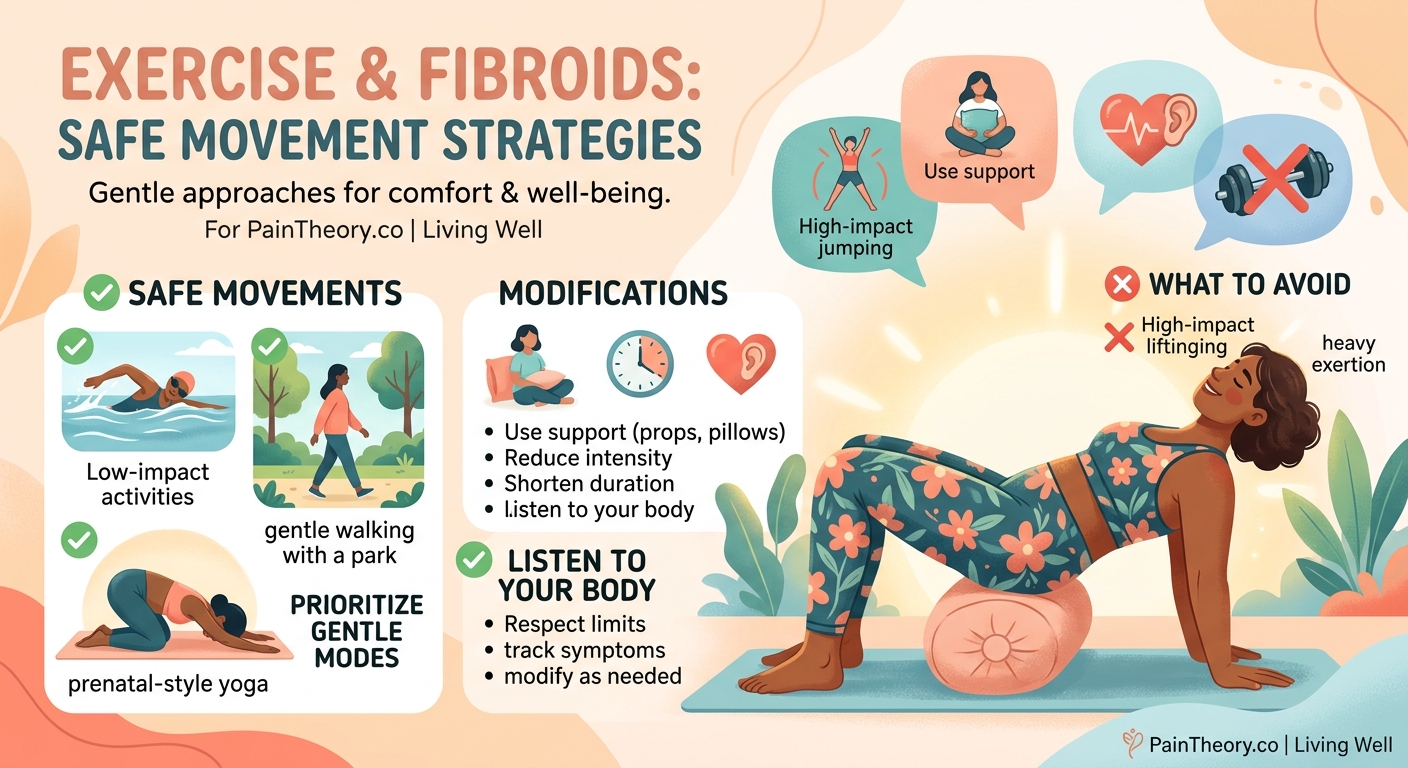
Some movements create excessive abdominal pressure or pelvic strain.
High-impact activities often cause problems:
- Running and jogging
- Jump rope
- Plyometric exercises (box jumps, burpees)
- High-intensity interval training with jumping
- Contact sports
The repeated jarring can increase pain and bleeding for many women.
Heavy lifting with poor form is another concern. Exercises that cause you to hold your breath and bear down (like the Valsalva maneuver) increase intra-abdominal pressure significantly.
Deep twisting movements in yoga or Pilates can compress the uterus and aggravate larger fibroids. Inversions might increase pelvic congestion and discomfort.
That doesn’t mean these activities are permanently off-limits. Many women can do modified versions or return to them after treatment.
For example, you might replace running with brisk walking or use an elliptical for similar cardiovascular benefits without the impact. Instead of heavy barbell squats, try bodyweight squats or resistance band variations that don’t require breath-holding.
The table below shows common substitutions:
| Potentially Problematic Exercise | Safer Alternative | Why It Works Better |
|---|---|---|
| Running | Power walking or swimming | Eliminates impact while maintaining cardio benefits |
| Heavy deadlifts | Resistance band pulls | Reduces abdominal pressure and allows controlled breathing |
| Traditional crunches | Pelvic tilts or bird dogs | Engages core without compression |
| Jump squats | Step-ups or glute bridges | Builds leg strength without jarring |
| Deep twisting poses | Gentle side stretches | Maintains flexibility without compression |
Listen to your body’s feedback. If an exercise consistently triggers symptoms, it’s telling you something important.
Managing Symptoms During and After Workouts
Even with careful planning, you’ll have challenging days.
Recognizing warning signs helps you respond appropriately:
- Sharp or escalating pain (not just muscle fatigue)
- Sudden increase in bleeding
- Dizziness or lightheadedness beyond normal exertion
- Severe pelvic pressure or feeling of heaviness
- Nausea unrelated to workout intensity
Stop exercising if you experience any of these symptoms. Rest and assess whether you need medical attention.
For mild discomfort, try these strategies:
Apply heat or cold after your workout. Many women find temperature therapy helpful for fibroid-related discomfort.
Stay hydrated before, during, and after exercise. Dehydration can intensify cramping and fatigue.
Time your workouts strategically. If mornings feel better than evenings, schedule movement then. Some women find exercising mid-cycle more comfortable than during their period.
Wear supportive clothing. A well-fitted sports bra and compression shorts can reduce jostling and provide gentle support to your pelvic area.
Practice proper breathing throughout your workout. Never hold your breath during exertion. Exhale during the challenging part of each movement.
Consider breaking your workout into shorter segments. Three 10-minute walks might feel better than one 30-minute session on symptomatic days.
“The goal isn’t to push through pain or prove you can do what you did before diagnosis. The goal is finding sustainable movement that supports your health without worsening your symptoms. That looks different for every woman, and it might look different for you from week to week.” – Physical therapist specializing in pelvic health
Building Core Strength Without Aggravating Fibroids
Core strength matters for overall function and pain management, but traditional ab exercises often cause problems.
The solution is working your core muscles without creating excessive intra-abdominal pressure.
Focus on exercises that maintain a neutral spine and engage deep stabilizing muscles:
Pelvic tilts: Lie on your back with knees bent. Gently rock your pelvis to flatten your lower back against the floor, then release. This subtle movement activates deep core muscles without compression.
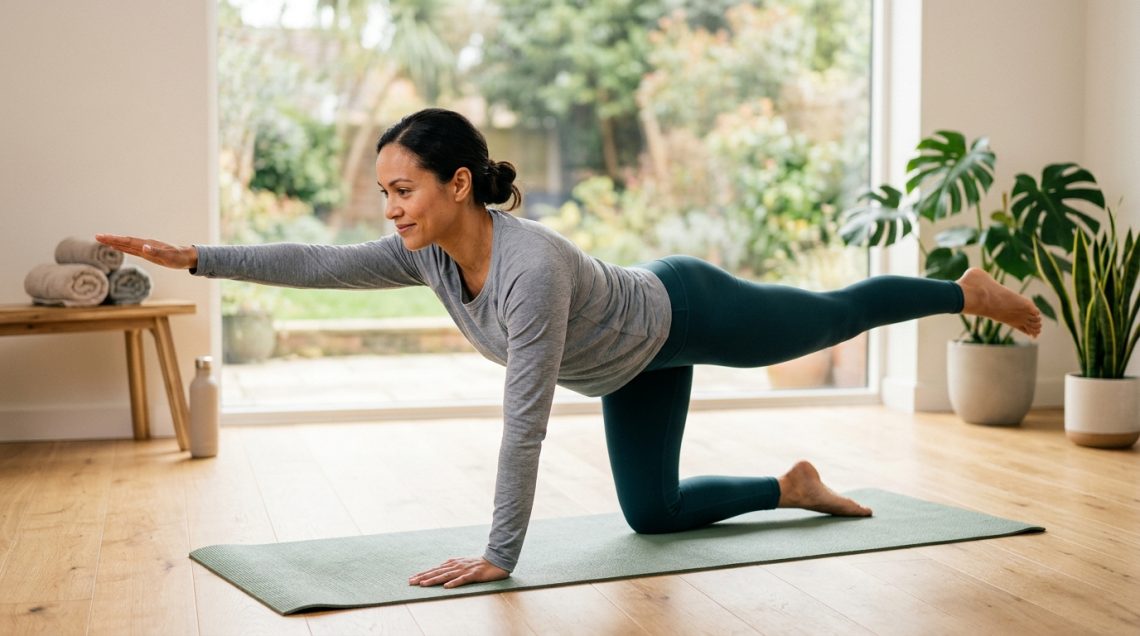
Bird dogs: Start on hands and knees. Extend one arm and the opposite leg, maintaining a stable torso. This challenges core stability without crunching movements.
Planks (modified): Hold a plank position on your knees or against a wall rather than full planks. Maintain proper alignment for shorter durations with perfect form.
Dead bugs: Lie on your back and slowly lower opposite arm and leg while keeping your lower back pressed to the floor. This controlled movement builds core strength safely.
Side-lying leg lifts: These engage obliques and hip stabilizers without placing pressure on your abdomen.
Avoid exercises that require you to curl your spine repeatedly or hold your breath. Skip traditional sit-ups, crunches, and bicycle crunches if they trigger symptoms.
Quality matters more than quantity. Five perfectly executed bird dogs with proper breathing provide more benefit than 50 rushed crunches that increase abdominal pressure.
The Role of Stress Management in Exercise Planning
Physical activity is just one piece of managing life with fibroids.
Stress affects pain perception and can worsen symptoms. Chronic stress triggers inflammation and may influence hormone levels, potentially affecting fibroid growth and symptoms.
Your exercise routine should reduce stress, not add to it.
That means releasing expectations about what you “should” be able to do. Comparing yourself to pre-diagnosis fitness levels or to women without fibroids creates unnecessary pressure.
Incorporate stress-reducing elements into your movement practice:
- Choose activities you genuinely enjoy rather than what you think you should do
- Exercise in environments that feel calming (nature, peaceful gyms, your home)
- Practice mindful movement, paying attention to how your body feels
- Use exercise as a break from other stressors, not another item on your to-do list
The connection between chronic pain and your nervous system means that managing stress can actually improve your physical symptoms.
If exercise consistently increases your stress levels, something needs to change. Maybe you’re pushing too hard, choosing activities you dislike, or exercising at inconvenient times.
Finding the sweet spot where movement feels good both during and after is essential for long-term sustainability.
When to Seek Additional Medical Support
Sometimes exercise modifications aren’t enough.
You should contact your healthcare provider if:
- Your symptoms significantly worsen despite adjusting your activity level
- You experience new or different types of pain
- Bleeding becomes heavy enough to interfere with daily activities
- You feel a noticeable change in fibroid size or location
- Exercise that previously felt comfortable now triggers symptoms
These changes might indicate fibroid growth or other developments that need medical evaluation.
Your provider might recommend imaging to assess your fibroids or discuss treatment options. Several approaches can reduce fibroid size or symptoms, potentially making exercise more comfortable.
For some women, surgical intervention becomes necessary when conservative management no longer provides adequate symptom control.
Working with specialists can also help. A physical therapist trained in pelvic health can design a personalized exercise program that accounts for your specific fibroid situation. They can teach you proper form and breathing techniques that minimize symptom aggravation.
A registered dietitian can help you optimize nutrition to support exercise recovery and overall health while managing fibroids.
Don’t wait until symptoms become unbearable to seek help. Early intervention often provides more options and better outcomes.
Creating Your Personalized Movement Plan
Your exercise routine should reflect your unique situation.
Start by identifying your current baseline. What can you do comfortably right now? Be honest about your starting point.
Set realistic goals that matter to you. Maybe you want to walk for 30 minutes without increased pain. Perhaps you want to return to yoga class with modifications. Or you might aim to maintain muscle strength during treatment.
Build your weekly schedule around these principles:
- Include variety (cardio, strength, flexibility)
- Plan rest days proactively
- Schedule lighter activities during your period if needed
- Leave room for adjustments based on how you feel
Track what works and what doesn’t. A simple notebook or phone app can help you identify patterns over weeks and months.
Celebrate progress in all its forms. Maybe you didn’t increase your walking distance, but you had less pain afterward. That’s progress. Perhaps you needed more rest days this month, but you maintained consistency on the days you did move. That counts.
Remember that your plan will evolve. What works now might need adjustment as your fibroids change, as you pursue treatment, or as other life factors shift.
The best exercise program is one you can sustain over time, not one that looks impressive on paper but leaves you exhausted and symptomatic.
Moving Forward with Confidence
Living with fibroids doesn’t mean giving up the activities that make you feel strong and capable.
It means getting creative, listening to your body’s wisdom, and finding new ways to move that honor both your fitness goals and your current health reality.
Start small, track your progress, and adjust based on real data rather than fear or assumptions. Work with healthcare providers who understand your desire to stay active and can support that goal.
Your body is capable of remarkable things, even with fibroids. The right movement plan helps you feel better physically and emotionally while managing your symptoms effectively. Give yourself permission to modify, rest when needed, and celebrate every day you show up for yourself in whatever way feels right.