Living with chronic pain can feel like carrying an invisible weight that no one else can see. You cancel plans again, and friends stop inviting you. Family members offer advice that misses the mark entirely. Your doctor rushes through appointments, leaving you with more questions than answers.
You’re not imagining the isolation. Studies show that people with chronic pain experience higher rates of loneliness and social withdrawal than the general population. But here’s the truth: building support system chronic pain doesn’t mean finding people who fix you. It means creating a network of individuals who understand, validate, and show up in ways that actually matter.
Building a support system for chronic pain requires identifying different types of support you need, communicating boundaries clearly, and assembling a mix of healthcare professionals, peers with lived experience, and understanding loved ones. The goal isn’t perfection but creating connections that reduce isolation and provide practical help when symptoms flare. Start small, be specific about your needs, and remember that quality always trumps quantity.
Why Traditional Support Networks Fall Short for Chronic Pain
Your childhood best friend means well when she suggests yoga cured her cousin’s back pain. Your partner tries to help by researching miracle cures at 2 AM. Your primary care doctor prescribes another round of physical therapy without asking if the last three rounds helped.
These people care about you. But chronic pain creates unique challenges that typical support systems aren’t built to handle.
Most people understand acute injuries. They know what a broken leg means and how long recovery takes. Chronic pain doesn’t follow that script. It fluctuates without warning. Good days don’t mean you’re healed. Bad days don’t mean you did something wrong.
This unpredictability confuses people who want to help but don’t know how. They offer solutions when you need validation. They take your cancellations personally. They wonder why you’re not better yet.
Understanding this gap is the first step toward building something better.
The Three Types of Support You Actually Need
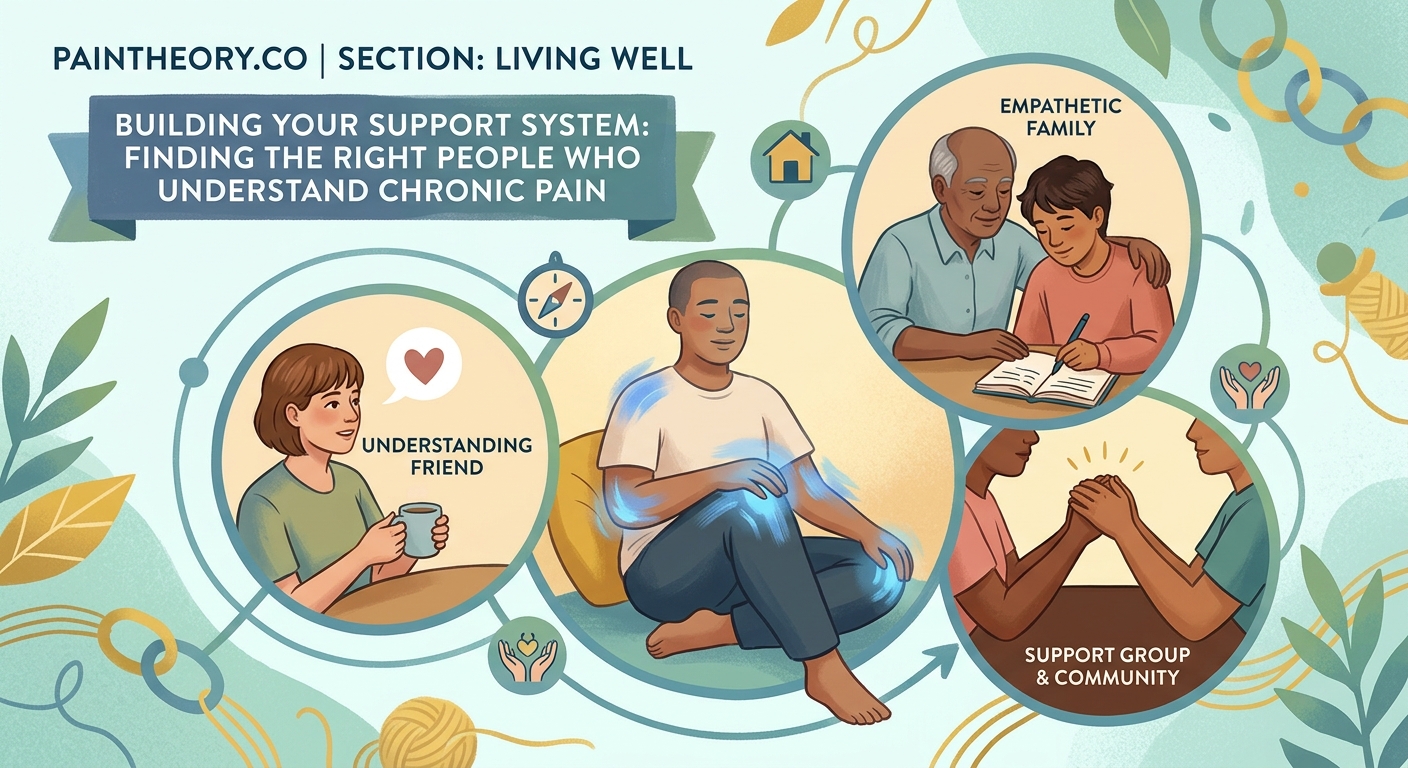
Building an effective support system means recognizing that different people serve different roles. No single person can meet all your needs, and expecting that sets everyone up for frustration.
Medical support comes from healthcare professionals who treat your condition and manage your care. This includes pain specialists, physical therapists, mental health providers, and any other clinicians involved in your treatment.
Peer support comes from others living with chronic pain. These are people who get it without lengthy explanations. They understand the frustration of invisible symptoms and the emotional toll of constant pain.
Personal support comes from friends and family who may not fully understand chronic pain but are willing to learn and show up consistently. These relationships provide emotional connection and practical help with daily tasks.
Most people focus too heavily on one type while neglecting others. The strongest support systems balance all three.
How to Find Healthcare Providers Who Listen
Finding the right medical team can feel like a full-time job. Many people with chronic pain see multiple doctors before finding ones who take their symptoms seriously.
Start by getting specific about what you need. Are you looking for someone to manage medications? A provider who specializes in your particular condition? Someone who takes a holistic approach?
Ask for referrals from people who share your condition. Online support groups often maintain lists of recommended providers in different areas. Patient advocacy organizations can also point you toward specialists.
During initial appointments, pay attention to how providers respond to your concerns. Do they listen without interrupting? Do they acknowledge the complexity of your experience? Do they discuss treatment options collaboratively rather than dictating a plan?
Red flags include dismissing your pain as exaggerated, suggesting it’s all in your head, or refusing to consider treatments you want to discuss. You deserve providers who treat you as an expert in your own body.
Understanding your nervous system’s role can help you have more productive conversations with medical professionals about your treatment options.
“The best healthcare providers for chronic pain patients are those who say ‘I believe you’ before they say anything else. That validation changes everything.” – Dr. Rachel Zoffness, pain psychologist
Where to Find People Who Understand Your Experience
Peer support provides something medical professionals and loved ones can’t: the comfort of being truly understood by someone who lives it too.
Online communities offer the easiest entry point. Facebook groups, Reddit communities, and condition-specific forums connect you with thousands of people managing similar challenges. You can participate as much or as little as you want, asking questions at 3 AM when pain keeps you awake.
In-person support groups create deeper connections but require more energy. Check with local hospitals, community centers, and pain clinics for meeting information. Many groups now offer hybrid options, letting you join virtually when leaving home feels impossible.
One-on-one peer relationships often develop naturally through these larger groups. You’ll find yourself drawn to certain people whose experiences resonate with yours. These individual connections can become some of your most valuable support.
Don’t overlook condition-specific organizations. Groups focused on fibromyalgia, arthritis, endometriosis, or other diagnoses often host events, maintain online forums, and facilitate connections between members.
Teaching Friends and Family What You Need
The people who love you want to help. They just don’t know how. Most haven’t considered that chronic pain requires different support than acute illness.
Your job isn’t to educate them about every medical detail. It’s to communicate clearly about what helps and what doesn’t.
Be specific. Instead of “I need support,” try “When I cancel plans, I need you to say ‘I understand’ rather than suggest I push through it.” Instead of “Help me more,” try “Could you pick up groceries on Tuesday when I have appointments?”
Create a simple guide for your inner circle. List concrete ways they can support you:
- Text instead of calling when you’re having a bad pain day
- Offer to visit at your place rather than suggesting you go out
- Ask “What do you need right now?” instead of offering unsolicited advice
- Accept that you might cancel last minute without taking it personally
- Check in regularly, even when you’re not actively struggling
Share articles or videos that explain your condition in accessible terms. You shouldn’t have to become a teacher, but providing resources lets people learn on their own time.
Setting Boundaries That Protect Your Energy
Support systems only work when they respect your limits. Without clear boundaries, even well-meaning people can drain your limited energy reserves.
Practice saying no without elaborate explanations. “I can’t make it” is a complete sentence. You don’t owe anyone a detailed breakdown of your symptoms or justification for your choices.
Limit time with people who consistently dismiss your experience, push unhelpful advice, or make your pain about their discomfort. This applies to family members too. Blood relation doesn’t entitle anyone to access that harms your wellbeing.
Set communication boundaries around your availability. You might tell friends you don’t answer calls during flare-ups but will respond to texts when able. You might ask family members not to send articles about miracle cures without asking first.
Protect your emotional energy by stepping back from relationships that feel one-sided. If someone only reaches out when they need something but disappears when you’re struggling, that’s not support.
Remember that boundaries aren’t punishments. They’re necessary frameworks that let healthy relationships thrive.
Building Your Support Team Step by Step
Creating a strong support system doesn’t happen overnight. Approach it as a gradual process with realistic expectations.
-
Assess your current situation. List everyone currently in your support network. Include healthcare providers, friends, family, and any peer connections. Note what type of support each person provides and where gaps exist.
-
Identify your top three needs. Maybe you need a pain specialist who takes new patients. Maybe you need one friend who understands when you cancel. Maybe you need help with grocery shopping during bad weeks. Focus on the most pressing needs first.
-
Take one action toward each need. Research three potential specialists and make an appointment with the most promising one. Join one online support group and introduce yourself. Have one honest conversation with one friend about what support looks like.
-
Evaluate and adjust. After a month, review what’s working. Did that new doctor listen? Does that support group feel helpful? Did your friend respond positively? Keep what works, change what doesn’t.
-
Expand gradually. Once you’ve addressed immediate needs, work on building redundancy. A second understanding friend. A backup for grocery help. Multiple peer connections so you’re not relying on one person.
-
Maintain relationships proactively. Support systems require upkeep. Check in with people who support you. Express appreciation. Show up for others when you’re able. Reciprocity matters, even when your capacity is limited.
Common Mistakes That Weaken Support Systems
| Mistake | Why It Hurts | Better Approach |
|---|---|---|
| Expecting one person to meet all needs | Creates pressure and inevitable disappointment | Distribute different types of support across multiple people |
| Not communicating specific needs | People guess wrong and feel frustrated | State exactly what helps: “I need you to listen, not solve” |
| Keeping everyone at arm’s length | Isolation deepens; no one knows how to help | Let at least 2-3 people see the real struggles |
| Staying with dismissive providers | Wastes time and damages self-trust | Switch doctors until you find ones who listen |
| Only seeking support during crises | Relationships feel transactional | Stay connected during stable periods too |
| Ignoring peer support | Miss out on practical tips and validation | Join at least one community of people with similar experiences |
What to Do When Support Feels Insufficient
Even strong support systems have limits. There will be days when no one understands, everyone’s busy, and you feel completely alone.
This doesn’t mean your support system failed. It means you’re dealing with something genuinely difficult that no amount of support fully resolves.
On those days, focus on basic self-compassion. You’re doing the best you can with challenging circumstances. Feeling isolated doesn’t mean you are isolated. It means you’re having a hard moment.
Reach out anyway, even when it feels pointless. Send a text to your most understanding friend. Post in your online support group. Call your therapist’s office to schedule an extra session.
Sometimes support looks like professional crisis resources. If you’re experiencing thoughts of self-harm, contact the 988 Suicide and Crisis Lifeline. If you need immediate medical attention for pain, don’t hesitate to seek emergency care.
Better sleep habits can improve your resilience during difficult periods, making it easier to maintain connections with your support network.
Maintaining Relationships When Pain Limits You
Chronic pain affects your ability to maintain friendships in typical ways. You can’t always meet for coffee, attend events, or be available when others need you.
This doesn’t make you a bad friend. It makes you someone managing a medical condition that requires accommodation.
Find alternative ways to stay connected. Video calls from bed. Text conversations throughout the day. Sending memes or articles that made you think of someone. Having friends visit your place instead of going out.
Be honest about your limitations while showing continued interest in others’ lives. “I can’t make your party, but tell me all about it afterward” maintains connection without overextending yourself.
Accept that some relationships won’t survive your chronic pain. People who can’t adjust their expectations or show basic understanding aren’t providing support anyway. Letting go of those connections makes room for better ones.
Celebrate the relationships that do adapt. The friend who suggests meeting at your place. The family member who checks in without expecting immediate responses. The partner who learns your pain cues and adjusts plans accordingly. These are your people.
Creating Support That Works for Your Specific Condition
Different pain conditions require different types of support. Someone with endometriosis pain faces different challenges than someone with chronic back pain.
Research condition-specific resources. National organizations focused on your diagnosis often provide better targeted support than general chronic pain groups. They understand the unique symptoms, treatments, and daily challenges you face.
Look for healthcare providers who specialize in your condition rather than generalists. A rheumatologist for arthritis. A gynecologist specializing in pelvic pain for endometriosis. These specialists bring expertise that dramatically improves care quality.
Connect with others managing the same condition. They’ll have practical advice about everything from which heating pads work best to how to explain your symptoms to doctors. This specific knowledge is invaluable.
Consider whether your condition involves visible symptoms or remains invisible. Invisible conditions often require more explicit communication about your needs since people can’t see your struggle.
Support Systems Change as Your Needs Evolve
What you need from your support system will shift over time. Early in your chronic pain journey, you might focus heavily on finding the right diagnosis and treatment. Later, you might need more help managing the emotional impact or adapting to limitations.
Your support system should evolve too. The doctor who helped initially might not be the right fit as your needs change. Friends who supported you through the crisis might not know how to show up for the long haul.
Regularly reassess what’s working. Every few months, ask yourself: Am I getting the medical care I need? Do I have people who understand my daily reality? Am I maintaining connections that matter to me?
Don’t feel guilty about outgrowing certain relationships or providers. Growth and change are normal. What served you a year ago might not serve you now.
Stay open to new connections. Join a new support group. Try a different type of therapy. Reconnect with old friends who might now have capacity to understand better.
When Professional Support Becomes Essential
Some aspects of living with chronic pain require professional help beyond what friends, family, or peer support can provide.
Mental health support is crucial. Chronic pain significantly increases risk for depression and anxiety. A therapist who understands chronic illness can help you process grief, develop coping strategies, and maintain quality of life despite ongoing symptoms.
Pain psychologists specialize in the intersection of chronic pain and mental health. They teach specific techniques for pain management, help reframe unhelpful thought patterns, and address the trauma that often accompanies chronic pain.
Social workers can connect you with practical resources like disability benefits, transportation assistance, or home health services. They navigate systems that feel overwhelming when you’re already managing constant pain.
Case managers coordinate care between multiple providers, ensuring everyone’s on the same page about your treatment plan. This becomes especially valuable if you’re seeing several specialists.
Don’t wait until you’re in crisis to seek professional support. Preventive mental health care and proactive care coordination make everything else more manageable.
The Role of Online Communities in Modern Support
Online support has transformed what’s possible for people with chronic pain. You can connect with others at any hour, from any location, regardless of your symptom severity that day.
The best online communities combine practical advice with emotional support. Members share tips about managing flare-ups, navigating insurance, finding good providers, and maintaining relationships. They also offer validation, humor, and understanding that reduces isolation.
Look for communities with active moderation to prevent misinformation and maintain a supportive atmosphere. Red flags include groups that push specific products, discourage medical treatment, or allow members to attack each other.
Participate at your own pace. You might read posts for months before commenting. You might be very active during hard periods and step back when you’re doing better. Both approaches are fine.
Consider starting with larger, established communities before seeking smaller, more specialized ones. General chronic pain groups help you feel less alone. Condition-specific groups provide targeted advice.
Remember that online support complements but doesn’t replace in-person connections and professional care. The strongest support systems include both.
Building Support When You’re Starting From Scratch
Maybe you’ve moved to a new city. Maybe chronic pain cost you your previous social circle. Maybe you’ve always struggled to build close relationships.
Starting from zero feels overwhelming, but it’s absolutely possible.
Begin with low-stakes connections. Online support groups require minimal energy and no face-to-face interaction. You can test the waters without major commitment.
Focus on one relationship at a time. Don’t try to build an entire support network simultaneously. Find one understanding friend. Establish care with one good provider. Join one supportive community.
Use your condition as a connection point. Attend virtual or in-person support group meetings. Join condition-specific online forums. Participate in advocacy events or awareness campaigns. Shared experience creates natural bonding opportunities.
Be patient with yourself and the process. Meaningful relationships take time to develop. You won’t instantly find your people, but consistent small efforts compound.
Consider whether professional help could jumpstart the process. A therapist can help address barriers to connection. A social worker can point you toward community resources. Support groups provide structured opportunities to meet others.
Making Peace With Imperfect Support
No support system will be perfect. Even the most understanding people will sometimes say the wrong thing. Even excellent doctors will occasionally miss something important. Even the best support groups will have off days.
This doesn’t mean your support system is failing. It means you’re dealing with human relationships and human limitations.
Practice accepting good-enough support. Someone who listens 80% of the time but occasionally offers unsolicited advice might still be a valuable part of your network. A doctor who’s excellent clinically but has poor bedside manner might still provide necessary care.
Distinguish between imperfect support and harmful behavior. Imperfect support comes from people who care but make mistakes. Harmful behavior includes consistent dismissal, boundary violations, or making your pain about their discomfort. You can work with imperfect. You should walk away from harmful.
Communicate when support misses the mark, but pick your battles. If someone’s trying but getting it wrong, gentle correction often helps. If someone consistently ignores your needs despite clear communication, that’s a different problem.
Remember that you’re also an imperfect part of others’ support systems. Chronic pain affects your ability to show up for people too. Mutual grace and understanding make relationships sustainable long-term.
Your Support System Is Worth the Effort
Building support system chronic pain takes time, energy, and emotional risk. You’ll face rejection, disappointment, and frustration along the way.
But isolation hurts worse than any of those setbacks. Humans are wired for connection. Chronic pain doesn’t change that fundamental need.
The right support system won’t cure your pain. It won’t make the hard days easy. But it will make them bearable. It will remind you that you’re not alone in this. It will provide practical help when you need it most.
Start small today. Send one message. Make one appointment. Join one group. Each tiny action moves you toward less isolation and more connection. You deserve people who understand, who show up, and who make this journey a little less lonely.