If you have been trying to get pregnant without success and you also have uterine fibroids, you have probably asked yourself one big question: Are these two things connected? You are not alone in wondering. Fibroids are extremely common, affecting up to 80% of women by age 50, and infertility affects about 1 in 8 couples in the United States. When both exist at the same time, it is natural to worry that the fibroids are the reason you are not conceiving. The answer is more nuanced than a simple yes or no, and understanding the details can help you make better decisions about your health and your fertility journey.
Fibroids can cause infertility in some women, but not all fibroids affect fertility. Location matters most. Submucosal fibroids that distort the uterine cavity have the strongest link to infertility and pregnancy loss. Intramural fibroids may also play a role depending on size. Subserosal fibroids rarely affect conception. If you have fibroids and are struggling to conceive, see a reproductive specialist. Many treatment options exist in 2026, from myomectomy to IVF, that can help you build your family.
How Fibroids Can Interfere with Getting Pregnant
The connection between fibroids and infertility is not a simple one. Some women with large fibroids get pregnant without any trouble. Other women with small fibroids struggle for years. To understand why, you need to look at how fibroids physically change the uterus and its environment.
Fibroids are growths of smooth muscle tissue that form inside or on the wall of the uterus. They are almost always benign, meaning they are not cancer. But they can still cause problems. Here are the main ways fibroids can interfere with fertility:
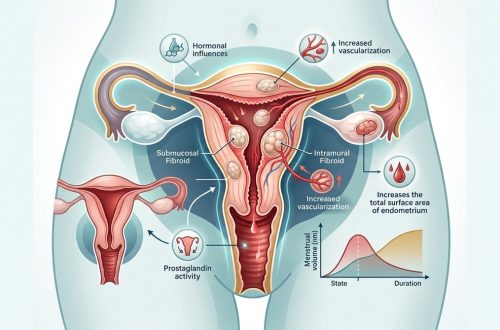
- Distorting the uterine cavity. A fibroid that bulges into the space where an embryo needs to implant can prevent pregnancy from taking hold.
- Blocking the fallopian tubes. A fibroid near the opening of a tube can physically block the egg and sperm from meeting.
- Changing blood flow. Fibroids can alter the blood supply to the uterine lining, making it less receptive to an embryo.
- Causing inflammation. Some research suggests fibroids create a chronic inflammatory environment in the uterus that is hostile to implantation.
- Interfering with contractions. The uterus normally has gentle contractions that help move sperm toward the fallopian tubes. Fibroids can disrupt this process.
“The most important factor is not the total number or size of fibroids, but their exact location. A small submucosal fibroid can cause more fertility problems than a large subserosal fibroid.” — Dr. Sarah Mitchell, reproductive endocrinologist
Which Fibroid Types Matter Most for Fertility
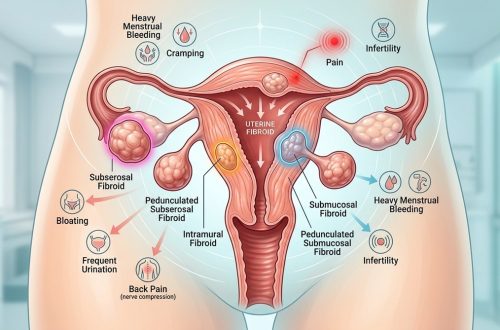
Doctors classify fibroids by where they grow. This classification is the single most important factor in determining whether fibroids and infertility are linked in your specific case.
Submucosal Fibroids
These fibroids grow just under the lining of the uterus and push into the uterine cavity. They have the strongest association with infertility. Studies show that removing submucosal fibroids can improve pregnancy rates significantly. If you have this type, it is worth talking to your doctor about treatment before pursuing pregnancy.
Intramural Fibroids
These grow within the muscular wall of the uterus. They are the most common type. Small intramural fibroids (under 3 cm) usually do not affect fertility. Larger ones, especially those that distort the cavity, can reduce pregnancy rates and increase miscarriage risk.
Subserosal Fibroids
These grow on the outer surface of the uterus. They rarely affect fertility because they do not change the environment inside the uterus. If you have only subserosal fibroids, they are probably not the cause of your infertility.
A Practical Look at Fibroid Size and Number
You might wonder if the size of your fibroids matters. It does, but not as much as location. A 5 cm submucosal fibroid is more likely to cause infertility than a 10 cm subserosal fibroid. That said, very large intramural fibroids (over 6 cm) can compress the uterine cavity even if they start in the muscle wall.
The number of fibroids also matters, but again in context. A single submucosal fibroid can be more problematic than three small intramural ones. Your doctor will use ultrasound or MRI to map out exactly where each fibroid sits and how it relates to the cavity.
Treatment Options for Fibroids When You Want to Get Pregnant
If you have fibroids and infertility, you have more options today than ever before. The goal of treatment is to remove or shrink the fibroids while preserving your ability to get pregnant and carry a baby.
Myomectomy
This is the surgical removal of fibroids while leaving the uterus intact. It is the gold standard for women who want to preserve fertility. There are different approaches:
- Hysteroscopic myomectomy. For submucosal fibroids. A camera goes through the vagina and cervix into the uterus. No incisions on the belly. Recovery is usually one to two weeks.
- Laparoscopic myomectomy. For intramural or subserosal fibroids. Small incisions in the abdomen. Recovery is about two to four weeks.
- Abdominal myomectomy. For large or numerous fibroids. A larger incision like a C-section scar. Recovery is four to six weeks.
Your surgeon will recommend the approach based on the size, number, and location of your fibroids.
Other Fertility-Preserving Procedures
| Procedure | How It Works | Best For | Recovery Time |
|---|---|---|---|
| MRI-guided focused ultrasound | High-frequency sound waves heat and destroy fibroid tissue | Women who cannot have surgery | Same day |
| Uterine artery embolization | Small particles block blood flow to fibroids, causing them to shrink | Women who are done having children (can affect ovarian function) | One week |
| Radiofrequency ablation | Heat energy destroys fibroid tissue through a small probe | Intramural and subserosal fibroids | One to two weeks |
Important Note on Embolization
Uterine artery embolization is effective for treating fibroid symptoms, but it can reduce ovarian reserve. If you are planning to get pregnant in the future, myomectomy or radiofrequency ablation are usually better choices. Always discuss your fertility goals with your interventional radiologist before choosing this option.
When IVF Might Be the Right Path
For some women, treating the fibroids is not enough. If you are over 35, have other fertility factors (like blocked tubes or male factor infertility), or have had fibroids removed but still cannot conceive, in vitro fertilization (IVF) may be the next step.
IVF can bypass some of the problems fibroids cause. Because the embryo is placed directly into the uterus, it does not need to travel through the fallopian tubes. However, if a fibroid is distorting the cavity, it can still prevent implantation. In that case, removing the fibroid before IVF improves success rates.
Your reproductive endocrinologist will help you decide the best order of operations. Sometimes it makes sense to do IVF first and deal with fibroids later. Other times, surgery comes first.
Common Questions About Fibroids and Infertility
Can fibroids cause miscarriage?
Yes. Fibroids, especially submucosal ones, are linked to higher rates of first-trimester miscarriage. They may also increase the risk of preterm labor and placental problems.
Do fibroids grow during pregnancy?
They can. Estrogen and progesterone levels rise during pregnancy, and some fibroids grow as a result. Most growth happens in the first trimester. Your doctor will monitor them with ultrasound.
Can you have a healthy pregnancy with fibroids?
Absolutely. Many women with fibroids have normal pregnancies and healthy babies. The key is proper monitoring and knowing when to intervene.
Should I have fibroids removed before trying to conceive?
That depends on the type and location. Submucosal fibroids should almost always be removed before pregnancy. Intramural fibroids over 4 cm that distort the cavity may also need removal. Subserosal fibroids usually do not need treatment.
Steps to Take Right Now
If you are worried about fibroids and infertility, here is a clear action plan:
- Get a proper diagnosis. Make sure your fibroids have been accurately mapped with ultrasound or MRI. Not all fibroids are the same.
- See a reproductive specialist. A reproductive endocrinologist can evaluate your full fertility picture, not just the fibroids.
- Discuss your treatment timeline. Some treatments require recovery time before you can try to conceive. Plan accordingly.
- Consider your age. If you are over 35, time matters. You may need to move faster on treatment decisions.
- Look at your overall health. Managing your weight, blood pressure, and stress levels can improve both fibroid symptoms and fertility.
For more details on managing symptoms, check out our guide on effective lifestyle changes to manage fibroid symptoms in 2026. If you are trying to decide between treatment options, our article on effective non-surgical treatments for uterine fibroids you should know can help you weigh your choices.
Finding Your Path Forward
The relationship between fibroids and infertility is real, but it is not a dead end. With modern medicine in 2026, you have many ways to address fibroids while keeping your fertility intact. The most important step is getting accurate information about your specific fibroids and working with a doctor who understands both conditions. You do not have to choose between treating your fibroids and having a baby. With the right plan, you can pursue both goals at the same time. Take it one step at a time, ask lots of questions, and trust that there are options available to help you build the family you want.