Uterine fibroids are surprisingly common. By the time they turn 50, more than half of all women in the United States will have at least one. But here is the part that surprises most people: where a fibroid grows inside your uterus changes everything about how it feels. Two women can both have fibroids, yet one struggles with heavy, painful periods while the other feels nothing at all. The difference often comes down to location.
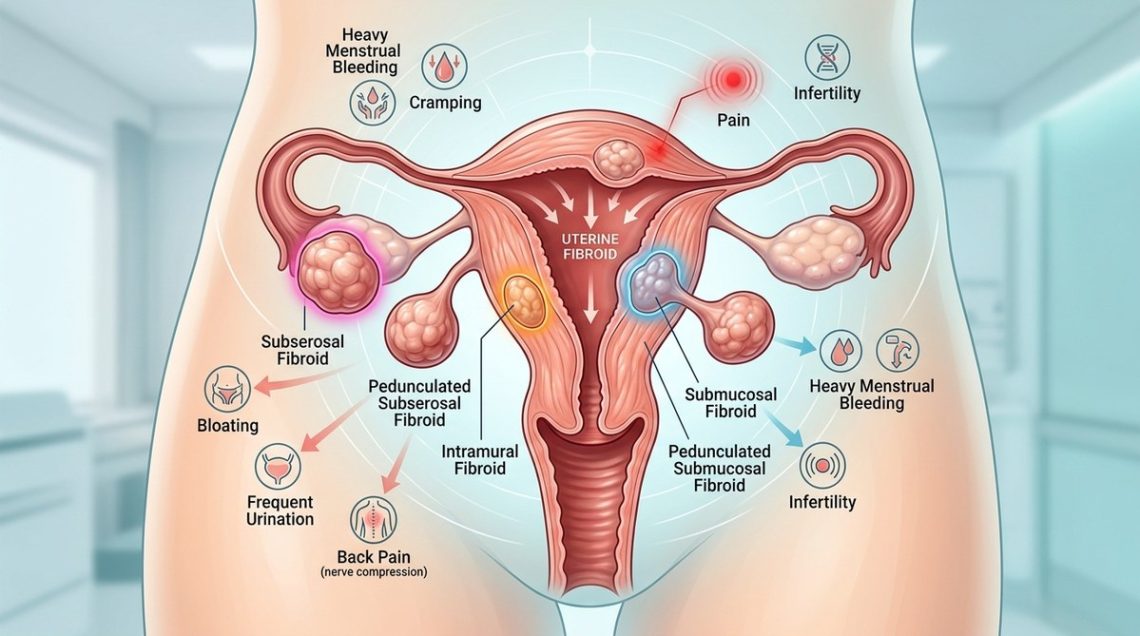
Fibroids are not all the same. Their location in the uterus determines which symptoms you experience. Submucosal fibroids often cause heavy bleeding and fertility issues. Intramural fibroids lead to pelvic pressure and pain. Subserosal fibroids can press on nearby organs. Knowing your fibroid type helps you and your doctor choose the right treatment for your specific symptoms.
Why Location Matters More Than Size
Think of your uterus like a small apartment building. Each room has different neighbors and different plumbing. A noisy party in the basement bothers the people downstairs, but the top floor barely hears it. Fibroids work the same way.
A small fibroid pressing against your bladder can cause more daily discomfort than a large fibroid sitting quietly in the uterine wall. This is why some women suffer intensely with tiny fibroids while others carry sizable ones without noticing.
Your symptoms are a direct map to where your fibroid is located. Learning to read that map gives you power. It helps you ask better questions at the doctor’s office and understand why certain treatments might work better for you.
The Three Main Fibroid Types by Location
Doctors classify fibroids based on where they grow in relation to the uterine wall. Each type creates a distinct symptom pattern.
Submucosal Fibroids (Inside the Uterine Cavity)
These fibroids grow just underneath the lining of your uterus. They bulge into the space where a baby would grow. Because they sit close to the endometrial lining, they often cause the most dramatic bleeding symptoms.
Common symptoms include:
- Heavy menstrual bleeding that soaks through pads or tampons in under an hour
- Periods that last longer than seven days
- Severe cramping during menstruation
- Difficulty getting pregnant or maintaining a pregnancy
- Blood clots during your period
Submucosal fibroids are the most likely to interfere with fertility. Even a small one can prevent an embryo from implanting properly. If you are trying to conceive and experiencing heavy periods, this type of fibroid could be the culprit.
Intramural Fibroids (Within the Uterine Wall)
These are the most common type. They grow inside the muscular wall of the uterus. As they expand, they stretch the uterine muscle, which can cause significant pain.
Common symptoms include:
- A feeling of fullness or pressure in your lower abdomen
- Dull, aching pain that feels like a constant cramp
- Lower back pain that gets worse as the day goes on
- Pain during or after sexual intercourse
- Abdominal bloating that makes your clothes feel tight
Intramural fibroids are the ones most likely to cause that vague, nagging pelvic discomfort that is hard to pin down. If you feel like something is “off” in your lower belly but you cannot point to one specific problem, an intramural fibroid might be the reason.
Subserosal Fibroids (On the Outer Surface)
These fibroids grow on the outside of your uterus. They push outward into your pelvic cavity instead of inward into your uterus. Because they do not affect the uterine lining, they rarely cause heavy bleeding.
Common symptoms include:
- Pressure on your bladder, causing frequent urination
- Pain or pressure in your lower back
- Constipation from pressure on the rectum
- A visible bulge or lump you can feel through your abdominal wall
- One-sided pelvic pain if the fibroid grows on a stalk
Subserosal fibroids are the ones that often surprise women. You might have normal periods but feel like you need to use the bathroom constantly. Or you might struggle with constipation that comes and goes for no clear reason.
How Fibroid Location Changes Your Daily Life
The symptoms above are the medical checklist. But real life is more complicated than a list. Here is how each type might actually show up in your day.
Submucosal fibroids and your period: You plan your life around your cycle. Heavy days mean staying home from work or social events. You carry backup clothes in your car. You have learned exactly which bathrooms are closest at your favorite coffee shop.
Intramural fibroids and your comfort: You feel a constant low ache in your pelvis. Sitting at your desk for eight hours makes it worse. You shift positions constantly. Lying on your stomach hurts. Your partner notices you wincing during everyday movements.
Subserosal fibroids and your bathroom habits: You pee eight times before lunch. You feel like you can never fully empty your bladder. You avoid long car rides because you cannot predict when you will need a restroom.
A Step-by-Step Guide to Identifying Your Fibroid Type
If you suspect you have fibroids, here is how to start figuring out which type you might be dealing with.
-
Track your bleeding patterns for two cycles. Note the heaviest day. Count how many days your period lasts. Look for clots larger than a quarter. Heavy bleeding points toward submucosal fibroids.
-
Map your pain. Where exactly does it hurt? Is it sharp or dull? Does it get worse at certain times of day? Pain that feels like pressure in your lower belly often points to intramural fibroids.
-
Notice your bathroom habits. Are you urinating more than usual? Are you constipated? These symptoms lean toward subserosal fibroids pressing on nearby organs.
-
Schedule an ultrasound. This is the only way to know for sure. A transvaginal ultrasound gives the clearest picture. Ask your doctor to specifically note the location of each fibroid.
-
Bring your symptom log to the appointment. Your doctor can match your symptoms to the fibroid locations seen on the ultrasound. This helps confirm the diagnosis.
What the Research Says About Fibroid Location in 2026
Recent studies continue to confirm that submucosal fibroids carry the highest risk for heavy bleeding and fertility problems. A 2025 meta-analysis found that women with submucosal fibroids were three times more likely to report heavy menstrual bleeding compared to women with subserosal fibroids.
Intramural fibroids, especially those larger than 4 centimeters, are now linked to more chronic pelvic pain than previously understood. Researchers in 2026 are studying how these fibroids irritate surrounding nerve endings over time.
Subserosal fibroids remain the least likely to cause bleeding problems, but they are the most likely to cause bowel and bladder symptoms. Women with large subserosal fibroids often report significant quality of life improvements after removal, even though they never had heavy periods.
When Fibroids Grow in Multiple Locations
Many women have more than one fibroid. It is common to have a mix of types. A submucosal fibroid might cause heavy bleeding while a subserosal fibroid on the same uterus causes bladder pressure. This combination can be confusing because your symptoms do not fit neatly into one category.
If you have multiple fibroids, your doctor will prioritize treatment based on which one is causing the most trouble. Usually, submucosal fibroids get treated first because they cause the most dramatic symptoms and fertility concerns.
Treatment Options by Fibroid Location
Your treatment plan should match your fibroid type. Here is a simple breakdown of what works best for each location.
| Fibroid Type | Best Treatment Options | Why It Works |
|---|---|---|
| Submucosal | Hysteroscopic myomectomy | Removes fibroid through the vagina without cutting the uterus |
| Intramural | Laparoscopic myomectomy | Removes fibroid from the uterine wall with minimal recovery time |
| Subserosal | Laparoscopic myomectomy or ablation | Targets fibroids on the outer surface without disturbing the uterine lining |
| Any type | Hormonal birth control or GnRH antagonists | Reduces bleeding and shrinks fibroids over time |
Expert advice from a board-certified gynecologist: “If you have submucosal fibroids and want to get pregnant, do not wait. These fibroids can grow quickly under the influence of estrogen. Treat them early. The success rate for pregnancy after submucosal fibroid removal is excellent.”
How to Talk to Your Doctor About Fibroid Location
Many women leave their doctor’s office without a clear answer about what type of fibroid they have. Here is how to get the information you need.
Ask these specific questions:
- “Can you tell me exactly where my fibroid is located in the uterus?”
- “Is it touching the uterine lining or pushing outward?”
- “How many fibroids do I have, and what type is each one?”
- “Based on the location, which symptoms am I most likely to experience?”
- “Does the location of my fibroid change my treatment options?”
Do not be shy about asking for clarification. If your doctor uses terms like “anterior fundal” or “posterior cervical,” ask them to show you on a diagram. Understanding the location helps you understand your body.
Common Mistakes Women Make About Fibroid Location
It is easy to misunderstand how fibroids work. Here are the most common misconceptions.
- Thinking size matters more than location. A small fibroid in the wrong spot can cause more problems than a large one in a good spot.
- Assuming heavy bleeding always means a large fibroid. Even tiny submucosal fibroids can cause significant blood loss.
- Believing that no symptoms means no fibroids. Subserosal fibroids can grow quite large without causing any obvious symptoms.
- Ignoring fibroids because they are “common.” Common does not mean harmless. Fibroids that press on organs or cause heavy bleeding deserve treatment.
What About Rare Fibroid Types?
Most fibroids fit into the three main categories. But a few less common types exist.
Pedunculated fibroids grow on a stalk. They can be submucosal or subserosal. A pedunculated subserosal fibroid can twist on its stalk, causing sudden severe pain. This is a medical emergency that requires immediate attention.
Cervical fibroids grow in the lower part of the uterus near the cervix. They are rare but can cause pain during intercourse and difficulty with childbirth.
Intraligamentary fibroids grow into the broad ligament that holds the uterus in place. They can press on nerves and blood vessels, causing referred pain in the legs or lower back.
If you have one of these less common types, your symptoms may not follow the typical patterns. Work closely with a specialist who understands these variations.
Your Next Steps Based on Fibroid Location
Once you know your fibroid type, you can take targeted action. Here is a practical plan for each location.
If you have submucosal fibroids:
- Prioritize treatment if you want to become pregnant
- Track your bleeding to monitor changes
- Ask about tranexamic acid for heavy periods
- Consider a hysteroscopic myomectomy as a first option
If you have intramural fibroids:
- Pay attention to pelvic pressure and back pain
- Try a heating pad for symptom relief
- Ask about laparoscopic myomectomy if symptoms worsen
- Monitor for growth with annual ultrasounds
If you have subserosal fibroids:
- Watch for bladder and bowel symptoms
- Keep a log of bathroom habits
- Consider treatment if symptoms affect your quality of life
- Do not assume you are fine just because your periods are normal
Understanding the Whole Picture
Fibroid location is only one piece of the puzzle. Your overall health, hormone levels, age, and personal goals all matter. But location gives you a clear starting point. It tells you what to expect and which treatments are most likely to help.
If you want to learn more about how fibroids affect your health, check out our guide on can fibroids cause weight gain and the early warning signs of fibroids that many women miss.
Matching Your Symptoms to the Right Care
Understanding fibroid types by location symptoms is the first step toward feeling better. You no longer have to wonder why your friend with fibroids has different problems than you do. The answer is in the location.
When you know where your fibroid sits, you can ask for the right tests, choose the right treatment, and stop blaming yourself for symptoms that are not your fault. Your body is giving you clues. Now you know how to read them.
If you are unsure about your next step, start with a symptom journal and an ultrasound. That combination will tell you more than any article can. And when you have that information, you can move forward with confidence. You deserve to feel comfortable in your own body. Knowing your fibroid type is how you get there.