If you have been dealing with a nagging ache in your hip, a sharp jolt down your thigh, or a pins-and-needles feeling in your foot that seems to come out of nowhere, you have likely blamed your lower back. Many women do. But what if the real source of that sciatica-like pain is not your spine at all? What if it is coming from deep inside your pelvis? The link between uterine fibroids and leg pain is one of the most overlooked connections in women’s health. And if you are a woman in your 30s, 40s, or 50s who has been diagnosed with fibroids, this could be the missing piece of your pain puzzle.
Uterine fibroids can trigger sciatic nerve pain by pressing on the nerves that run through your pelvis. This pressure mimics classic sciatica but needs a different treatment approach. Recognizing the fibroids and sciatica connection helps you get the right diagnosis and relief. This article explains how fibroids cause leg pain, the symptoms to watch for, and your best options for lasting comfort.
How Fibroids Can Reach Your Sciatic Nerve
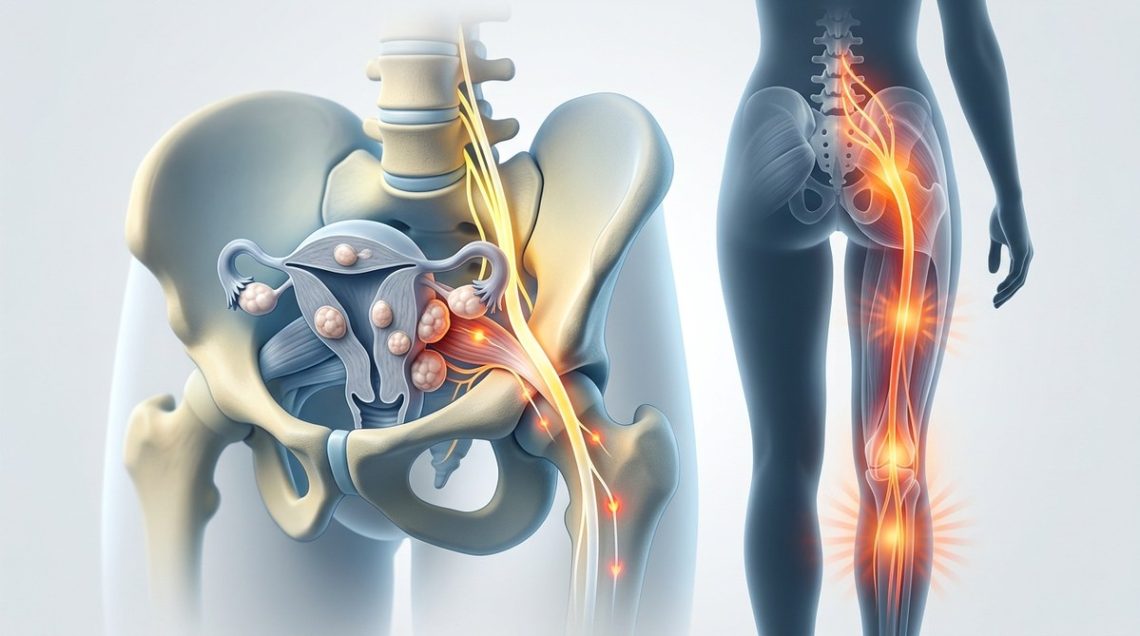
Your uterus sits right in front of your sacrum, the triangular bone at the base of your spine. The sciatic nerve, the largest nerve in your body, passes directly alongside and beneath the uterus as it travels from your lower spine down through your pelvis and into each leg. When fibroids grow, especially larger ones or those located on the back wall of the uterus, they can push against this nerve pathway.
Think of it like a garden hose. If you step on the hose, the water flow gets blocked and pressure builds up behind the kink. Fibroids create a similar kink in your nerve highway. The resulting pain, numbness, or tingling can travel all the way down to your toes. This is not a back problem. It is a pelvic problem with leg symptoms.
The Real Reason Your Legs Hurt
Many women describe the sensation as a deep, heavy ache in one leg. It might feel different from the sharp, shooting pain of a classic disc herniation. The fibroids and sciatica connection often produces a duller, more persistent discomfort that worsens with certain positions or at certain times of the month.
Here are the most common pain patterns linked to fibroids:
- A constant throbbing in the right or left buttock
- Numbness that comes and goes along the back of your thigh
- A feeling of heaviness in one leg that makes walking feel uneven
- Tingling in the foot that disappears when you shift your weight
- Pain that gets worse when you sit for long periods or lie on your back
If any of these sound familiar, your fibroids may be the hidden driver. For a deeper look at the early signs you might be missing, read our guide on 7 early warning signs of fibroids most women ignore until it’s too late.
When Sciatica Is Not Actually Sciatica
A standard diagnosis of sciatica usually points to a problem in the lumbar spine, like a herniated disc or spinal stenosis. But when fibroids are the cause, the pain pattern often behaves differently. Understanding this difference can save you from months of unnecessary back treatments.
| Symptom | Classic Sciatica | Fibroid-Related Sciatica |
|---|---|---|
| Pain location | Lower back, then leg | Pelvis, buttock, then leg |
| Triggers | Bending, twisting, lifting | Sitting, menstrual cycle, constipation |
| Sensation | Sharp, electric, shooting | Dull ache, pressure, heaviness |
| Response to movement | Often improves with stretching | May improve with position changes |
| Associated symptoms | Back stiffness | Pelvic pressure, heavy periods |
If you have been told your pain is just sciatica but your periods are heavy and you have known fibroids, ask your doctor to consider the pelvic connection. The root cause changes the treatment plan.
The Role of Inflammation and Hormones
Fibroids do not just sit there. They are living tissue that responds to your hormones. Estrogen and progesterone fuel their growth, which is why symptoms often change throughout your menstrual cycle. When fibroids grow, they can also trigger local inflammation in the pelvic cavity. This inflammation can irritate nearby nerves, including the sciatic nerve, even without direct physical pressure.
This means your pain might fluctuate with your cycle. Many women report that leg pain peaks in the days leading up to their period and fades afterward. If that matches your experience, it is a strong clue that fibroids are involved. For more on how hormones amplify pain, check out the estrogen-pain connection: how hormones amplify chronic pain in women.
What to Do About Fibroid-Related Leg Pain
If you suspect your leg pain is coming from fibroids, do not just accept it as something you have to live with. There are effective steps you can take. Here is a practical approach to finding relief.
-
Get the right imaging. A standard ultrasound can show fibroid size and location. Ask your doctor specifically about the position of the fibroids relative to the sacrum and nerve pathways. An MRI may give even clearer detail.
-
Track your symptom patterns. Keep a simple diary for two menstrual cycles. Note when the leg pain is worst, what you were doing, and where you were in your cycle. This data helps your doctor connect the dots.
-
Try targeted physical therapy. A pelvic floor physical therapist can teach you exercises that reduce pressure on the sciatic nerve. Gentle nerve glides and positional releases can bring significant relief.
-
Consider fibroid reduction treatments. Depending on your situation, options like hormonal birth control, a myomectomy, or radiofrequency ablation may shrink the fibroids and take the pressure off your nerves. Learn more about effective non-surgical treatments for uterine fibroids you should know.
-
Address the inflammation. An anti-inflammatory diet can help calm the pelvic environment. Our guide on anti-inflammatory foods that may reduce fibroid symptoms offers a great starting point.
The Difference Between Fibroids and Endometriosis Pain
Both conditions can cause leg pain, but they work differently. Endometriosis involves tissue growing outside the uterus that can directly attach to the sciatic nerve. Fibroids, on the other hand, cause pain through compression and indirect irritation. The treatment paths differ, so getting the right diagnosis matters. If you are unsure which condition is driving your symptoms, read our comparison of fibroid pain vs. endometriosis: how to tell the difference and why it matters.
When to Seek Medical Help
You do not have to live with unexplained leg pain. If your symptoms are interfering with your daily life, it is time to see a specialist. Look for a gynecologist who understands the fibroids and sciatica connection or a pelvic pain specialist. Bring your symptom diary and your imaging results.
“Many women suffer for years thinking their leg pain is a back problem when it is actually a fibroid problem. Once we identify the correct source, relief often comes much faster.” Dr. Mariana Torres, pelvic health specialist
If your pain is severe or you are considering surgery, weigh your options carefully. Our article on should you get a hysterectomy for fibroids? weighing your options in 2026 can help you make an informed choice.
Your Path to Pain-Free Legs
The fibroids and sciatica connection is real, and it is finally getting the attention it deserves. Your leg pain is not random. It is not all in your head. It is a physical signal from your body that something in your pelvis needs attention. By understanding how fibroids affect your nerves, you can stop chasing the wrong treatments and start targeting the real cause.
Start with the steps above. Track your symptoms. Talk to your doctor about imaging. And do not be afraid to ask, “Could this be related to my fibroids?” The answer might change everything. If you want to take a broader approach to managing your fibroid symptoms, our guide on effective lifestyle changes to manage fibroid symptoms in 2026 offers practical daily strategies that complement medical care.
You deserve to walk through your day without that ache in your leg. The first step is knowing what is really causing it. Now you do.