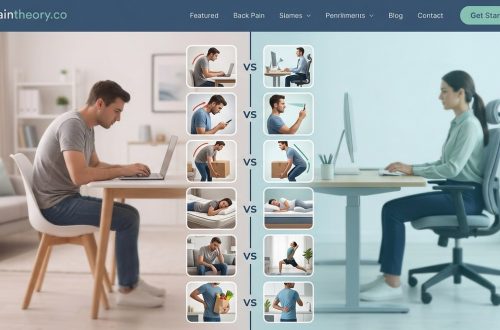
Your lower back has been trying to get your attention for months. Maybe it’s that dull ache that shows up around 2 p.m. every workday. Or the stiffness you feel when you stand up after a long meeting. You might blame stress, a bad mattress, or just getting older. But the real culprit is probably something you’re sitting on right now.
The average American spends over 13 hours a day sitting. That includes time at your desk, in your car, and on your couch. Your spine was not built for that. It was designed for movement, for changing positions, for the occasional run across a parking lot. When you sit for hours on end, you are slowly reshaping your spine. And not in a good way.
Prolonged sitting is linked to a permanent loss of spinal curvature, increased disc pressure, and weakened core muscles. By 2026, research shows that even young, healthy desk workers can develop measurable spinal changes within just two years of full-time remote work. The good news is that these changes can be prevented and partially reversed with the right movement habits and ergonomic setup.
What happens to your spine when you sit
Your spine has a natural S-curve. This shape acts like a shock absorber. It distributes weight evenly and keeps your vertebrae stacked properly. When you sit, especially in a slouched position, you flatten that curve.
This flattening is called “spinal flexion.” It puts uneven pressure on your discs. Over time, that pressure can cause the gel-like center of your discs to bulge or even rupture. That is a herniated disc. And it hurts.
But the damage goes deeper than your discs. Your spinal ligaments stretch out. Your back muscles weaken because they are not being used. Your hip flexors tighten up. These changes do not happen overnight, but they are happening right now, every time you sit through a movie or a workday.
“Sitting is not inherently bad. The problem is that we sit for too long without interruption. Your spine needs movement to stay healthy. It needs a constant change of load and position.” — Dr. Sarah Chen, spine biomechanics researcher at Stanford University
The 2026 remote work effect on your back
The shift to remote work that started in 2020 has permanently changed how we live. By 2026, many of us are still working from home or in hybrid setups. That means more time in less-than-ideal chairs.
Your dining table chair was never meant for eight hours of work. Your couch was designed for watching TV, not for typing emails. Even many home office setups lack the support you get from a commercial ergonomic chair.
Research from 2025 showed that remote workers reported a 40 percent increase in lower back pain compared to their in-office counterparts. The main reason was not just sitting, but sitting in bad positions for longer stretches without the natural breaks that come from commuting, walking to a coworker’s desk, or going to a meeting room.
How your couch is different from your car seat
Both put you in a similar position, but they affect your spine differently.
| Factor | Couch | Car Seat |
|---|---|---|
| Support | Soft, uneven surface | Firm, contoured shape |
| Posture | Deep slump, rounded back | Semi-reclined, slight support |
| Duration | Often 2-4 hours at a time | Usually under 1 hour |
| Movement | Very little, often static | Some from driving motions |
| Impact | Severe hip flexor shortening | Moderate disc compression |
Your couch is actually worse for your spine than your car seat for long periods. The soft surface lets your pelvis tilt backward, which flattens your lower back curve. Your car seat at least has some structure.
The 4-step process to protect your spine
You do not need to quit your desk job or sell your car. You need a system. Here is a simple process that works for most people.
-
Set a movement timer. Every 30 minutes, stand up for at least two minutes. Use your phone, a smartwatch, or an app. Do not rely on your memory. You will forget.
-
Do a 30-second spine reset. While standing, gently arch your back backward. Reach your arms overhead. Take a deep breath. This counteracts the forward slump.
-
Change your sitting surface. Alternate between a chair, a stability ball, and a standing desk. Each position uses different muscles and loads your spine differently.
-
Strengthen your posterior chain. Your glutes, hamstrings, and lower back muscles need regular work. Simple exercises like glute bridges, bird dogs, and deadlifts can reverse the weakening caused by sitting.
Common mistakes people make with ergonomic setups
A good chair helps, but it is not a magic solution. Many people buy an expensive ergonomic chair and still end up with back pain. Here is why.
-
Relying only on lumbar support. A lumbar cushion can help, but it does not fix a slouched upper back. You need whole-spine awareness.
-
Sitting too high or too low. Your feet should be flat on the floor. Your knees should be at a 90-degree angle. Your hips should be slightly higher than your knees.
-
Forgetting about your screen height. If your monitor is too low, you crane your neck forward. This creates a chain reaction that pulls your whole spine out of alignment.
-
Using a standing desk the wrong way. Standing all day is not better than sitting all day. You need to alternate. Aim for a 50-50 split between sitting and standing throughout your day.
What the research says about reversing sitting spine damage
The term “sitting spine damage” is not just a catchy phrase. It describes real structural changes. A 2024 study from the University of California tracked 100 remote workers over two years. They found measurable loss of lumbar lordosis, the natural curve of your lower back, in 78 percent of participants.
The good news is that these changes are not permanent. The same study found that participants who followed a structured movement program regained 60 percent of their spinal curvature within six months.
Your spine is adaptable. It responds to the loads you put on it. If you stop loading it in a slumped position and start loading it in a neutral position, it will slowly reshape itself.
Practical tools that actually help in 2026
You do not need a $2,000 chair to fix your back. Here are some tools that make a real difference.
-
A seat cushion with a coccyx cutout. This relieves pressure on your tailbone and helps you maintain a neutral pelvis.
-
A small back support roll. Place it at your belt line, not higher. This supports your lumbar curve without pushing you into an exaggerated arch.
-
A footrest. If your feet do not reach the floor, your hamstrings pull on your pelvis. This tilts you backward. A simple footrest fixes this.
-
A monitor arm. This lets you adjust your screen height perfectly. Your eyes should be level with the top third of your monitor.
For a more detailed guide on setting up your entire workspace, check out the desk worker’s guide to preventing and reversing sitting-related back pain.
How to build a sustainable movement habit
The biggest challenge is not knowing what to do. It is actually doing it. Here are some strategies that work for real people with busy schedules.
-
Attach movement to an existing habit. Every time you take a sip of coffee, check your posture. Every time you finish a task, stand up and stretch.
-
Use your calendar. Block off five minutes every hour for movement. Treat it like a meeting you cannot skip.
-
Make it social. Find a coworker who also wants to move more. Send each other a message every hour as a reminder.
-
Track your progress. Use a simple notebook or an app. Write down how many times you stood up each day. Watch the number grow.
When sitting spine damage becomes chronic pain
For some people, the structural changes from sitting cross a line into chronic pain. This is not just soreness. This is pain that does not go away, even when you stop sitting.
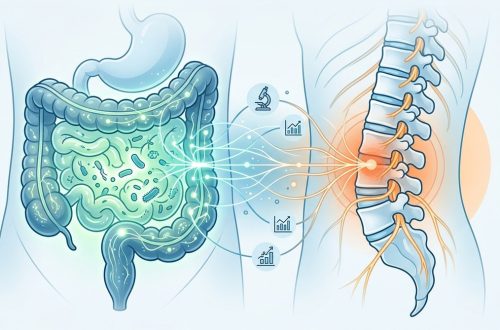
Chronic back pain changes your nervous system. Your brain starts to interpret normal sensations as painful. This is called central sensitization. It is a complex topic, but the important thing to know is that it can be reversed.
If your back pain has become constant, you should see a doctor. There are 5 back pain red flags that mean you should see a doctor immediately. Do not ignore them.
Your spine is stronger than you think
Here is the truth. Your spine is not fragile. It is incredibly resilient. It can handle a lot of sitting, as long as you give it breaks. The problem is not the sitting itself. It is the lack of variety.
Think about your ancestors. They sat on the ground, on logs, on rocks. They changed positions constantly. They squatted, knelt, and stretched. Their spines saw a huge range of motion every single day.
You can mimic that variety even in a modern office. Get up and walk around every 30 minutes. Use different chairs. Stretch your hips. Strengthen your back. Do not let your spine get stuck in one position for too long.
Your back pain is not a life sentence. It is a signal. Your body is telling you that something needs to change. Listen to it. Make small adjustments. Your spine will thank you.